0%

In 2026, choosing a Premium Aluminum Entry Door means looking beyond a striking façade. Buyers should compare frame construction, thermal breaks, glazing, weather seals, hardware, finish options, and warranty coverage. These details affect comfort, durability, and everyday operation. A slim frame may look elegant, but its performance depends on the complete door system and careful installation.

Architect Ludwig Mies van der Rohe famously said, “Less is more.” His words were about design, not door specifications, yet they suit the clean sightlines many homeowners seek. Small details matter. A flush threshold, a solid handle, or a well-fitted seal can change how a door feels in daily use. Still, appearance alone cannot confirm quality.

This guide explores manufacturers serving the premium aluminum entry door market in 2026. It considers product range, customization, technical information, service support, and the clarity of published specifications. Rankings can vary by region, project needs, and installer expertise; no shortlist fits every home. And the comparison is never perfect. Buyers should verify current product data and local availability before making a decision. A polished brochure is useful, but it is not a substitute for a measured opening, a detailed quote, and a careful review of the actual door system.
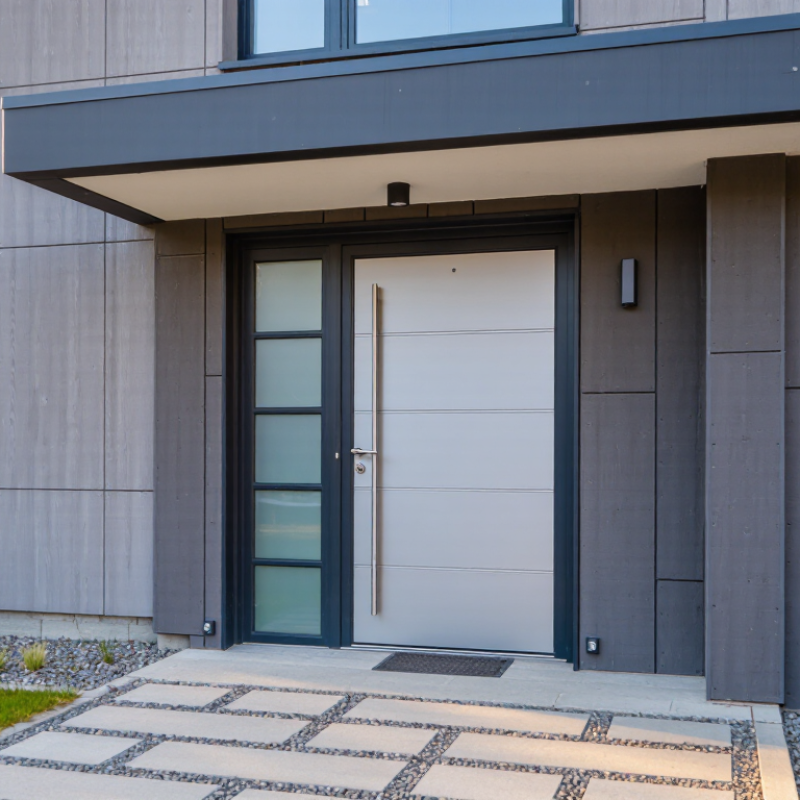
2026 Top Premium Aluminum Entry Door Manufacturers?

What Defines a Premium Aluminum Entry Door Manufacturer in 2026?

A premium aluminum entry door is more than a thick frame and a smooth finish. It is a tested assembly: frame, thermal break, glazing, seals, hardware, and threshold working together. The International Energy Agency’s 2023 Buildings report estimates that buildings used about 30% of global final energy in 2022. That figure covers buildings, not doors specifically, but it underlines why air leakage and heat transfer deserve attention. Ask for documented air, water, and structural performance results for the complete door system, not just an impressive profile specification. Standards such as AAMA/WDMA/CSA 101/I.S.2/A440 provide a useful testing framework for fenestration products.

Look closely at the details. A well-designed thermal break separates interior and exterior aluminum; continuous weather seals should compress evenly when the door closes. Check that the finish has documented durability testing, and that hinges and locks suit the door’s actual weight and use. Installation matters just as much: even a carefully tested unit can leak if the sill is poorly flashed or the frame is out of square. No door is maintenance-free. Ask what cleaning, adjustment, and replacement parts the manufacturer supports over time. Even experienced buyers can overvalue a heavy-looking frame; appearance alone proves little. Request test reports, warranty terms, and clear guidance for local exposure before comparing quotes.

Which Standards and Features Distinguish Premium Entry Doors?

Premium entry doors earn their status through verified performance, not a heavy-looking slab alone. The North American Fenestration Standard (AAMA/WDMA/CSA 101/I.S.2/A440) evaluates windows and doors for air leakage, water penetration, and structural loading. Ask for the tested product configuration, not just a claim about the material. A beautiful door can still leak at its threshold.

Thermal performance deserves careful scrutiny. The U.S. Department of Energy’s Energy Saver guidance estimates that windows account for 25–30% of residential heating and cooling energy use; glazed entry doors can also affect comfort, though their impact depends on size and installation. Look for NFRC-rated U-factor and solar heat gain coefficient, measured under NFRC 100 and 200 procedures. Lower U-factor generally means less heat transfer. Check the frame, insulated core, weather seals, and threshold as a system. Details matter.

Test reports are useful. So is a tape measure. Confirm the stated rating applies to the door’s actual size, glazing, and hardware, and inspect corner joints and seals for gaps. A thermally broken aluminum frame can reduce heat flow, but installation still matters. No specification replaces a properly flashed, square opening. And ratings are not magic. DOE Energy Saver; AAMA/WDMA/CSA 101/I.S.2/A440; NFRC 100 and 200.

2026 Top Premium Aluminum Entry Door Manufacturers? - Which Standards and Features Distinguish Premium Entry Doors?
Evaluation Dimension Relevant Standard or Basis What Distinguishes a Premium Specification What to Verify
Structural performance For applicable North American products, AAMA/WDMA/CSA 101/I.S.2/A440 (NAFS) provides performance classes and grades for fenestration products, including eligible door systems. A performance grade suited to the project’s design pressures, building height, exposure, and local wind conditions—not simply a general “heavy-duty” claim. Request the tested product configuration, performance grade, size limits, and supporting test or certification documentation. Confirm that the tested configuration matches the proposed door.
Air leakage ASTM E283 is a test method for determining air leakage through exterior windows, curtain walls, and doors under specified pressure differences. Published air-leakage results for the complete door assembly, with perimeter seals and operating hardware included. Ask for the test report and the tested specimen size and configuration. Compare results using the same test method and units.
Water penetration ASTM E331 and ASTM E547 are recognized methods for evaluating water penetration under specified laboratory conditions. A documented water-resistance pressure appropriate to the site exposure, together with a sill and drainage design suited to the installation. Check the reported test pressure, test method, threshold or sill details, and installation instructions. Laboratory results do not replace correct on-site flashing and drainage.
Thermal performance NFRC 100 covers procedures for determining product U-factor; NFRC 200 covers procedures for determining solar heat gain coefficient (SHGC). Published whole-product ratings for the specified door size and glazing configuration. A thermally broken aluminum frame can reduce heat transfer through the frame. Look for applicable NFRC ratings or labels. Lower U-factor means less heat transfer; the preferred SHGC depends on climate, orientation, and project design.
Glazing safety In the United States, applicable safety-glazing requirements may reference CPSC 16 CFR Part 1201 and ANSI Z97.1, depending on the glazing location and use. Safety glazing where required, with clear identification of the glass type and configuration. Verify the applicable local code and confirm that the specified glazing is marked and documented for its intended location.
Coating and finish AAMA 2605 is a specification for high-performance organic coatings on architectural aluminum extrusions and panels. A finish system with documented compliance, stated color and gloss options, and care and warranty terms appropriate to the exposure. Request coating compliance documentation and written maintenance guidance. Coastal or industrial exposure may require additional project-specific review.
Thermal-bridge control Thermal performance is assessed at the whole-product level through applicable rating methods; a thermal break is a design feature, not a performance rating by itself. A clearly described thermal-break design, paired with verified whole-door thermal data for the selected configuration. Ask for the rated assembly data rather than relying only on frame material, profile descriptions, or claims about insulation.
Weather seals and sill Performance depends on the complete assembly, including seals, threshold, frame, hardware, and installation details. Replaceable perimeter weather seals, a compatible threshold, and documented sill and drainage details. Review component details and installation instructions. Confirm compatibility with the finished floor, accessibility needs, and site drainage conditions.
Hardware and operation Hardware capacity and operation must match the door’s dimensions, weight, use, and applicable project requirements. Hardware specified for the actual leaf size and weight, with adjustment and replacement information available. Check hinge and lock specifications, operating clearances, maintenance requirements, and availability of replacement components.
Security claims Security performance depends on the complete door, frame, glazing, locks, anchors, and installation; requirements vary by jurisdiction and project. Specific, documented test results for the complete configuration when a security rating is claimed. Request the named test method, rating scope, and tested configuration. Do not treat a lock specification alone as proof of whole-door security performance.
Documentation and support Product ratings apply to defined configurations and conditions; installation details can affect in-service performance. Accessible technical data, installation instructions, finish and glazing options, warranty terms, and service information. Match all documentation to the scheduled door size, opening direction, glazing, finish, hardware, and project location.

Standards, code requirements, and certification availability vary by country and project. Confirm current requirements with the relevant authority and request documentation for the exact door configuration being specified.

How to Evaluate Leading Aluminum Entry Door Manufacturers

How to Evaluate Leading Aluminum Entry Door Manufacturers

Choosing a premium aluminum entry door manufacturer takes more than comparing catalog photos. Check frame construction, thermal-break design, weather seals, and hardware options. Ask for documented performance data, including air leakage and water resistance, where available. A clear specification sheet is more useful than broad claims. Review finish samples in daylight; a color can look different beside stone or timber. Also confirm who measures the opening and handles installation. Even a well-made door can disappoint if the fit is poor.

Tips: Request a written quote with glass type, frame depth, finish, hardware, lead time, and warranty terms. Ask how replacement parts are sourced. Keep the answers.

Look for consistency across the process. Do sales staff explain trade-offs, or only describe benefits? A heavier door may feel solid, but hinges and the frame must support its weight. Ask how the finish is tested and maintained, especially in coastal or high-sun locations. Compare warranty exclusions carefully; wording matters. References from projects with similar exposure can help, though one successful installation does not prove every door will perform the same. Some details are easy to miss. That is precisely why written records and measured site checks matter.

How Top Manufacturers Compare in Design, Performance, and Service

In 2026, comparing premium aluminum entry door manufacturers means looking beyond polished showroom photos. Examine frame proportions, corner joints, finish consistency, and the range of glass options. A narrow frame can bring more daylight into a hallway, but it may not suit every home’s style. Details matter.

Performance claims deserve a closer look. Ask for documented thermal values and test results for air and water resistance, not just broad claims about efficiency. Check how the door’s threshold, weather seals, and locking hardware work together. A well-made door can still underperform if it is poorly measured or installed. Test the sample. Compare specifications for the complete door, not just the aluminum frame, and confirm which glass and hardware are included in the quoted price.

Service can separate otherwise similar suppliers. Ask about production timelines, installation guidance, replacement parts, and who handles adjustments after delivery. Clear answers are useful; vague promises are not. A written warranty helps, though its value depends on what it actually covers. Comparisons are never perfect: finish samples may look different in changing daylight, and delivery dates can shift. Note those uncertainties before deciding.

How to Choose a Manufacturer for Your Project

Choosing a premium aluminum entry-door manufacturer starts with the opening, not the brochure. Share the rough dimensions, wall construction, exposure to rain, and expected traffic. Ask for performance data that matches the exact frame, glass, and hardware configuration. A rating for a different model may not tell you much. Details matter.

Review completed projects with similar sizes and conditions. Ask how the manufacturer handles custom dimensions, finish samples, and hardware changes. A physical sample can reveal color shifts and surface texture that screen images miss. Confirm who checks shop drawings and resolves measurement questions before production. Ask directly. A responsive sales contact is useful, but technical support matters more when site conditions change.

Check lead times, packaging, replacement-part availability, and warranty terms in writing. Clarify whether delivery includes unloading, and who coordinates installation questions. These details affect schedules as much as the door itself. I would not assume the most expensive option is automatically the best fit; a complex finish may add cost without helping your project. Compare specifications line by line, and ask the manufacturer to explain any unclear item. A little uncertainty is normal early on, but unanswered questions about tolerances or service deserve attention before you approve the order.

FAQS

What makes an aluminum entry door a complete system?

The frame, thermal break, glass, seals, hardware, and threshold must work together. A strong frame alone proves little.

Which performance documents should I request?

Ask for test results covering the complete door’s air, water, and structural performance. Check that they match your chosen glass and hardware. Details matter.

How can I check the door’s thermal design?

Look for a thermal break separating interior and exterior aluminum. Ask for documented thermal values for the exact configuration.

What should I inspect in a sample?

Check finish consistency, surface texture, corner joints, and frame proportions. Hold the sample near a window; daylight can change how its color looks. Not perfect, but useful.

Why does installation affect performance?

A tested door can still leak if the frame is out of square or the sill is poorly flashed. Confirm who handles site measurements and installation questions.

What service details should I clarify?

Ask about production timelines, replacement parts, adjustment support, packaging, and delivery unloading. Get the answers in writing.

How should I compare warranties?

Read what the warranty covers, including hardware, finish, and service. A written promise helps, but vague terms leave room for disappointment.

Is the most expensive option always the best fit?

Not necessarily. Compare specifications line by line, and consider whether an elaborate finish adds practical value. I might still miss something early on.

Conclusion

Choosing a Premium Aluminum Entry Door manufacturer in 2026 means looking beyond appearance. A dependable manufacturer should demonstrate consistent product quality, clear documentation, and options suited to the project’s climate, building type, and design goals. Important features may include durable finishes, secure locking systems, weather-resistant seals, thermal performance, and careful construction. Buyers should also confirm which recognized performance standards and testing information apply to each door configuration rather than relying on broad claims.

To compare manufacturers, assess design flexibility, material and finish choices, installation guidance, warranty terms, lead times, and responsiveness after purchase. A strong fit balances performance and visual appeal with practical support throughout specification and installation. Before deciding, define project requirements, request detailed product information, and compare proposals on equivalent configurations. This approach helps homeowners, designers, and builders select a door solution that meets functional needs, complements the building, and offers dependable long-term value.

Evelyn

Evelyn

Evelyn is a professional marketing specialist with in-depth knowledge of the company’s products and a strong commitment to clear, useful communication. She regularly contributes expert blog articles to the company website, helping readers understand product features, practical applications, and......