An Aluminum Front Door can give a modern home a clean, precise entrance: a slim dark frame, broad glass panels, and a handle that feels solid in the hand. But appearance is only part of the decision. The right door must also suit the opening, climate, security needs, and daily use. Aluminum is valued for strength and design flexibility, yet its performance depends on the complete assembly—not the frame alone.
Energy details deserve a close look. The U.S. Department of Energy notes that windows can account for roughly 25–30% of residential heating and cooling energy use. That figure concerns windows, not every exterior door, but it matters when a front door includes substantial glazing. Check the glass and frame together, and compare certified performance information where available. The National Fenestration Rating Council’s labels provide standardized ratings, including U-factor and solar heat gain coefficient. Small numbers, real consequences.
Finish quality matters, too. The American Architectural Manufacturers Association’s AAMA 2605 specification sets demanding performance requirements for high-quality organic coatings on architectural aluminum. A compliant finish may be worth considering in exposed locations, though installation and maintenance still matter. Even an excellent product can disappoint if the threshold leaks or the frame is poorly fitted. That part is easy to underestimate.
This guide presents ten aluminum front doors for modern homes, with attention to style, glazing, finishes, and practical features. Some designs look striking in a showroom but may feel too stark at home. Use the comparisons as a starting point, then verify specifications with the manufacturer and installer.
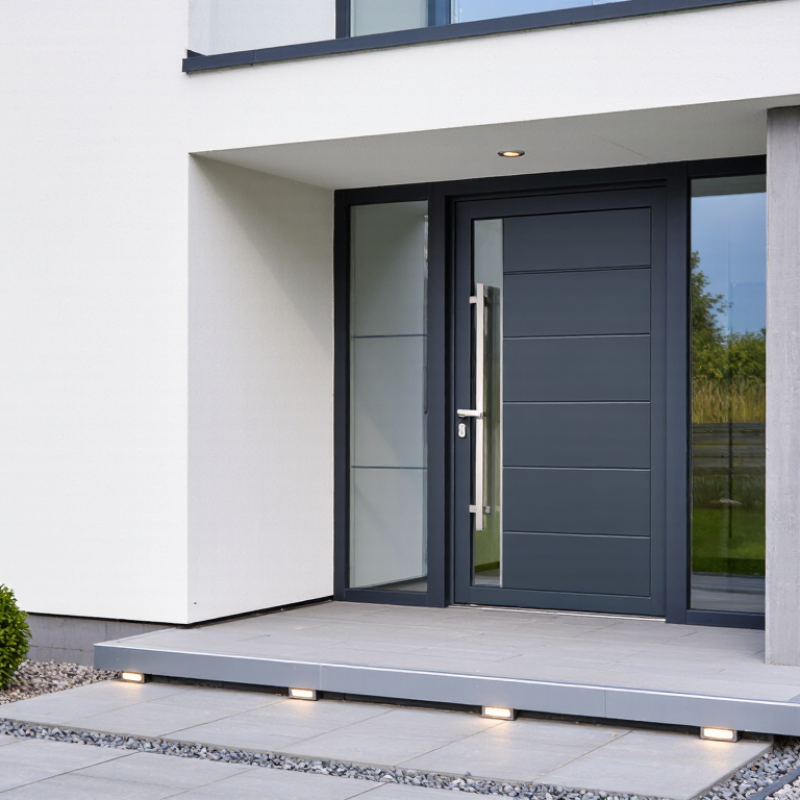
Aluminum Front Door Fundamentals: Frame Alloys, Thermal Breaks, and Glazing
Aluminum front doors suit modern homes because their frames can stay slim while supporting broad glass panels. Architectural frames often use 6063 aluminum alloy, valued for its extrusion finish and corrosion resistance. But metal conducts heat readily. A thermal break—a continuous insulating strip between the frame’s inner and outer sections—reduces that transfer. Check that it runs through the full frame and threshold, not just the visible sides. Details matter.
Glazing affects comfort, daylight, and privacy. The U.S. Department of Energy’s Energy Saver guidance estimates that windows account for about 25–30% of household heating and cooling energy use; this is a broad estimate, not a door-specific figure. Compare the complete door’s U-factor and solar heat gain coefficient, or SHGC, using ratings tested under National Fenestration Rating Council procedures. Lower U-factor generally means less heat transfer; suitable SHGC depends on climate and sun exposure. A number alone is not the whole story.
Tips: Choose insulated, sealed glazing, then inspect frame joints and weatherstripping. Ask for performance ratings for the full door assembly, not glass alone. A beautifully narrow frame can still feel cold beside a drafty threshold. That trade-off is easy to miss.
10 Best Aluminum Front Doors for Modern Homes — Aluminum Front Door Fundamentals: Frame Alloys, Thermal Breaks, and Glazing
| Door type | Best suited to | Common frame material | Thermal-break considerations | Typical glazing choice | Configuration and practical notes |
|---|---|---|---|---|---|
| Thermally broken flush-panel door | Minimalist façades and contemporary homes | Extruded aluminum, commonly 6063-series alloy | Look for a continuous insulating barrier separating the interior and exterior frame sections. | Solid insulated panel, or a small insulated-glass insert | A simple, mostly opaque face offers privacy. Confirm that the panel, frame, and threshold are specified as a coordinated exterior-door system. |
| Full-lite glazed door | Entryways where daylight and a view are priorities | Extruded aluminum frame; alloy and temper depend on the system | A thermal break can reduce heat transfer through the metal frame; whole-door performance depends on the complete assembly. | Insulating glass unit; safety glazing where required by local code | Large glazed areas admit more daylight but provide less privacy. Check glass safety requirements and the door’s tested energy rating. |
| Vertical-sidelight entry system | Narrow entrances that need additional daylight | Aluminum door frame with matching aluminum sidelights | Specify thermally broken door and sidelight framing where available, including appropriate treatment at frame joints. | Double-pane insulating glass; laminated or other safety glazing where required | A sidelight is a fixed glazed panel beside the door. It increases the glazed area and overall opening width, so measure the rough opening carefully. |
| Double-door entry | Wide entrances and larger modern façades | Extruded aluminum leaves and frame | Check thermal separation at the frame, meeting stile, threshold, and perimeter seals. | Solid panels, glazed panels, or a combination | Two leaves create a wide clear opening when both are active. Hardware, weather seals, and alignment at the center meeting point are important. |
| Pivot-style aluminum door | Statement entrances with a wide, tall door leaf | Reinforced aluminum door construction with a compatible pivot system | Thermal-break details vary by system; verify the complete door’s tested performance rather than judging the frame alone. | Opaque panel or insulated glazing, depending on design | Pivot hardware supports the leaf at floor and head positions rather than using conventional side hinges. Confirm structural support, clearances, and weather sealing. |
| Aluminum door with narrow vision panel | Homes needing a balance of daylight and privacy | Extruded aluminum frame with an insulated door panel | A thermally broken frame is useful in climates with significant indoor–outdoor temperature differences. | Small double-pane insulated-glass panel | A limited glass area can bring in daylight while preserving more privacy than a full-lite door. Glass placement and size are design-specific. |
| Textured or perforated-look panel door | Modern façades seeking visual depth with limited transparency | Aluminum frame with a formed or applied exterior panel | Ask how the decorative outer layer is isolated from the interior frame and how the insulated core is constructed. | Usually solid; optional small insulated-glass insert | Texture can create shadow and visual interest without a large glazed area. Exterior finishes should be specified for the site’s exposure conditions. |
| Coastal-exposure aluminum entry door | Homes exposed to salt air or frequent wind-driven rain | Extruded aluminum with a finish and hardware selected for the exposure | Thermal breaks address heat flow, not corrosion; both thermal design and corrosion-resistant components matter. | Insulating safety glass if glazing is included | Ask about finish suitability, compatible fasteners, drainage, and applicable water-penetration or wind-load test data for the installed system. |
| High-performance insulated aluminum door | Energy-conscious new builds and renovations | Thermally broken aluminum frame with an insulated door leaf | Look for documented whole-door U-factor or equivalent local energy data; the result depends on size, glass, frame, and test method. | Low-emissivity insulating glass when a glazed configuration is chosen | Compare certified whole-assembly results on the same basis. A frame-only figure does not represent the performance of the complete door. |
| Custom oversized aluminum entry door | Architect-designed openings and distinctive proportions | Engineered aluminum sections sized for the specified leaf and loads | Confirm that the selected system retains its tested thermal and air-sealing details at the proposed dimensions. | Solid, partially glazed, or full-lite options | Oversized leaves can require engineered hardware and structural support. Verify maximum tested dimensions, weight limits, and installation requirements. |
Selection note: Aluminum alloy, thermal-break design, glazing, ratings, and available sizes vary by door system and market. Request current test documentation for the complete door assembly and confirm local safety-glazing, energy, wind-load, and installation requirements.
FAQS
It means less heat passes through the door. Lower values can help keep indoor temperatures steadier.
A lower solar heat gain coefficient usually limits sunlight-driven warming. It can matter on a west-facing entry.
Solid insulated doors with decorative panels can perform well, with U-factors around 0.18–0.25. They offer little daylight, though.
No. More glass can increase heat gain, and added joints may allow more air leakage. I once underestimated that tradeoff.
Request the complete rating label, including whole-door results. A center-of-glass figure alone may not describe the frame or edges.
Sunlight, rain, humidity, and regular cleaning. Dark finishes may heat up more in afternoon sun.
Wash it twice yearly with mild soap and water. Avoid abrasive pads. Small color changes can be hard to judge.
Measure the finished opening, floor height, and trim depth. Leave room for shims and weather seals. Measure twice.
Seal the frame perimeter, use a sloped sill, and provide drainage. A careful fit matters; mine once leaked despite good specifications.
Check handle clearance, lever height, door swing, and hinge material. Corrosion-resistant hinges may suit damp coastal areas.
Conclusion
Choosing the right Aluminum Front Door involves more than selecting a modern appearance. This guide explains how frame alloys, thermal breaks, and glazing affect durability, insulation, and daylight. It compares ten door styles through key energy measures, including NFRC U-factor and solar heat gain coefficient, helping homeowners understand how design choices can influence comfort and energy performance.
The guide also outlines how air leakage, water resistance, and structural strength are evaluated under ASTM E283, E547, and E330, and how AAMA 2605 relates to long-term coating durability. Practical advice on door dimensions, hardware, and installation details helps readers plan for a secure fit and reliable operation. By weighing appearance, performance, and site-specific needs together, homeowners can make a more informed choice for a modern home.