0%

Choosing the right Aluminum Entry Door is not merely a style decision. It affects security, weather resistance, energy performance, and daily comfort. A useful door should open smoothly, seal tightly, and withstand years of rain, sunlight, and frequent use. It should also suit the building’s proportions, not overpower them.

Architect and materials specialist Marc T. Vassallo offers a practical reminder: “Materials should be judged by how they perform, not only by how they look.” That principle matters when comparing aluminum grades, thermal breaks, hardware, glass, finishes, and frame construction. A slim black door may look impressive in a showroom. However, its real value appears during a cold morning, a summer storm, or repeated family traffic.

This guide will examine the details homeowners often miss. We will consider climate, entrance orientation, frame depth, insulation, threshold design, locking systems, and maintenance needs. Small details matter here. A poorly fitted threshold can invite drafts. A weak finish may fade faster than expected. Even an attractive handle can feel uncomfortable after daily use.

There is no perfect Aluminum Entry Door for every property. That is worth admitting. Budget, architecture, exposure, and personal priorities change the answer. The best choice balances appearance with measurable performance. Before ordering, request technical specifications, warranty terms, finish samples, and installation guidance. A beautiful door is only a good investment when it performs reliably after installation.
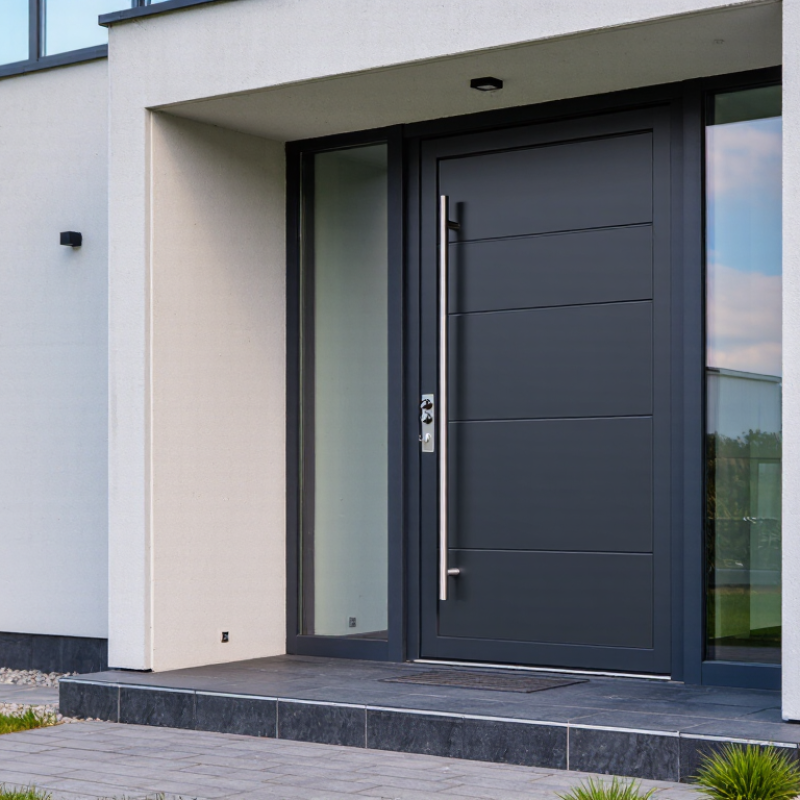
How to Choose the Right Aluminum Entry Door?

Understanding Aluminum Entry Doors and Their Key Advantages

How to Choose the Right Aluminum Entry Door?

Aluminum entry doors combine a clean appearance with practical, long-term performance. Their frames resist rust, moisture, and insect damage better than many traditional materials. This matters in coastal homes, where salt air can quickly expose weak finishes. A properly coated aluminum frame usually needs only mild soap and water. That is convenient, but not maintenance-free.

Thermal performance deserves closer attention. Choose doors with insulated panels, thermal breaks, and weather seals. The National Fenestration Rating Council evaluates products through U-factor and solar heat gain ratings. Lower U-factor values generally indicate better insulation. According to the International Aluminium Institute, recycled aluminum requires about 5% of the energy used for primary aluminum production. This supports a more resource-conscious material cycle. Still, recycled content varies. Ask for verified documentation.

Tips: Check the door’s U-factor, air leakage rating, and finish warranty. Stand near the frame on a cold day; noticeable drafts reveal installation problems. Review the threshold height, hinge strength, and lock alignment before ordering. A beautiful door can perform poorly if the wall opening is uneven. That detail is easy to overlook.

How to Choose the Right Aluminum Entry Door?

Typical material density comparison: lower density generally means a lighter door frame and easier handling.

Aluminum has a typical density of about 2.70 g/cm³, making it substantially lighter than steel while providing good rigidity and corrosion resistance. When selecting an aluminum entry door, also check for a thermal break, weather seals, glazing performance, hardware quality, and the door’s tested air, water, and wind resistance. The values shown are representative bulk-material figures; the final performance depends on the complete door system and its construction.

Assessing Your Entryway, Climate, and Household Requirements

Choosing an aluminum entry door starts with the entryway itself. Measure the opening at the top, middle, and bottom. Older masonry often shifts slightly. Do not trust one measurement. Check the wall depth, threshold height, swing direction, and nearby steps. A narrow hall may need an outward swing, while a busy porch may require more clearance. Watch the afternoon sun, too. Direct heat can affect finishes and make the handle uncomfortable.

Climate changes the specification. In cold regions, choose a door with a thermal break and a well-insulated core. These features reduce heat transfer and help limit interior condensation. In hot, sunny areas, look for a durable finish and effective weather seals.

Coastal homes need corrosion-resistant hardware and careful drainage around the frame. Windy or rainy locations benefit from reinforced hinges, compression seals, and a properly sloped sill. Local building professionals can verify wind, insulation, and water-management requirements. Small installation errors matter.

Household routines deserve equal attention. Families with young children may prefer laminated glass and a smooth, low-maintenance threshold. Pet owners should inspect the lower panel for scratches and moisture exposure. If anyone uses a walker, measure the clear opening and avoid an unnecessarily raised threshold. Security depends on more than a heavy door. Use a strong frame, protected hinges, reliable locks, and correct anchoring. I have seen attractive doors perform poorly because the frame was not plumb. Appearance can distract from practical details. Recheck every assumption before ordering.

Comparing Door Construction, Styles, Glass, and Hardware

Choosing the right aluminum entry door starts with construction, not decoration. A thermally broken frame can reduce heat transfer and improve indoor comfort. Check the corner joints, drainage paths, and weather seals carefully. These details often reveal build quality.

I once focused too much on the finish. The door looked attractive, but the threshold needed better protection from rain. A small regret.

Style should support the building’s architecture and your daily routine. Slim sightlines create a clean, modern appearance and admit more daylight. Raised panels or divided glass can suit traditional homes. Measure the opening and swing clearance before choosing a design. A beautiful door becomes frustrating when it strikes nearby furniture.

Glass deserves practical attention. Clear glass brings daylight, while frosted or textured glass improves privacy. Laminated glass can offer better impact resistance. Low-E glass may reduce solar heat, but performance varies by climate and orientation. Request documented specifications instead of relying on vague claims.

Hardware affects the door’s daily feel and long-term reliability. Choose corrosion-resistant handles, hinges, and locks, especially near humid or coastal areas. A multi-point locking system can distribute pressure more evenly around the frame. Hinges must support the door’s weight without sagging.

I used to assume heavier hardware was always better. That is not quite right.

Poor alignment can make premium hardware feel stiff. Test the handle, inspect the seals, and bring a tape measure before ordering.

Evaluating Energy Efficiency, Security, Durability, and Maintenance

How to Choose the Right Aluminum Entry Door?

Energy Efficiency

Energy efficiency begins with the complete door system, not aluminum alone. Check the NFRC label for U-factor and solar heat gain coefficient. A lower U-factor generally means better insulation. The U.S. Department of Energy notes that weatherstripping and proper installation strongly affect heating and cooling performance. Small gaps matter. Look for thermally broken frames, insulated cores, and continuous seals around the threshold. However, published ratings may not reflect poor installation. I learned this after seeing condensation around an otherwise well-rated frame.

Security

Security requires more than a heavy-looking slab. Examine the lock, hinges, strike plate, glass, and frame together. The Federal Bureau of Investigation’s burglary data shows that residential security risks remain significant, although entry methods vary widely. A multi-point locking system can improve resistance, but only when anchored into a solid structure. Ask whether the assembly has been tested under recognized door and hardware standards. A shiny handle proves little.

Durability

Durability depends on coastal exposure, drainage, coating quality, and daily use. AAMA 2605, referenced by FGIA, defines demanding performance requirements for high-quality organic coatings, including weathering and adhesion tests. Aluminum resists rot, yet it can corrode near saltwater when finishes or drainage fail. Inspect corners, sill channels, and moving hardware annually. Maintenance is usually modest, not nonexistent. That distinction is easy to miss. Choose measurable performance over appearance, and request test reports that identify the complete door assembly.

Choosing the Correct Size, Finish, Features, and Installation Method

How to Choose the Right Aluminum Entry Door?

Choosing the correct size begins with accurate measurements, not guesswork. Measure the rough opening at the top, middle, and bottom. Record width, height, wall depth, and sill condition. A few millimeters can affect shimming, sealing, and lock alignment. The U.S. Department of Energy reports that windows can represent 25–30% of residential heating and cooling energy use, so thermal performance deserves attention. Choose an insulated aluminum core, a tested U-factor, and low air leakage. Check the NFRC label where available. It provides comparable performance data.

Finish matters more than showroom lighting suggests. Dark coatings can become hot under direct sun, while textured finishes may hide small scratches. Ask for an exterior-grade powder coating and confirm its maintenance requirements. Features should match daily use. Consider multipoint locking, adjustable hinges, laminated glass, a thermal break, and a properly designed threshold. More features are not automatically better. They can complicate repairs.

Installation method changes the result. A replacement installation may preserve interior trim, but it must fit the existing frame precisely. New-construction installation allows better integration of flashing, insulation, and drainage. FGIA installation guidance emphasizes a level sill, plumb jambs, compatible sealants, and continuous water management. Experienced installers should photograph hidden flashing before closing the opening. That small record helps later. I would not trust a beautiful door installed over a damaged sill. Recheck the measurements. Mistakes happen.

FAQS

Why is aluminum suitable for an entry door?

Aluminum resists rust, moisture, and insect damage. It suits damp or coastal homes. Still, the finish needs care.

How should I measure the doorway?

Measure width and height at the top, middle, and bottom. Record wall depth, threshold height, and sill condition. One measurement is risky.

What thermal features should an aluminum door have?

Look for an insulated core, thermal breaks, and complete weather seals. A lower U-factor usually means better insulation. Check air leakage data, too.

Which aluminum door features help in cold climates?

Choose strong insulation and a thermal break. These reduce heat transfer and indoor condensation. Check for drafts near the frame on cold days.

What should coastal homeowners consider?

Choose corrosion-resistant hardware and careful drainage. Salt air can weaken poor finishes. Mild soap and water usually handle routine cleaning.

How do household needs affect door selection?

Families may prefer laminated glass and a smooth threshold. Pet owners should inspect the lower panel for scratches. Walker users need enough clear opening.

Does a darker finish create problems?

Dark coatings can become hot in direct sunlight. A textured finish may hide small scratches. Ask about exterior durability and cleaning needs.

Which installation details matter most?

The sill must be level, and the jambs must be plumb. Flashing, insulation, sealants, and drainage need continuous protection. A beautiful door can still fail.

Is a replacement installation always the best choice?

Not always. Replacement work may preserve interior trim, but the existing frame must fit precisely. New construction can improve flashing and water management.

How important are hinges, locks, and anchoring?

They matter as much as door weight. Use strong hinges, reliable locks, and correct anchoring. I would not trust appearance alone. Recheck everything.

Conclusion

Choosing the right Aluminum Entry Door begins with understanding how aluminum combines strength, light weight, design flexibility, and resistance to moisture and corrosion. Start by evaluating your entryway’s dimensions, surrounding architecture, local climate, and household needs. Consider whether you need improved insulation, increased privacy, enhanced security, or easier access for family members and visitors. These factors will help determine the most suitable door configuration and features.

Next, compare construction quality, opening style, panel design, glass options, and hardware. Look for dependable locking systems, durable finishes, weather-resistant seals, and energy-efficient glazing that can improve indoor comfort. The door should also be sized accurately and professionally installed to prevent drafts, water penetration, or operating problems. Select a finish and maintenance level that suit your lifestyle, while confirming that the frame, hinges, handles, and accessories are compatible. A thoughtful balance of appearance, performance, durability, and installation quality will help ensure your Aluminum Entry Door remains attractive, secure, and functional for many years.

Clara

Clara

Clara is a dedicated marketing professional and a trusted voice behind the company’s growing library of expert blog content. With a strong understanding of the company’s products, services, and customers, she transforms complex information into practical, engaging, and easy-to-understand insights.......