A front door does more than mark the entrance. It faces rain, sun, and daily use while shaping a home’s first impression. The right Entry Door should suit the climate, the house, and the people using it—not just the paint color. Material, insulation, security hardware, glass, and installation all matter. Small details count: a warped frame can leave a visible gap, while poorly fitted weatherstripping may let in drafts. This is practical, not glamorous.
There is useful market context. Zonda’s 2024 Cost vs. Value report estimated a 188.1% cost recoup for a U.S. steel entry door replacement project. That is a modeled national average, not a promise of resale profit. Local labor costs, door specifications, and buyer preferences can change the result. Still, averages can mislead.
A good comparison starts with the home’s exposure and existing frame. Steel is often chosen for durability and value; fiberglass can offer a wood-like appearance with less routine upkeep. Wood brings natural character, but usually needs more protection from moisture and sun. Check the manufacturer’s performance information, warranty, and applicable energy ratings. Look closely at the threshold, seals, hinges, and lock alignment—not only the slab. Ask installers how they handle flashing and water management. A beautiful door can still disappoint if installation is careless. There is no perfect choice; the useful choice balances comfort, appearance, maintenance, and budget.
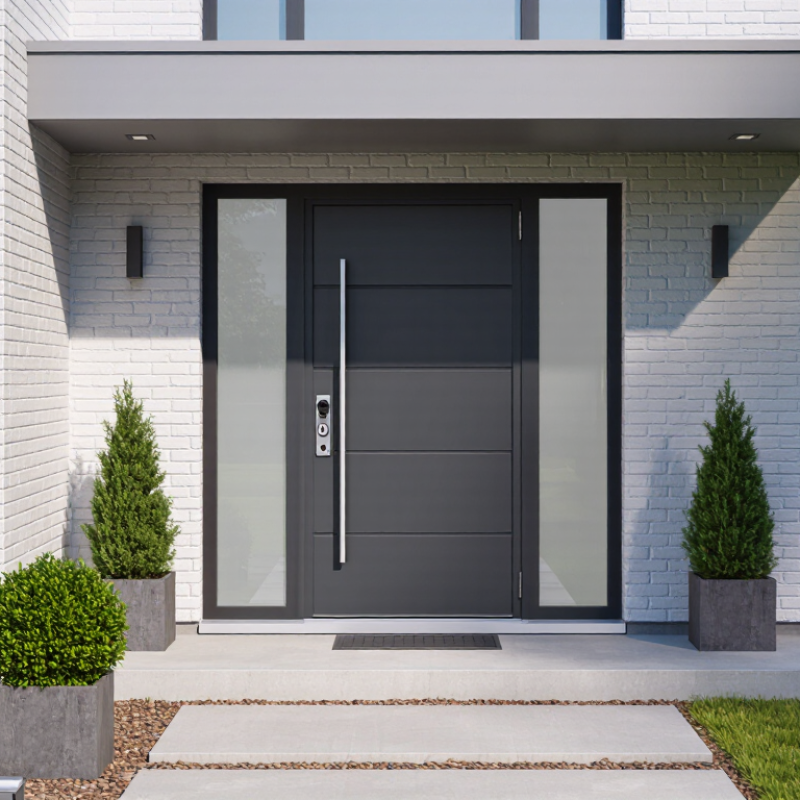
Start by noticing how your entry works on an ordinary day. Do groceries often pass through it? Does a stroller, muddy boots, or a narrow hallway shape your choice? Measure the opening, frame depth, and threshold before comparing materials. A sturdy door can feel reassuring, but fit and installation matter just as much. Decide whether you want glass for daylight, privacy, or both. Small details count. Check the hinges, lock, weatherstripping, and how smoothly the door closes when your hands are full. It is easy to focus on appearance and overlook these daily annoyances.
Then consider your local climate. In cold, windy areas, look for a well-insulated door and a tight, even seal around its edges. Ask how the frame and threshold handle drafts and driving rain. In humid regions, moisture resistance and proper finishing can help limit swelling or peeling. Near the coast, salt air may affect exposed hardware, so ask about corrosion-resistant options. Strong sun can fade finishes and heat a glass panel; a shaded entry or suitable glazing may help. Local weather varies, even within one town. Compare product performance details, and ask a qualified installer how the door will be sealed in your home. A small gap can undo a good choice.
An entry door faces rain, sunlight, grit, and daily impact, so material matters as much as appearance. Fiberglass resists moisture and often needs only washing and occasional finish checks. Steel provides a firm, sturdy surface, but a deep dent is hard to disguise. If its protective coating gets scratched, exposed metal can rust. Wood has natural warmth and can be repaired, yet it may swell, crack, or peel when exposed to changing weather. Beautiful, but demanding.
Climate changes the maintenance equation. In a damp, shaded doorway, check wood edges and the bottom rail for soft spots or peeling paint. In strong sun, inspect finishes for fading and cracking. Fiberglass is not maintenance-free; damaged paint or seals still need attention. A door that looks durable may perform poorly if it is poorly fitted. That part is easy to overlook.
Check the weatherstripping for gaps, especially near the latch and threshold. A thin strip of daylight can signal a draft or water entry. Clean hinges and tighten loose screws before they strain the frame. I would not choose by material alone: a heavy door can still stick if the frame shifts, and a low-maintenance finish cannot fix a poor seal. Consider the exposure at your entrance and how often you can realistically inspect it.
Compare typical routine maintenance needs by door material.
Ratings are comparative estimates on a 1–5 scale, where 1 means lower routine maintenance and 5 means higher. Wood doors often need more frequent refinishing; steel, fiberglass, and aluminum doors generally need less routine upkeep. Actual needs vary with the door’s finish, exposure, and installation.
A good entry door should slow heat loss, resist forced entry, and keep rain from reaching the sill. The U.S. Department of Energy estimates that air leaks can account for 25–40% of heating and cooling energy use in a typical home. Check the National Fenestration Rating Council label for a door’s U-factor; a lower number indicates less heat transfer. Small gaps matter. A tight weatherstrip and adjustable threshold can help, but only if the frame is installed squarely.
Security depends on the whole assembly, not just the door slab. The FBI recorded 847,522 burglaries in the United States in 2023. That figure does not mean a particular door will prevent a break-in, but it supports checking the lock, frame, and strike plate together. Choose a solid, well-fitted door and use long strike-plate screws anchored into the framing. Feel the difference. A loose latch or frame that flexes under hand pressure deserves attention.
Weather resistance is easy to overlook until wind-driven rain finds a path indoors. Look for a continuous compression seal, a snug sweep, and a sill that directs water outward. Ask how the unit is rated for your climate and exposure; coastal wind and freeze-thaw conditions create different demands. Keep flashing and drainage details in the installation plan, not as an afterthought. No door is perfect. Even a high-performing unit can leak if the opening is poorly sealed or the threshold is uneven.
| Door Type | Energy Efficiency | Security Considerations | Weather Resistance | Maintenance | A Good Choice When… |
|---|---|---|---|---|---|
| Insulated fiberglass | Typically performs well when the door has an insulated core, effective perimeter seals, and a well-fitted frame. Compare the complete door’s U-factor; a lower value means less heat transfer. | The door skin alone does not determine security. A reinforced frame, quality lock, secure hinges, and properly installed strike plate are important. | Generally resists moisture-related swelling and corrosion. Check the finish and seals periodically, especially in areas with strong sun or heavy rain. | Usually low; clean as directed and inspect weatherstripping and finish for wear. | You want a balance of insulation, weather resistance, and relatively low upkeep. |
| Insulated steel | An insulated core can provide good thermal performance. Check the door’s U-factor and whether any glass panels affect the overall rating. | A strong option when paired with a sturdy frame and correctly installed deadbolt. Security depends on the full door-and-hardware assembly, not the steel skin alone. | Can be durable, but scratches or damaged coatings may expose steel to rust. Keep the finish intact and maintain seals. | Low to moderate; inspect for dents, scratches, rust, and worn weatherstripping. | You prefer a practical, often cost-conscious door and can protect its finish from damage. |
| Solid wood | Performance varies with wood species, thickness, construction, and glazing. Check the tested whole-door rating rather than assuming that solid wood is highly insulating. | Can provide a substantial door leaf, but the frame, hinges, lock, and installation still determine how secure the entry is. | More sensitive to moisture and temperature changes than many other options; a suitable finish and well-maintained seals help reduce problems. | Moderate to high; inspect the finish and recoat or repair it as needed. | You value a natural appearance and are prepared to maintain the finish. |
| Thermally broken aluminum | A thermal break separates the interior and exterior metal surfaces to reduce heat transfer. Compare the whole-door U-factor, since frame design and glazing matter. | Security depends on frame strength, glazing type, locks, hinges, and installation. Consider secure glazing if the door includes large glass areas. | Aluminum generally resists rust, but finishes, seals, and hardware still need inspection. Performance depends on the quality of the thermal break and weather seals. | Generally low; clean the frame and check seals and moving hardware. | You want a modern appearance or a slim frame and have selected a model designed for your climate. |
| Entry door with extensive glazing | Glazing can change the door’s overall energy performance. Look for a whole-unit rating and, where relevant, energy-efficient glazing suited to your climate. | Use glazing designed for doors and consider its location, size, and resistance to forced entry. Secure locks and a reinforced frame remain essential. | Weather resistance depends on glazing seals, frame construction, threshold, and installation. Inspect caulking and seals for gaps or deterioration. | Clean glass and regularly check glazing seals, weatherstripping, and hardware. | You want more daylight or visibility and are willing to assess glazing performance and privacy needs. |
Selection tip: Compare the U-factor on the label for the complete door assembly; lower U-factors indicate better resistance to heat flow. Actual performance also depends on glazing, frame, threshold, weatherstripping, and installation. For security, assess the door, frame, locks, hinges, and strike plate as one system.
A front door should feel connected to the house, not pasted onto it. Match its shape to nearby lines: a simple slab suits clean architecture, while divided glass can soften a traditional façade. Check the finish outdoors, where morning shade and afternoon sun can change its appearance. A glossy color may look striking in a showroom and feel too bright at home. It happens.
Hardware deserves the same care. Choose a handle that feels comfortable in your hand, and a finish that works with porch lights, house numbers, and existing metalwork. In Remodeling magazine’s 2024 Cost vs. Value report, a steel entry-door replacement had an estimated 188.1% cost recoup nationally. That figure is a resale estimate, not a promise; it does suggest that a visible, well-chosen upgrade can matter. Style alone is not enough. Confirm that the door’s size, operation, and weather seals suit the opening and local climate.
Tips: Bring home finish samples and view them at different times of day. Try the handle before ordering. Small details matter. If the trim is already busy, keep the door design quieter; I would reconsider an elaborate glass pattern beside patterned brick. A little restraint can make the entry feel more intentional.
Before comparing door styles, measure the existing opening, not just the door slab. Record width at the top, middle, and bottom, then check height on both sides. Note jamb depth, sill condition, hinge side, and swing direction. Uneven floors matter; a door that clears bare concrete may scrape new tile.
I still recheck the hinge side. It is easy to miss.
Allow for more than the door itself. Include hardware, trim, disposal, delivery, and labor in your budget.
Zonda’s 2024 Cost vs. Value report estimated a U.S. steel entry-door replacement at $2,355, with an estimated resale value of $4,430.
These are national project estimates, not a guaranteed quote or return; local labor and opening repairs can change the cost sharply. Ask an installer to inspect for rot, out-of-square framing, and water damage before ordering. Confirm whether the quoted work includes removing the old frame, sealing gaps, and adjusting the threshold.
A tight fit matters.
Check the manufacturer’s rough-opening and wall-depth requirements against your measurements, and get the installation scope in writing.
Measure the opening, frame depth, and threshold. Also check how much room the door needs to swing.
Cold, windy areas need good insulation and an even seal. Humid conditions can call for moisture-resistant materials and careful finishing.
Ask how the frame and threshold manage water and drafts. A small gap can undo a good choice.
Consider how much daylight you want and how much privacy the entry needs. Strong sun can heat glass, so suitable glazing or shade may help.
View samples outside in morning shade and afternoon sun. A color that looks calm indoors may feel surprisingly bright outside.
Try the handle in your hand and compare its finish with porch lights and nearby metalwork. Small details matter.
Not exactly, but it should feel connected to the house. Busy trim or patterned brick may look better with a quieter door.
The door’s size, operation, and weather seals must suit the opening. Ask a qualified installer how it will be sealed. I might still overlook a small gap.
Choosing the right Entry Door starts with understanding your household’s needs and the local climate. Consider how much traffic the entrance receives, the exposure to sun, rain, wind, or temperature changes, and the level of privacy and security you want. Compare materials such as wood, fiberglass, and steel by weighing their durability, appearance, insulation, and maintenance requirements. A door that suits your conditions can help withstand everyday wear while remaining practical to care for.
Next, assess energy efficiency, security features, and resistance to drafts and moisture. Choose a style, finish, and hardware that complement your home and are comfortable to use. Before making a decision, measure the opening carefully, check the frame and surrounding area, and set a realistic budget that includes both the door and installation. Confirming these details in advance helps ensure the door fits properly, performs well, and suits your home over time.