0%

A Modern Aluminum Entry Door combines clean design, structural strength, and practical weather protection. It usually features an aluminum frame, insulated panels, durable hardware, and carefully fitted seals. Slim sightlines can bring more daylight into a hallway without making the entrance feel exposed. The surface may use powder coating, anodizing, or a wood-look finish. Each option affects texture, color stability, and maintenance needs.

Look closely at the details. A thermal break can reduce heat transfer through the frame. Multi-point locks may improve closing pressure and security when installed correctly. Adjustable hinges help keep the door aligned after seasonal movement or heavy daily use. A qualified installer should check the opening, threshold height, drainage, and local weather conditions before fitting the unit. Small gaps around the seal can create noticeable drafts during a cold evening.

Performance depends on more than appearance.

In my experience, homeowners often focus on the finish first. That choice can overlook insulation ratings, glass specifications, and replacement-part availability. A reliable manufacturer should provide clear product data, warranty terms, and installation guidance. Independent testing can also support claims about air leakage, water resistance, and thermal performance. Still, no entry door solves every problem. Dark finishes may absorb more heat, while large glass panels can reduce privacy or increase interior temperatures. Careful planning matters. This guide explains how a Modern Aluminum Entry Door is built, how it performs, and which details deserve closer attention before purchase.
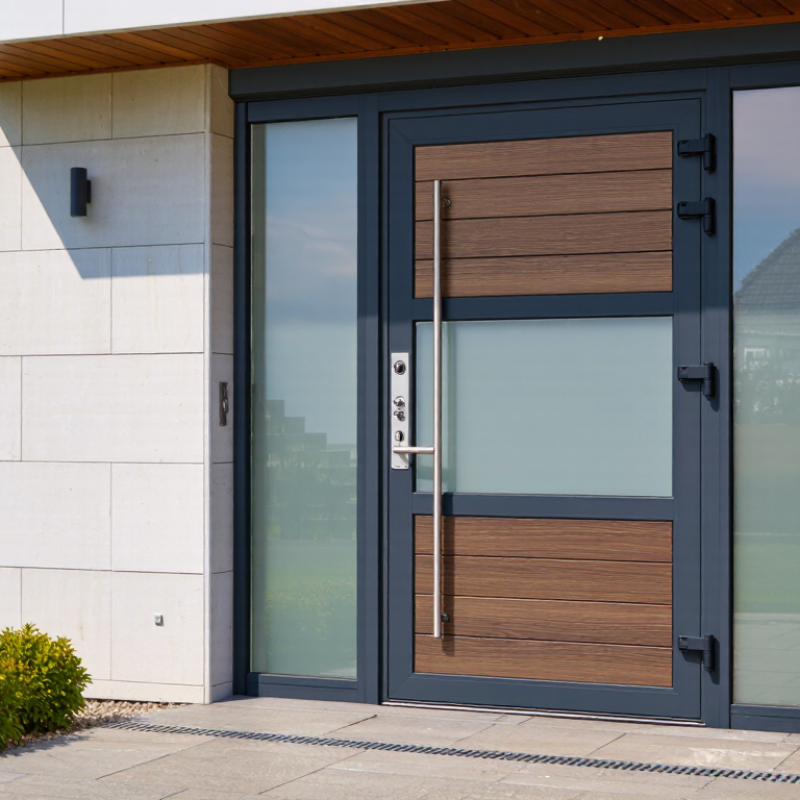
What Is a Modern Aluminum Entry Door?

Definition and Core Features of a Modern Aluminum Entry Door

A modern aluminum entry door is an exterior door designed with clean lines, durable aluminum framing, and practical performance. Its identity comes from more than appearance. It combines a slim profile with strength, weather resistance, and controlled indoor comfort. Many models use thermal breaks to reduce heat transfer through the frame. High-quality weather seals help limit drafts, rain, and outdoor noise.

Core features often include insulated panels, low-emissivity glass, adjustable hinges, and a multi-point locking system. A powder-coated finish can resist peeling and support easier cleaning.

Drainage channels are also important, especially in areas with heavy rainfall. In real installation work, small gaps around the frame can weaken an otherwise excellent door. Measurements must be accurate. No door is perfect. A dark finish may also become noticeably warm under strong sunlight, so the site’s exposure deserves careful thought.

Tips: Check the frame depth, threshold height, and swing direction before ordering. Ask how the thermal break is constructed, not only whether one exists. Test the weather seal by closing the door gently; it should feel firm without excessive force. Inspect the glass specification, hardware adjustment range, and drainage design. A qualified installer should verify the opening, maintain level alignment, and explain future maintenance. Even a premium-looking door can perform poorly when installation is rushed.

Materials, Construction, and Thermal Performance

A modern aluminum entry door begins with its material, but the frame design matters just as much. Aluminum is strong, stable, and resistant to warping in changing weather. However, solid metal conducts heat quickly. That is why quality doors use a thermal break, usually made from an insulating polyamide section between the inner and outer aluminum profiles. This separation reduces heat transfer through the frame.

Construction details influence daily comfort. Multi-chamber profiles can improve insulation, while compression seals limit drafts around the door leaf. Low-emissivity glazing may reduce heat loss when the door includes glass. Look for published U-factor values rather than vague claims such as “energy efficient.” Lower values generally indicate better insulation, but local climate and installation quality also affect performance. Details decide comfort.

Thermal performance can fail at the threshold. A poorly adjusted sill may allow cold air, rain, or dust to enter, even when the panel is well engineered. Careful installation requires a level opening, continuous sealing, and correct drainage paths. Air leakage testing is useful, especially for large or frequently used entrances. No door performs perfectly. A realistic assessment should consider orientation, glass area, surrounding walls, and indoor humidity. In practice, the best result comes from matching the aluminum system, glazing, hardware, and installation method to the building’s actual conditions.

Design Styles, Finishes, and Customization Options

What Is a Modern Aluminum Entry Door?

Design Styles, Finishes, and Customization Options

A modern aluminum entry door combines slim sightlines with a strong, weather-resistant frame. Its appearance depends less on ornament and more on proportion, surface texture, and controlled light. Flush panels create a calm façade. Narrow glass strips add privacy while brightening a dark hallway. Full-height glazing feels more open, but it demands careful consideration of privacy and heat.

Finishes change the door’s character. Powder-coated black gives a crisp architectural effect, while warm gray feels quieter and softer. Wood-look finishes can add warmth without the maintenance of natural timber. Textured coatings are useful near busy entrances because they can disguise small marks. Still, no finish stays perfect. Coastal air, gritty dust, and frequent contact may affect its appearance over time. Check the coating specification and cleaning guidance before choosing a color.

Customization should solve real daily needs. Choose insulated glass for comfort, laminated glass for added security, and a low threshold for easier access. A concealed closer keeps the design clean, although adjustment can be less convenient. Hardware may be recessed, slim, or deliberately contrasting. I prefer testing sample finishes outdoors, not under showroom lights. Colors often look different beside stone, brick, or evening shadows. Door swing, handle height, drainage, and installation tolerances also deserve attention. Small errors become obvious at the entrance.

Security, Durability, and Maintenance Requirements

A modern aluminum entry door is a security assembly, not just a metal panel. Its strength depends on the frame, hinges, lock cylinder, strike plate, and glass working together. Multi-point locking can distribute pressure along the door edge. Laminated glass also helps resist impact because its inner layer can hold broken pieces in place. However, no door is completely intrusion-proof. Installation gaps can defeat expensive hardware. A qualified installer should anchor the frame into structural material, not only the wall finish.

Durability also depends on exposure. Aluminum resists rot and insects, but salt air, trapped moisture, and damaged coatings can cause corrosion. The Aluminum Association reports that nearly 75% of all aluminum ever produced remains in use, showing its long service potential. That figure is encouraging, but it does not remove maintenance needs. Wash exterior surfaces with mild soap and clean water several times yearly. Check seals, drainage paths, hinges, and lock operation annually. Coastal homes may require more frequent inspection.

Energy performance is easy to overlook. The U.S. Department of Energy estimates that air leakage may represent 25% to 40% of a home’s heating and cooling energy use. Proper weatherstripping and a precise threshold can reduce drafts around the entry. Small details matter. I have seen beautiful doors perform poorly because the threshold was uneven. NFRC ratings can help compare U-factor and solar heat gain, although ratings may not reflect every installation condition. The maintenance plan should include repainting or coating repairs after scratches appear. No door stays perfect forever.

Key Factors for Choosing and Installing One

What Is a Modern Aluminum Entry Door?

A modern aluminum entry door combines a slim frame with improved thermal performance. Its value depends on more than appearance. The U.S. Energy Information Administration’s 2020 Residential Energy Consumption Survey reports that space heating used 42% of household energy. Therefore, a poorly sealed entrance can increase indoor discomfort and operating costs.

Key Factors for Choosing and Installing One

Look for thermally broken aluminum frames, low-emissivity glazing, adjustable hinges, and continuous weatherstripping. A thermally broken frame separates interior and exterior metal with an insulating barrier. This reduces heat transfer. Check the National Fenestration Rating Council label for U-factor and air-leakage information. Lower U-factor values generally indicate better insulation. However, ratings should match the local climate, wall design, and glass area.

Installation quality matters just as much. The opening must be square, level, and properly supported. Installers should use compatible flashing, sealants, and sill drainage. The door should close without force, while the gasket should compress evenly around the frame. Small gaps near the threshold can cause drafts and water entry. The Fenestration and Glazing Industry Alliance emphasizes following tested installation procedures, not improvising on site.

Details matter.

A heavy door may feel durable, yet excessive weight can strain hinges and the surrounding structure. A wide glass panel may bring daylight, but it can also raise solar heat gain. I would not choose a door from photographs alone. Real performance depends on measurement, orientation, maintenance, and careful adjustment after installation. Some projects still fail because these ordinary details receive too little attention.

FAQS

What is a modern aluminum entry door?

It is an exterior door with clean lines, slim framing, and weather-resistant construction. It balances strength, daylight, security, and indoor comfort. No door is perfect.

Why is a thermal break important?

A thermal break separates inner and outer aluminum profiles with an insulating section. This reduces heat transfer through the frame. Ask about its construction, not just its presence.

How can I judge thermal performance?

Check published U-factor values instead of relying on vague efficiency claims. Lower values generally indicate better insulation. Glazing, climate, orientation, and installation also affect comfort.

What glass options are useful?

Low-emissivity glass can reduce heat loss through glazed areas. Laminated glass may provide added security and reduced injury risk after breakage. Large glass areas need careful privacy and heat planning.

Which design choices affect daily use?

Flush panels create a calm, simple façade. Narrow glass strips bring light while protecting privacy. Full-height glazing feels open, but it may increase heat and visibility.

Which finish works best outdoors?

Powder-coated surfaces are easier to clean and can resist peeling. Textured finishes may hide small marks near busy entrances. Dark colors can become hot under strong sunlight.

What should be checked before ordering?

Confirm frame depth, threshold height, opening size, and swing direction. Check handle height, drainage paths, glass details, and hardware adjustment range. Small mistakes become obvious.

Why does installation quality matter so much?

An excellent door can perform poorly when the frame is rushed or misaligned. The opening should remain level, with continuous sealing and clear drainage. A gentle closing test should feel firm, not forced.

How should the door be maintained?

Follow the coating and hardware cleaning guidance. Inspect seals, hinges, drainage channels, and threshold areas periodically. Coastal air, dust, and frequent contact can change the finish. Maintenance is not glamorous.

Conclusion

A Modern Aluminum Entry Door combines clean architectural styling with strength, energy efficiency, and long-term practicality. Built from lightweight yet durable aluminum, it typically features insulated cores, thermal breaks, weather-resistant seals, and quality glazing to help reduce heat transfer and improve indoor comfort. Its slim sightlines and precise construction allow for broad glass panels, balanced proportions, and a contemporary appearance without sacrificing stability.

Homeowners can customize a Modern Aluminum Entry Door through different colors, powder-coated finishes, textures, glass types, hardware, and panel configurations. Its corrosion resistance and low-maintenance surface make it suitable for varied climates, while reinforced frames, secure locking systems, and impact-resistant components can enhance safety and durability. When choosing and installing one, consider the local climate, opening dimensions, energy performance, drainage, door swing, threshold design, security needs, and professional installation quality.

Evelyn

Evelyn

Evelyn is a professional marketing specialist with in-depth knowledge of the company’s products and a strong commitment to clear, useful communication. She regularly contributes expert blog articles to the company website, helping readers understand product features, practical applications, and......