0%

Choosing an Aluminium Entry Door is a practical decision involving security, weather resistance, design, and long-term value. China has become an important sourcing destination for these products, with manufacturers and suppliers serving residential, commercial, and hospitality projects worldwide. Yet product quality can vary significantly between factories.

This guide examines China’s leading Aluminium Entry Door manufacturers and suppliers from a buyer’s perspective. It considers aluminium alloy grades, thermal breaks, powder coating, glass options, hardware, customization, and production control. Experienced suppliers should explain profile thickness, corner-joint methods, drainage design, and expected service conditions clearly. Factory visits, sample inspections, and production photographs can reveal more than attractive catalogs. Small details matter. Check the hinges.

Reliable companies normally provide technical drawings, installation guidance, test documentation, and consistent communication. Their experience should be visible in completed projects, not only in marketing statements. Buyers should also compare packaging quality, lead times, replacement-part support, and responses to defects. A low quotation may conceal thinner profiles, weaker hardware, or limited after-sales service. That risk deserves attention.

No supplier is perfect. Even a capable factory may misunderstand dimensions or finish requirements without detailed specifications. Buyers should confirm opening sizes, color references, glass performance, delivery terms, and inspection procedures in writing. This overview does not treat every listed company as equally suitable. Instead, it offers a careful starting point for comparing expertise, reliability, and value when sourcing an Aluminium Entry Door from China.
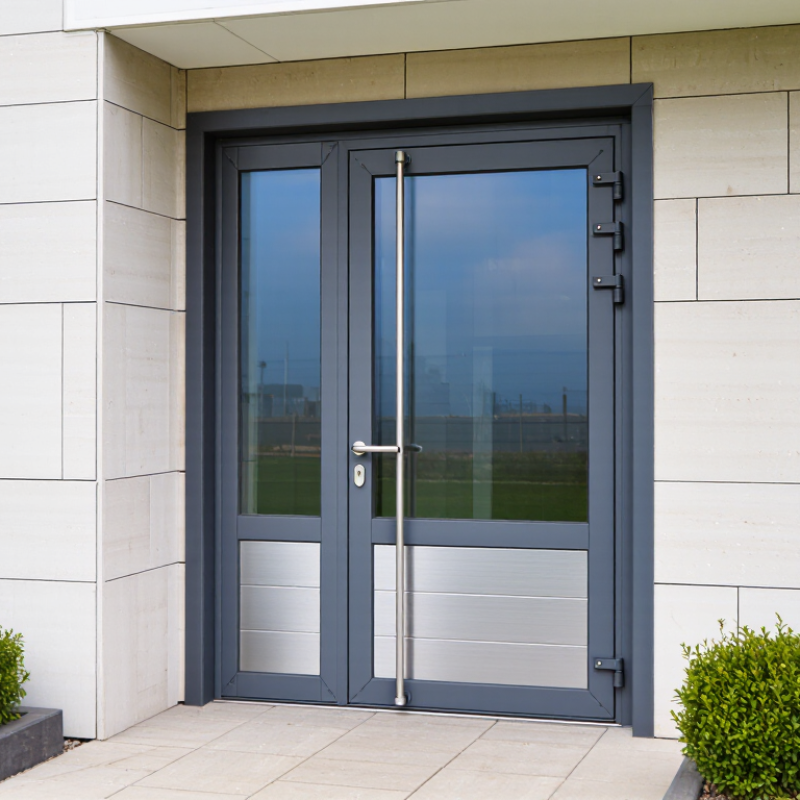
China Top Aluminium Entry Door Manufacturers and Suppliers

Aluminium Entry Doors: Types, Features, and Common Uses

Aluminium entry doors combine a clean appearance with practical strength. Common types include single doors, double doors, pivot doors, and sliding entry systems. Single doors suit compact homes, while double doors create a wider, more welcoming entrance. Pivot doors offer a dramatic look, but they need careful structural planning. Sliding systems save space and work well in modern apartments or commercial lobbies.

A quality door usually includes a thermally broken aluminium frame, insulated glass, weather seals, and adjustable hinges. Powder-coated finishes resist fading and simplify maintenance. Glass panels can improve daylight, although frosted or laminated glass provides greater privacy and impact resistance.

Multi-point locks add security, but installation quality matters just as much. Even a strong frame may perform poorly when the threshold is uneven.

These doors are common in houses, villas, offices, hotels, and apartment buildings. Coastal projects need suitable coatings and stainless hardware because salt air can accelerate corrosion. In colder regions, frame insulation deserves close attention. I once underestimated how much a dark finish could emphasize dust and scratches. That choice looked attractive in a showroom, but it demanded more cleaning. Chinese manufacturers and suppliers can offer varied profiles, finishes, and custom sizes, yet buyers should verify drawings, test reports, drainage details, and after-sales support before ordering. Details matter.

China’s Aluminium Entry Door Industry and Manufacturing Process

China’s aluminium entry door industry combines large-scale extrusion capacity with flexible custom manufacturing. Factories commonly use 6063 aluminium profiles for their balance of strength, finish quality, and machinability. Some projects require thicker sections for coastal areas or high-traffic buildings. Local suppliers usually source glass, seals, hardware, and thermal-break components through established regional networks. Material certificates and incoming inspections help verify alloy grade, coating thickness, and dimensional accuracy.

The manufacturing process starts with profile cutting and CNC machining. Technicians create drainage paths, lock openings, hinge recesses, and connection points. Thermal-break strips can reduce heat transfer through the frame. Assembly teams then fit gaskets, glazing beads, panels, and reinforced corners. Welding may be used for selected structures, although poorly controlled heat can distort thin sections. Careful jigs and measurement tools reduce this risk. Still, small adjustments are sometimes needed by hand.

Surface treatment often includes powder coating or anodising. Before coating, profiles need cleaning, pretreatment, and complete drying. This stage strongly affects adhesion and corrosion resistance. Finished doors undergo checks for frame squareness, opening force, glass seating, seal compression, and surface defects. Practical factories also test sample units for water penetration and air leakage. Results should be recorded, not merely inspected visually. A perfect production line is unlikely. Continuous review remains necessary, especially when designs change or installation conditions differ from factory drawings.

Leading Aluminium Entry Door Manufacturers and Suppliers in China

China’s aluminium entry door manufacturers and suppliers serve projects ranging from compact apartment entrances to wide, weather-exposed commercial openings. The strongest suppliers can explain alloy selection, profile thickness, thermal breaks, glazing options, and hardware compatibility—not just show polished catalogue images. Ask for section drawings and test reports tied to the exact door configuration. Small details matter: a continuous gasket, a well-drained sill, and a lock that still operates after repeated use.

Performance deserves close attention. The UN Environment Programme’s Global Status Report for Buildings and Construction 2024 reports that buildings and construction accounted for 32% of global energy demand and 34% of energy-related CO₂ emissions in 2023. That context makes airtightness and thermal performance practical purchasing criteria, even for an entry door. Request documented air-leakage, water-penetration, and thermal results, and check whether they apply to the selected size and hardware. Not all tests transfer neatly.

A factory audit can reveal more than a brochure. Inspect corner joints, coating consistency, packaging, and how suppliers track batch changes. Ask how they handle replacement parts and installation guidance for overseas projects. One weak point is often overlooked: excellent factory samples do not guarantee careful site installation. Compare several quotations against the same specification, then clarify lead time, tolerances, and after-sales responsibilities in writing. No shortcut here.

How to Assess Manufacturers, Product Quality, and Certifications

When assessing China’s aluminium entry door manufacturers, start with evidence, not polished websites. Ask for the factory address, production photos, and a live video inspection. A credible supplier explains alloy grade, wall thickness, thermal-break design, and hardware sources clearly. Request samples before discussing a large order. Check corner joints, drainage holes, gasket compression, and coating consistency under daylight. Small flaws matter.

Product quality depends on controlled processes. Review aluminium inspection, extrusion tolerances, surface preparation, powder-coating thickness, and final assembly records. Ask how doors are tested for air leakage, water penetration, wind pressure, and repeated opening cycles. Test reports should identify the model, test date, laboratory, and applicable standard. A report for another door proves little. Measure the sample yourself; catalog dimensions can hide practical errors.

Certifications deserve careful verification. Confirm whether ISO 9001 covers the manufacturing site, not only an office. For export markets, match declarations and safety documents to local building requirements. Check certificate numbers through the issuing body when possible. Also assess communication, after-sales procedures, spare hardware, and packaging protection. A strong manufacturer shares corrective-action records without defensiveness. No audit is perfect. I would still inspect hinges after salt-spray exposure and ask difficult questions. Cheap pricing may reflect efficient production, or thinner materials; only documented comparisons reveal which.

Customization, Ordering, and Export Considerations

China Top Aluminium Entry Door Manufacturers and Suppliers: Customization, Ordering, and Export Considerations

Customization begins with the opening, not the catalogue. Share a measured drawing, wall thickness, swing direction, threshold height, and site photographs. Specify the frame depth, thermal break, glazing, hardware, and finish in writing. For coastal projects, ask about corrosion-resistant coatings and suitable fasteners. Confirm sample color under natural light; screen images can mislead. Details matter.

Ordering works better with a signed specification sheet. Record dimensions, tolerances, packing method, lead time, and inspection points. Request a corner sample or full-size mock-up for unusual profiles. Check that the door opens smoothly and seals evenly. The UNEP 2023 Global Status Report for Buildings and Construction attributes 37% of global energy- and process-related CO2 emissions to the sector in 2022. That makes thermal performance worth checking, though the report does not assess individual doors. Ask for documented test results relevant to the intended climate and building design.

For export, agree on shipping terms, port, delivery schedule, and responsibility for freight and insurance before production. Confirm the destination’s required product documents with the importer or local adviser; requirements vary by market. Use moisture-resistant packaging, protected corners, and clear carton labels. Match packing lists and invoices to the final order details. One easy-to-miss issue: confirm whether handles and keys ship installed or separately. A careful review prevents avoidable delays, but specifications still need a final human check.

China Aluminium Entry Door Suppliers: Customization and Export Planning

Illustrative door dimensions for comparing single- and double-leaf configurations. These are example specifications, not universal standards; confirm the finished frame size, rough opening, hardware, and local code requirements with your supplier.

FAQS

What types of aluminium entry doors are commonly available?

Common options include single, double, pivot, and sliding doors. Single doors suit compact homes. Double doors create a wider entrance. Sliding systems save space in apartments and lobbies.

What features should a quality aluminium entry door include?

Look for a thermally broken frame, insulated glass, weather seals, and adjustable hinges. Multi-point locks improve security. However, poor installation can weaken good materials.

How can glass affect an entry door’s performance?

Clear glass increases daylight, while frosted glass improves privacy. Laminated glass offers better impact resistance. Glass seating and gasket pressure should be checked carefully.

Which aluminium finish requires the least maintenance?

Powder-coated surfaces usually resist fading and simplify cleaning. Dark finishes can show dust and scratches clearly. Attractive, but sometimes demanding.

Are aluminium entry doors suitable for coastal buildings?

Yes, with suitable coatings and stainless hardware. Salt air can accelerate corrosion around hinges and fasteners. Inspect drainage paths regularly. Small details matter.

What happens during aluminium entry door manufacturing?

Profiles are cut and machined for locks, hinges, drainage, and connections. Teams install thermal-break strips, gaskets, glass, and reinforced corners. Some hand adjustments remain necessary.

How should buyers assess a door supplier?

Request samples, factory evidence, production photos, and a live inspection. Check corner joints, coating consistency, drainage holes, and gasket compression. Polished websites prove little.

Which tests and documents should buyers request?

Ask for material certificates, coating records, and test reports for air leakage, water penetration, wind pressure, and repeated cycles. Reports should identify the tested model and date. A report for another door proves little.

How important is installation quality?

It is extremely important. An uneven threshold can cause poor sealing and difficult operation. Measure the opening carefully. Even strong frames can perform badly.

What should buyers remember about quality inspections?

Inspect hinges, glass seating, seals, packaging, and corrective-action records. Review sample doors in daylight. No audit catches everything. I might still overlook a small defect.

Conclusion

This guide introduces the main types of Aluminium Entry Door, including options designed for different architectural styles, climates, and security needs. It explains common features such as durable frames, thermal performance, weather resistance, glazing choices, and customizable finishes, along with typical uses in residential and commercial buildings. Readers will also gain an overview of China’s aluminium door industry and the general manufacturing steps, from material selection and profile processing to assembly and quality checks.

The article outlines how to compare manufacturers by reviewing production capabilities, workmanship, product specifications, and relevant quality certifications. It also covers practical considerations when requesting custom designs, confirming dimensions and finishes, placing orders, and preparing for export. By assessing these factors carefully, buyers can communicate requirements clearly, compare quotations more effectively, and select products suited to their project and delivery needs.

Vivienne

Vivienne

Vivienne is a highly experienced marketing professional dedicated to helping businesses understand products, markets, and customer needs. With a strong command of the company’s product portfolio, industry trends, and practical application scenarios, she creates clear, informative, and valuable......