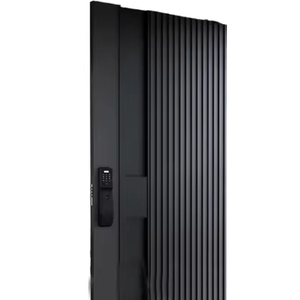
Certified Commercial & Hotel Entry Door Systems
Explore engineering-grade door assemblies tested for high-traffic durability, thermal integrity, wind-load resistance, and European CE compliance.
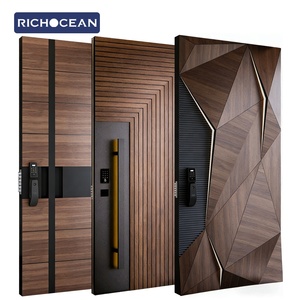
Richocean Luxury Bulletproof Lamborghini Front Entry Door Aluminum Storm Security Voordeur Residential Doors
Inquire Now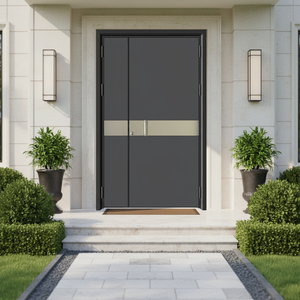
Luxury Cast Aluminum Front Entry Door High Security Anti-Theft Fire Prevention Pivot Design Premium Alloy Frame Modern
Inquire Now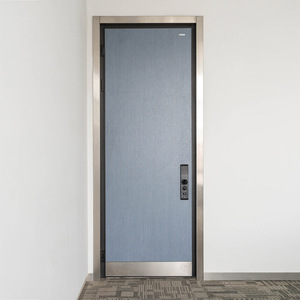
Matte Fabric Texture Steel Interior Door Smart Electronic Lock Wear Resistant Metal Door for Office Hotel Guest Rooms ISO9001
Inquire Now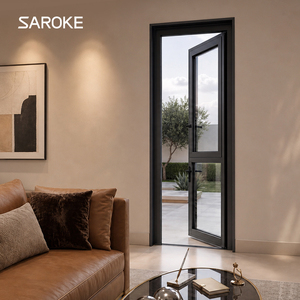
American Standard House Black Metal Patio Exterior Thermal Break Aluminum Doors And Windows
Inquire Now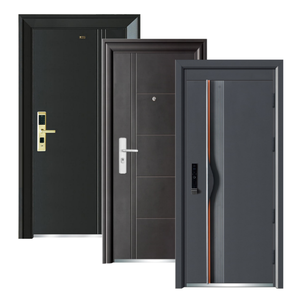
American Modern Style Main Security Door External Black Metal Steel Entry Front Doors Exterior Black Door For House Villa
Inquire Now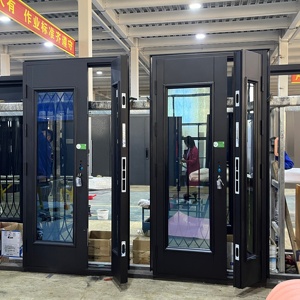
Modern Design Villas Black Profile Aluminum Frame Exterior Front Entry Doors With Customized Color & Size
Inquire Now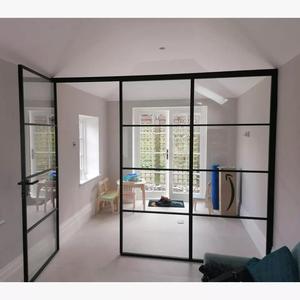
Iron Door Black Steel Internal Glass Doors Exterior Entry Glass Patio French Doors
Inquire Now115,000 m²
Manufacturing Footprint
25+ Years
Engineering & Export Mastery
44 Points
Quality Control Protocol
700+
Skilled Technical Staff
1. Architectural Engineering & Mandatory CE Compliance for Hotel Lobbies
The hotel lobby portal serves as the primary thermal, structural, and acoustic boundary of a hospitality establishment. Specifying commercial entrance doors requires adherence to European CE Marking standard EN 14351-1 for external pedestrian doorsets and EN 16034 for fire-resisting and/or smoke-control characteristics. Unlike standard residential doors, lobby entrance doors endure millions of actuation cycles per year while subjected to stack effect pressures, thermal expansion differential, and heavy physical impacts.
"CE certification for hotel entrance systems demands strict compliance with mechanical durability Class 8 (up to 1,000,000 cycles under EN 12400), structural wind pressure resistance (EN 12210), and verified thermal transmittance (U-values below 1.4 W/m²K)."
Essential Technical Metrics for Commercial Lobby Entrances
Contractors, procurement directors, and hotel developers must evaluate OEM/ODM manufacturers against key performance thresholds to ensure regulatory compliance and operational safety:
Structural & Wind Resistance
Thermally broken aluminum extrusion frames (T6 6063 alloy) engineered to withstand wind loads up to Class C5/B5 under EN 12210, crucial for high-rise and coastal luxury hotels.
Thermal & Energy Efficiency
Multi-chamber polyamide (PA66GF25) thermal breaks integrated with double or triple Low-E insulated glass units (IGUs) filled with Argon gas to meet NFRC and European EN ISO 10077-1 energy codes.
Security & Electronic Access
Multi-point motorized locks, electromagnetic hold-open devices tied to central BMS fire alarms, bulletproof/impact-resistant glass laminates meeting RC3/RC4 burglar resistance standards.
2. Global Procurement & Technological Trends in Hotel Door Systems
As the international hospitality sector shifts toward sustainable building practices and contactless guest experiences, hotel lobby door manufacturing is undergoing rapid technological evolution. Global procurement teams must align specifications with these long-term industry vectors:
A. Integration of Ultra-Slim Profiles with Heavy-Duty Pivot Assemblies
Modern architectural design favors massive visual clarity with minimal frame visibility. The industry is moving toward concealed, floor-bearing hydraulic pivot systems capable of supporting single-leaf door leaves weighing up to 500 kg with profile sightlines under 30mm. These systems utilize specialized aircraft-grade alloy frames, maintaining high structural rigidity under continuous commercial usage.
B. Smart Access & Automation Connectivity
Contactless guest entry and centralized building automation are driving the demand for smart door integration. Lobby entry systems now feature embedded RS485/CAN-bus communication protocols, biometric recognition sensors, RFID keyless interfaces, and automated power-assist operators compliant with EN 16005 safety guidelines for power-operated pedestrian doorsets.
C. Sustainable Carbon Neutrality & Environmental Product Declarations (EPD)
Leading global hotel chains (Marriott, Hilton, IHG) mandate LEED and BREEAM certifications for new builds. Future door procurement favors factories utilizing recycled billet aluminum, VOC-free fluorocarbon powder coatings, and fully documented Environmental Product Declarations (EPD) that verify low embodied carbon across the lifecycle of the product.
Factory OEM/ODM Capabilities: Foshan Derka Architectural Co., Ltd.
Operating a massive 115,000 m² manufacturing plant in Foshan, China—the global epicenter of architectural aluminum manufacturing—Derka Architectural Doors & Windows offers unexcelled direct-from-factory production capacity for large-scale international hospitality and residential developments.
Strict 44-Point Quality Inspection Protocol
Every door assembly manufactured in our facility undergoes 44 strict quality control steps prior to export packaging:
- Raw aluminum profile alloy composition & wall thickness verification.
- Precision CNC milling, corner crimping, and joint weather-sealing.
- Fluorocarbon/powder-coating adhesion, salt-spray, and UV resistance testing.
- Hardware alignment, multi-point lock torque, and operational cycle testing.
- IGU seal integrity, Low-E coating positioning, and optical distortion checks.
- Custom heavy-duty export wood crating with floor-by-floor project tagging.
Global Compliance & Certifications
Our door systems are pre-engineered and certified to pass rigorous local building inspections across primary global markets:
ISO 9001 Certified
CE EN 14351-1
AS2047 (Australia)
NFRC / Energy Star
CSA Standards
Florida Product Approval (Impact)
Procurement FAQ: Hotel Lobby & Commercial Entrance Doors
Technical and logistical insights for general contractors, architects, and international hospitality buyers.
What certifications are essential when importing hotel lobby doors into European markets?
For European Union deployment, doorsets must feature CE marking according to EN 14351-1 for external doors or EN 16034 for fire-rated applications. Essential performance characteristics include U-value thermal verification, water tightness (EN 12208), air permeability (EN 12207), and resistance to wind load (EN 12210). Third-party test reports from accredited laboratories must be presented prior to project delivery.
How do thermal-break aluminum doors prevent heat transfer in extreme climates?
Thermal break aluminum systems utilize an extruded structural polyamide (PA66GF25) strip inserted between the inner and outer aluminum frames. This creates an insulating barrier that dramatically reduces thermal conduction. When paired with double/triple glazed Low-E tempered glass units filled with argon gas, overall door assembly U-values can drop below 1.2 W/m²K, preventing condensation and lowering HVAC operating costs in luxury hotels.
Can your factory engineer custom sizes, oversized glass pivot doors, and specialized finishes?
Yes. Every commercial order is engineered to order (DTO - Draw to Order). Our technical engineering team provides shop CAD/BIM drawings for client approval. We regularly produce oversized entrance pivot doors exceeding 4 meters in height and 2 meters in width, complete with custom fluorocarbon finishes, anodizing, brass/copper cladding, or smart electronic hardware integration.
How are oversized commercial doors protected against damage during international ocean transport?
Our export packing protocol includes wrapping all finished frames and panels in protective surface films, heavy corner guards, and multi-layer EPE foam. Complete units are enclosed in custom-built, fully sealed solid plywood crates featuring internal shock absorption and steel banding. Crates are clearly labeled by project floor, zone, and opening schedule number for simplified site sorting.
What is the typical lead time for custom OEM hotel door orders?
Standard lead time is approximately 25 to 35 days from final approval of technical shop drawings and deposit confirmation. Operating 9 automated production lines across 16-hour daily shifts allows us to meet strict project milestone deadlines without compromising our 44-point quality inspection process.
Ready to Engineer Your Project's Entrance System?
Connect with our structural engineers and export procurement managers for detailed shop drawings, technical pricing, and physical sample kits.
Inquire Now