Architectural Aluminum Access Control & Door Solutions
Direct factory supply of modern security entry systems engineered for commercial projects, luxury villas, and high-rise developments worldwide.
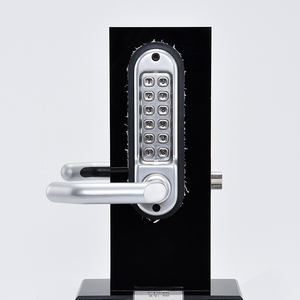 IP65 Weatherproof
Outdoor Garden Door Lock Zinc Alloy Digital Smart Door Lock Set With Double Side Operating
Dual-sided keypad access control system engineered for aluminum garden doors and exterior gates with semiconductor biometric scanning.
- Zinc Alloy Housing
- Double-Side Keypad
- Tuya / TTLock App
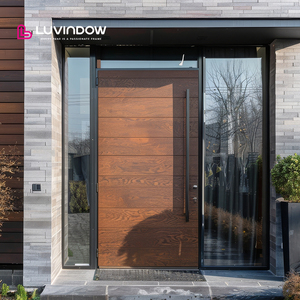 Multi-Point Security
Solid Wood Security Door With Multi-Point Locking System For Home Protection
High-density solid wood core entrance door reinforced with aluminum edge banding and a 5-point steel deadbolt safety mechanism.
- Solid Wood Core
- 5-Point Lock System
- STC 42dB Rating
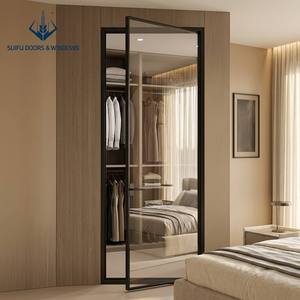 Slim Sightlines
Minimalist Slim Frame Aluminum Swing Door for Bathroom Kitchen Fluted Glass Narrow Frame Casement Door with Magnetic Mute Lock
16mm narrow frame casement door crafted from extruded 6063-T6 aluminum, integrated with silent magnetic locks and privacy fluted glass.
- 16mm Sightline
- Fluted Tempered Glass
- Magnetic Mute Lock
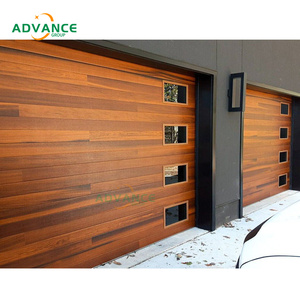 R-16 Insulation
American 16x8 Black Security Garage Door Double Wooden Home Residential Garage Doors for Home
Thermally efficient sectional residential garage door featuring embossed aluminum clad over polyurethane foam with structural wind resistance.
- 16x8 Double Size
- PU Insulated Core
- Wind Load Rated
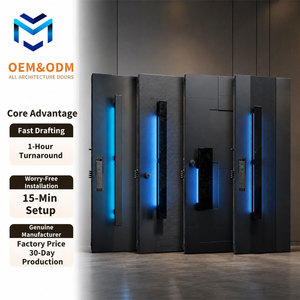 Grand Pivot System
American Soundproof Front Entry Main Exterior Interior Doors Cast Aluminum Security Entrance Steel Pivot Doors with Blue Light
Luxury architectural pivot entrance door built with heavy-gauge cast aluminum panels, floor spring hardware, and LED halo ambient illumination.
- Cast Aluminum Cladding
- Heavy-Duty Pivot
- LED Halo Illumination
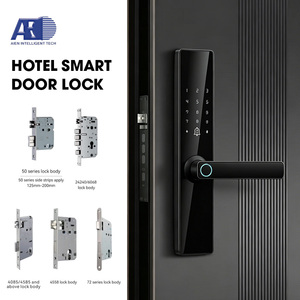 Universal Retrofit
Universal Smart Door Lock Aluminum Alloy Fingerprint Password Card Tuya / TTlock App For 5050 6068 85 72 Mortise
Versatile smart lock housing compatible with international standard mortises (5050/6068/8572). Features biometric fingerprint & app control.
- Multi-Mortise Fit
- Biometric Scanner
- Tuya / TTLock Platform
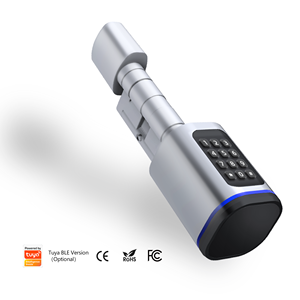 WiFi Network Access
Tuya Smart Outdoor Wood Door Lock Adjustable Network Access Keyless Electric Password Aluminum Door WiFi Connected
Direct WiFi-enabled electronic access lock designed specifically for slim-profile aluminum doors and timber entry doors with real-time audit logs.
- Direct WiFi Connectivity
- Adjustable Strikers
- Real-Time Notifications
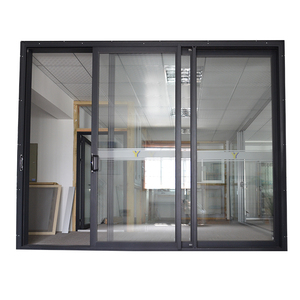 NFRC Certified
NFRC Certificate New Modern Big Entrance Aluminium Low-e Sliding Rail Glass Patio Doors
Large-span panoramic sliding door featuring thermal break aluminum extrusions, double Low-E argon insulated glazing, and stainless steel rollers.
- Thermal Break Profile
- Double Low-E Glazing
- U-Factor 0.22 Rated
1. The Paradigm Shift in Architectural Access Control & Aluminum Door Engineering
Modern architectural engineering demands an unprecedented integration of structural durability, energy efficiency, and intelligent security access. Historically, aluminum doors and electronic access control systems functioned as separate procurement verticals. Today, top manufacturers in China's industrial manufacturing hubs—most notably Foshan, Guangdong—have pioneered fully integrated smart access control aluminum door systems that combine architectural metallurgy with mechatronic access control.
Aluminum alloy (specifically extruded 6063-T6 and 6060-T66) has established itself as the structural metal of choice for modern fenestration due to its high strength-to-weight ratio, extreme corrosion resistance, and exceptional dimensional stability under wide temperature fluctuations. When coupled with advanced mechatronic locksets, biometric capacitive sensors, and thermal break technology, custom aluminum door systems offer commercial developers, villa contractors, and door importers a turn-key solution that fulfills strict structural and security building codes.
Information Gain Insight: Thermal Break & Access Control Synergies
Traditional hollow aluminum profiles suffer from high thermal conductivity (K-value ~200 W/m·K). Modern high-performance access control aluminum doors utilize Polyamide PA66-GF25 (25% glass fiber reinforced) thermal barrier strips, reducing frame thermal conductivity to under 2.2 W/m²K while maintaining structural housing tolerances required for motorized multi-point electronic mortise locks.
As smart cities and IoT-driven building management systems (BMS) become standardized across North America, Europe, Australia, and the Middle East, procuring architectural doors from certified manufacturers who understand both structural wind-loading parameters (ASTM E330 / EN 12210) and electronic access protocols (RS485, Wiegand, Bluetooth 5.2, Zigbee 3.0, and Tuya/TTLock cloud gateways) is critical to avoiding jobsite integration delays.
2. Global Sourcing Trends & Sourcing Forecast (2025–2030)
To assist global procurement managers, architects, and real estate developers in making future-proof sourcing decisions, our engineering team has analyzed market data across global construction markets. The following four macro procurement trends define the high-end aluminum door sector:
Trend A: Embedded Mechatronics & Seamless Biometric Mortises
Mechanical lock keys are rapidly transitioning to secondary emergency overrides. Sourcing demand has shifted toward flush-mounted mechatronic locksets fully integrated inside the aluminum extrusion sash profile. Semiconductor 3D capacitive fingerprint sensors, encrypted RFID (13.56 MHz ISO14443A), and dynamic pin generation are now specified at the factory manufacturing stage. This eliminates post-installation modification of frames on site, preserving factory-applied anodized or powder-coated surface treatments.
Trend B: Stringent Thermal & Carbon Neutrality Mandates
With national energy codes tightening—such as Title 24 in California, the National Construction Code (NCC) in Australia, and the EPBD directive in the European Union—doors must achieve low overall U-factors. B2B buyers now mandate double-glazed or triple-glazed Insulated Glass Units (IGU) featuring Low-Emissivity (Low-E) coatings, argon gas filling, and warm-edge spacers combined with thermal break profiles. Doors with built-in access control electronics must preserve perimeter weather-stripping gaskets (EPDM or TPE) without creating acoustic or thermal leaks around lock cutouts.
Trend C: Multi-Point Intrusion Resistance (EN 1627 RC2 / RC3 & PAS 24)
Access control doors for luxury entryways, main exterior pivots, and villa facades are increasingly required to meet strict forced-entry standards. Premium Chinese manufacturers now supply aluminum doors equipped with 3-point or 5-point motorized stainless steel deadbolts. These systems feature anti-saw hardened steel pins, anti-drill escutcheon plates, and anti-prying hook latches that automatically engage upon sash closure.
Trend D: Minimalist Narrow-Sightline Aesthetics with Hidden Hardware
Architectural preference heavily favors ultra-slim visible frame profiles (ranging from 16mm to 38mm sightlines) that maximize glass surface area and natural daylighting. Achieving structural rigidity in slim frame aluminum doors requires precision extrusion engineering, heavy-gauge wall thicknesses (up to 3.0mm), concealed 3D-adjustable heavy-duty hinges, and silent magnetic latching mechanisms.
| Specification Vector | Standard Aluminum Door | Thermal Break Access Control Aluminum Door | Architectural Pivot / Heavy Sliding System |
|---|---|---|---|
| Profile Alloy Grade | Standard 6063-T5 (1.4mm) | Architectural 6063-T6 (2.0mm - 2.5mm) | Structural 6060-T66 / Cast Alloy (3.0mm+) |
| Thermal Performance (U-Value) | 3.5 - 5.0 W/m²K (Non-Thermal) | 1.2 - 1.8 W/m²K (PA66-GF25 Barrier) | 0.9 - 1.4 W/m²K (Triple Low-E Glazed) |
| Access Control Method | Mechanical Cylinder Lock | Biometric + RFID + App + Keypad | Automated Motorized Pivot / Face Recognition |
| Water Tightness (EN 12208) | Class 3A (150 Pa) | Class 9A (600 Pa) | Class E750 (750 Pa Custom Track Drain) |
| Acoustic Isolation (STC) | 25 - 28 dB | 38 - 42 dB (Double Glazed IGU) | 42 - 45 dB (Laminated Acoustic Glass) |
3. Technology & Metallurgical Engineering Standards
Evaluating an aluminum door manufacturer requires a thorough inspection of raw material standards, surface treatment longevity, mechatronic IP weatherproofing ratings, and quality assurance workflows. Top-tier manufacturers in China adhere to international metallurgical and structural testing norms:
Extrusion Alloy Integrity & Wall Thickness Specifications
Commercial doors must withstand significant operational cycles and wind loads. Leading Foshan window & door factories utilize virgin aluminum billets extruded into 6063-T6 alloy profiles, maintaining a minimum nominal wall thickness of 2.0mm for hinged casement doors and up to 3.0mm for heavy-duty lift-and-slide or pivot entry doors. Tensile strength must exceed 205 MPa, with yield strength surpassing 170 MPa to ensure structural deflection stays within acceptable architectural tolerances under hurricane-zone conditions.
Advanced Surface Finishing: PVDF vs. Anodizing vs. Powder Coating
Door exteriors exposed to severe coastal salt spray, high ultraviolet (UV) radiation, or industrial pollutants require specialized surface coatings to prevent chalking, pitting, and color fading:
- PVDF (Fluorocarbon) Coatings: 3-coat system containing 70% Kynar 500 resin achieving dry film thickness >40 microns. Formulated to pass 3,000-hour salt spray corrosion testing under ASTM B117 standards.
- Class 1 Architectural Anodizing: Anodic film thickness >25 microns compliant with Qualanod standards, providing extreme scratch resistance and metallic metallic luster.
- Electrostatic Powder Coating: Architectural grade powder meeting AAMA 2604 / AAMA 2605 specifications, available in unlimited RAL custom color palettes and textured wood-grain heat transfer finishes.
Smart Electronic Lock Housing & Weatherproofing (IP65/IP66)
Electronic locks integrated into exterior aluminum doors face extreme ambient humidity, rain, dust, and temperature shifts (-25°C to +65°C). Premier manufacturers utilize silicone potting encapsulation for control PCBA modules, double-layer EPDM rubber gasketing for battery chambers, and stainless steel (SUS304/SUS316) lock cases. Electronic locksets are tested to withstand ESD (Electrostatic Discharge) up to 15kV, ensuring security circuits cannot be bypassed by external high-voltage frequency pulse devices.
4. Enterprise Advantages: Foshan DERKA Manufacturing Powerhouse
When sourcing access control aluminum doors from China, manufacturer infrastructure directly dictates lead-time predictability, quality consistency, and export compliance. Operating from Foshan, Guangdong—the world's premier architectural aluminum hub—Foshan Derka Architectural Doors & Windows Co., Ltd. (DERKA) represents the gold standard in export-oriented fenestration manufacturing.
115,000 m² Factory Base
Operating 9 semi-automated production lines with continuous 16-hour daily output capacity, guaranteeing high-volume project delivery without scheduling delays.
44-Point QC Protocol
Every unit undergoes 44 rigorous quality inspection checkpoints spanning profile alloy composition, CNC machining tolerances, corner crimping shear strength, and 100% lock cycling tests.
25+ Years Export Expertise
700+ skilled personnel and experienced structural engineers crafting shop drawings and custom CAD/BIM models for North America, Australia, Europe, and Middle East codes.
Certified Compliance
Factory operations certified under ISO 9001:2015, with products tested to meet CE marking, AS2047 Australian standards, CSA, and NFRC energy ratings.
Export Packaging & Jobsite Logistics Engineering
International freight demands rugged protective packing to prevent transit damage. All access control aluminum doors undergo a 5-stage protective packing protocol: surface protective film application, foam corner guard placement, moisture-barrier shrink wrapping, air-cushioned bubble wrap, and securing inside heavy-duty export-grade plywood crates labeled by project floor and opening number. This allows installers to seamlessly unpack and match each unit to architectural shop drawings upon site arrival.
5. Frequently Asked Questions (FAQ) for Overseas B2B Buyers
Key technical, logistical, and compliance questions answered by our engineering export desk:
Ready to Secure Premium Access Control Doors for Your Project?
Consult with our structural fenestration engineers today. Send us your project floor plans, CAD drawings, or door schedules for a comprehensive technical proposal and factory-direct quotation within 24 hours.
Get a Quote