Featured B2B Aluminium & Security Entry Door Solutions
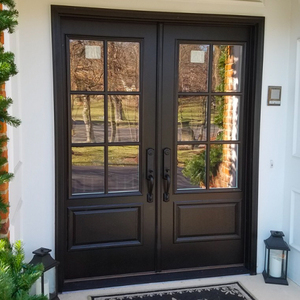
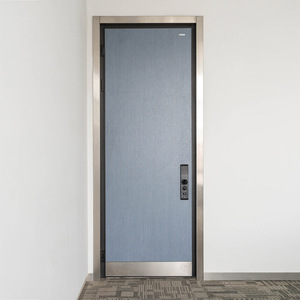
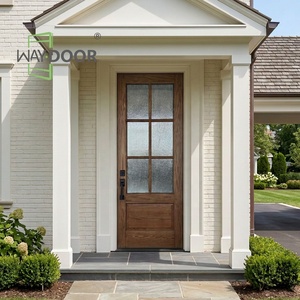
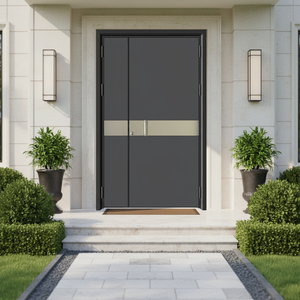
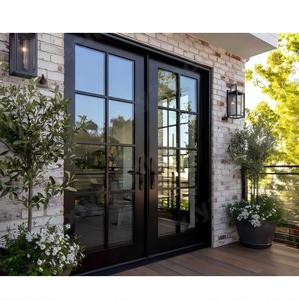
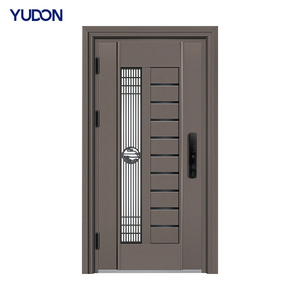
Explore our factory-direct product range engineered for global architectural projects. Each system is fully customizable in profile wall thickness, thermal break configuration, security locking, and surface finishes.
Executive B2B Procurement Report: Sourcing Aluminium Entry Doors from China
The global demand for high-performance architectural entry door systems has undergone a structural shift. Modern commercial developments, luxury residential villas, and multi-family housing projects no longer view front entrance doors as simple operational barriers. Instead, today's entry doors are highly engineered building envelope components required to meet strict structural wind load capacities, stringent thermal performance codes (U-factors ≤ 0.8 to 1.4 W/m²K), sophisticated multi-point anti-burglary standards, and seamless IoT smart lock integration.
As the world's premier architectural aluminum manufacturing hub, Foshan, Guangdong Province in China, represents over 60% of the world's custom high-end aluminum fenestration and door production capacity. Sourcing aluminum entry doors directly from top-tier Chinese manufacturers allows international buyers, architectural specifiers, general contractors, and real estate developers to achieve 30% to 50% cost efficiencies compared to European or North American fabricators without compromising on material metallurgical standards or hardware longevity.
However, navigating the supplier ecosystem in China requires clear engineering criteria. Successful B2B procurement depends on verifying key technical parameters: profile aluminum alloy grade (e.g., 6063-T5 vs. 6061-T6), polyamide thermal barrier width (PA66-GF25), surface coating longevity (AAMA 2605 PVDF vs. Qualicoat powder coating), glass insulated glazing unit (IGU) ratings, and verified compliance with regional building standards such as NFRC, AS2047, CE EN 14351-1, and CSA.
Engineering Analysis: Metallurgy, Thermal Physics, and Security Mechanisms
To establish true architectural performance, aluminum front entry doors must combine structural physics with precision fabrication. Below is a deep technical breakdown of the four core pillars that differentiate tier-1 Chinese aluminum entry door systems from standard market offerings.
1. Aluminum Metallurgy & Profile Wall Thickness
Primary extrusion billets must conform to GB/T 5237 / EN 755 / ASTM B221 6063-T5 aluminum alloy. For oversized architectural pivot doors or impact-resistant front entry systems, profile wall thickness must strictly adhere to structural load requirements:
- Standard Residential Entry: Minimum nominal wall thickness of 1.8mm to 2.0mm.
- Heavy-Duty Villa & Commercial Entrance: Wall thickness between 2.5mm and 3.0mm+ to prevent frame warping and resist torsion under high wind pressures up to 5000 Pa (ASTM E330).
- Tensile & Yield Strength: Tensile strength ≥ 205 MPa; Yield strength ≥ 170 MPa; Webster Hardness ≥ 12 HW.
2. Thermal Break Insulation (PA66-GF25)
Standard solid aluminum is a thermal conductor ($K \approx 200 \text{ W/m·K}$). To achieve energy code compliance, top manufacturers incorporate continuous multi-cavity polyamide thermal barrier strips:
- Polyamide Composition: PA66 reinforced with 25% glass fiber (PA66-GF25), providing mechanical shear resistance and equal thermal expansion coefficients to aluminum profiles.
- Strip Depth Options: 24mm, 34mm, or 39mm ultra-wide thermal breaks. Cavities are injected with high-density polyurethane (PU) insulation foam.
- Thermal Performance ($U_w$): Reduces door system thermal transmittance to $U_w \le 1.0 - 1.4 \text{ W/m²K}$ (or up to $0.8 \text{ W/m²K}$ with triple glazed Low-E units).
3. Multi-Point Security Locking & Hardware
Security is a paramount baseline for front entrance doors. Superior Chinese manufacturers standardly configure high-security lock sets and precision load-bearing hardware:
- Multi-Point Gearbox Locks: 5-point to 7-point locking systems with anti-drill, anti-saw hardened steel hook bolts conforming to European EN 1627 RC2 / RC3 and UK PAS 24 burglary security levels.
- Hinge Capacity: 3D adjustable 304/316 stainless steel butt hinges or heavy-duty German-engineered hydraulic floor pivot springs capable of supporting single door sash weights up to 300kg - 500kg.
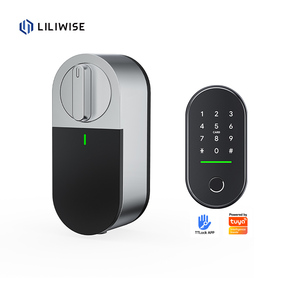
- Smart Cylinder Compatibility: standard EU profile lock cylinder cutouts compatible with motorized smart locks (fingerprint, 3D facial recognition, RFID, Bluetooth/Zigbee).
4. Surface Coatings & Weather Resistance
The exterior finish determines whether an aluminum entrance door retains its aesthetic integrity over decades of exposure to UV radiation, coastal salt spray, and extreme rain:
- PVDF Fluorocarbon Coating: 3-coat/2-bake Kynar 500 PVDF resin conforming to AAMA 2605 standard, offering a 20+ year anti-fading guarantee against severe marine environments.
- Architectural Powder Coating: AkzoNobel or PPG powders certified under Qualicoat Class 2 / AAMA 2604 with a minimum film thickness of 60 - 80 microns.
- Wood-Grain Thermal Transfer: Italian polyurethane powder sublimation technology providing authentic timber texture with zero warp or rot risks.
Architectural Material Benchmark: Entry Door System Comparison
When selecting entry door systems for high-value building projects, buyers must balance structural lifespan, thermal protection, maintenance costs, and capital expenditure. The table below compares premium thermal-break aluminum entry doors against traditional alternative materials.
| Performance Parameter | Thermal Break Aluminium (Foshan) | Cast Aluminium Pivot Door | Solid Oak / Mahogany Wood | Steel Front Security Door |
|---|---|---|---|---|
| Thermal U-Factor ($W/m²K$) | 0.8 - 1.4 (Excellent) | 1.2 - 1.8 (Good) | 1.5 - 2.2 (Moderate) | 1.8 - 2.5 (Poor without core) |
| Structural Wind Load | Up to 5000 Pa (ASTM E330) | Up to 6000 Pa (Ultra High) | 1800 - 2500 Pa (Moderate) | 3500 - 4500 Pa (High) |
| Moisture & Coastal Resistance | Impervious (No rust/rot) | Impervious (No rust/rot) | Prone to swell, rot & warp | Requires anti-rust primer |
| Burglary Protection (EN 1627) | RC2 / RC3 Compliant | RC3 / RC4 High Security | RC1 / RC2 (Sash dependent) | RC3 / RC4 Security Core |
| Maintenance Cycle | Zero maintenance (25+ yrs) | Zero maintenance (30+ yrs) | Re-varnish every 2-3 yrs | Repaint every 5-8 yrs |
| Max Architectural Dimension | Single sash up to 1.5m x 3.2m | Pivot sash up to 2.5m x 4.5m | Limited by wood slab warp | Standard panel limits |
| Eco-Sustainability | 100% Recyclable Aluminum | 100% Recyclable Aluminum | Deforestation concern | Recyclable steel core |
Future Sourcing Trends in B2B Aluminium Entry Door Procurement (2025–2030)
As architectural designs shift toward minimalism, expansive daylighting, and carbon neutrality, the market for front entry doors is evolving rapidly. Forward-thinking buyers and estate developers must align their supply chains with these key trends over the coming decade:
1. Oversized Architectural Pivot Doors
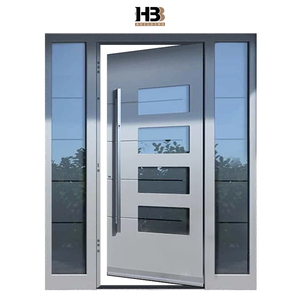
Residential luxury developments are increasingly specifying giant pivot entrance doors measuring 2.0 meters wide by 3.5 to 4.0 meters high. Engineered with concealed floor hydraulic pivots and multi-chamber cast aluminum infills, these systems provide a dramatic architectural entrance while maintaining light, fingertip push-pull operation.
2. Smart Biometric & Keyless Access
The integration of smart locking mechanisms direct from the factory floor has become a standard requirement. Future entry doors come pre-wired for 3D structured-light facial recognition cameras, palm vein identification, hidden touch keypads, and motorized multi-point deadbolts connected to Apple HomeKit, Google Assistant, or automated building systems.
3. Passive House & Ultra-Low Carbon
With international energy efficiency codes tightening in Europe and North America, entry door specifications now demand passive house level performance ($U_w \le 0.8 \text{ W/m²K}$). Furthermore, global buyers prioritize suppliers offering Low-Carbon Recycled Aluminum certified with Environmental Product Declarations (EPD).
DERKA Factory Strengths & The 44-Point Quality Inspection Protocol
As a leading China custom aluminum windows and doors manufacturer headquartered in Foshan, Foshan Derka Architectural Doors & Windows Co., Ltd. operates a massive 115,000 m² modern production facility equipped with 9 automated extrusion lines, CNC machining centers, and automated assembly stations. Supported by 700+ skilled staff and engineers, DERKA delivers over 2,000 custom door and window solutions for projects worldwide.
Quality assurance at DERKA is not a final check—it is a continuous 44-Point QC Protocol applied throughout every step of production to ensure zero defect delivery:
Phase 1: Raw Materials & Extrusion Verification
- Optical Spectrometer chemical composition check on 6063-T5 aluminum ingots.
- Polyamide PA66-GF25 thermal strip tensile strength testing.
- Coating film thickness test using magnetic/eddy-current gauge (AAMA 2605 / Qualicoat compliance).
- Glazing unit seal integrity & argon gas concentration verification.
Phase 2: Fabrication & Assembly Testing
- CNC dual-head cutting angle accuracy test within ±0.1mm tolerance.
- Corner crimping joint shear force and sealant injection continuity check.
- Pneumatic water penetration test (ASTM E331 pressure chamber test).
- Air tightness permeability test (ASTM E283 chamber test).
Phase 3: Hardware & Security Testing
- 100,000-cycle operational endurance test on multi-point lock mechanisms.
- 3D adjustable hinge load deformation test under maximum sash weight loading.
- Smart lock electronic cylinder response and fall-back emergency key lock test.
- EPDM continuous weatherstrip compression recovery test.
Phase 4: Export Packaging & Project Labeling
- PE protective surface film application with corner guard protectors.
- Fumigated solid wooden crate / steel frame crating for ocean transit.
- Individual unit tagging categorized by project floor, zone, and opening ID for site assembly.
- Pre-shipment high-resolution photo and video audit documentation for client sign-off.
Global Building Code Compliance & International Certifications
Importing architectural entry doors requires strict compliance with regional building regulatory codes. DERKA products are pre-engineered and tested to meet international standards across target export regions:
North America (USA & Canada)
Tested in accordance with NFRC (National Fenestration Rating Council) for U-factor and SHGC, Energy Star qualified, CSA B45 standard compliant, and certified for Florida High-Velocity Hurricane Zones (HVHZ TAS 201/202/203 impact testing).
Australia & New Zealand
Fully compliant with AS2047 (Windows and External Doors in Buildings), AS1170 (Structural Design Actions), and certified under AS3959 for Bushfire Attack Level ratings up to BAL-40 / BAL-FZ.
European Union & UK
Carries full CE Marking under EN 14351-1 standard, meeting EU airtightness Class 4, water tightness Class E900, and burglary protection certified to EN 1627 RC2/RC3 security levels.
Frequently Asked Questions (B2B Sourcing & Technical FAQ)
Get authoritative answers to common engineering, quality assurance, logistics, and customization questions asked by international buyers and project specifiers.
Ready to Source High-Performance Entry Doors for Your Project?
Consult with DERKA's senior architectural engineering team today. Send us your project drawings or door schedules for a free technical review, structural calculation, and competitive factory-direct quote within 24 hours.