High-Performance Custom Aluminum & Hybrid Entry Door Systems
Engineered to meet stringent international building codes (NFRC, AS2047, CE EN 14351-1), featuring poly-amide thermal barriers, multi-point lock systems, and precision structural extrusions.
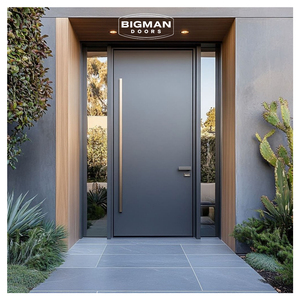 Architectural Pivot
British Modern Minimalist Dark Grey Matte Security Pivot Door Heavy Metal Entry Door Anti-Theft Feature Exterior Villa Kitchen
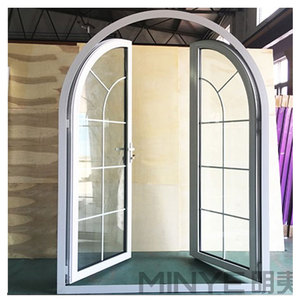 Arch Casement
Popular Design Rustic Style Arch Top Doors Aluminum Windproof Casement Door
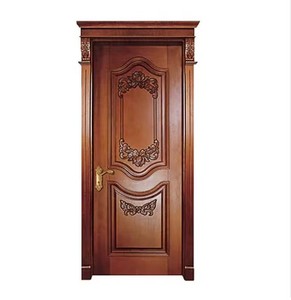 Luxury Teak Wood
LongTai Antique Villa Door Style Solid Teak Panel Caving Wood Entry Front Door Designs
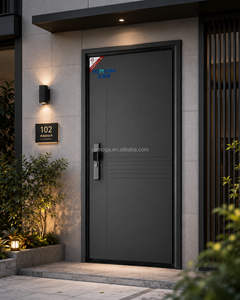 Soundproof Steel
Modern Waterproof Soundproof Steel Pivot Front Entry Door Chinese Exterior Security Main Entrance Door for Apartment Hotel
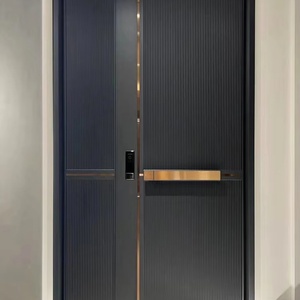 Cast Aluminum
FoShan High-End Cast Aluminum Security Anti-Theft Villa Entry Door Stainless Steel Entrance Door of a Self-built House
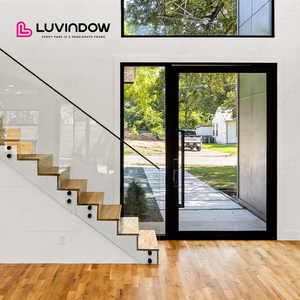 Double Glazed
Modern Style Main Entrance Door Heat Insulated Aluminum Double Glazed Glass Pivot Door
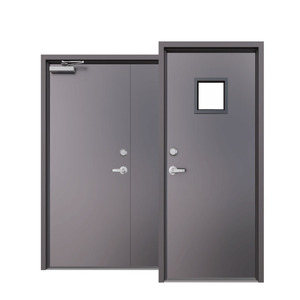 USA Standard
USA Standard Anti-Break Steel Front Entry Door Sound Insulation Metal Security Door With Multi-Point Lock
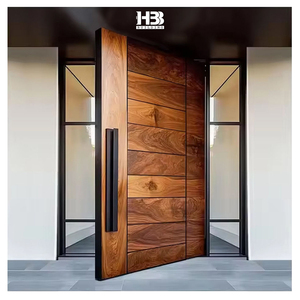 Walnut & Sidelites
American Villa Custom-Designed Modern Large Size Exterior Black Walnut Pivot Door Solid Wood Front Door With Double Sidelite
Foshan Derka Architectural Manufacturing Capacity
Operating a mega-scale 115,000 m² production hub with 9 automated lines delivering certified structural perfection to international markets.
Technical Sourcing Guide for Thermal Break Aluminum Entry Doors
An authoritative analysis of thermodynamic barrier design, structural alloy metallurgy, perimeter seal mechanics, and OEM manufacturing practices for commercial architects and builders.
1. The Thermodynamics of Thermal Break Entry Door Systems
In modern architectural engineering, standard hollow aluminum extrusions possess a major flaw: high thermal conductivity ($\lambda \approx 160 \text{ to } 200 \text{ W/m·K}$). Unbroken aluminum frames act as thermal bridges, permitting rapid conductive heat transfer between building exteriors and climate-controlled interiors. This mechanism exacerbates HVAC power consumption, leads to indoor humidity condensation, and causes structural frame warping under extreme solar loading.
Custom OEM thermal break aluminum entry door manufacturing resolves thermal bridging by mechanically joining inner and outer aluminum extrusion profiles using a reinforced structural polyamide barrier—specifically Polyamide PA66GF25 (25% fiberglass reinforced). Polyamide exhibits an extremely low thermal conductivity rate ($\lambda \approx 0.3 \text{ W/m·K}$), reducing thermal transmission through the frame by up to 85%.
Engineering Rule of Thumb: Transitioning from non-thermal break profiles to a 24mm or 34mm PA66GF25 multi-cavity thermal barrier drops total entrance assembly thermal transmittance ($U_{d}$) from over $3.8 \text{ W/m²·K}$ down to under $1.2 \text{ W/m²·K}$, directly meeting U.S. Energy Star, Australian AS2047, and European Passive House entrance standards.
Extrusion Alloy Selection: 6063-T5 vs. 6063-T6 Structural Aluminum
Leading Foshan OEM factories specify prime virgin ingot aluminum alloy 6063-T5 or 6063-T6 for entry door frames and sashes. Alloy 6063 provides superior surface smoothness for anodizing and electrostatic powder coating, paired with high tensile strength (minimum yield strength of 170 MPa for T6 temper). For oversized pivot doors exceeding 3 meters in height or cast aluminum anti-theft security doors, structural wall profile thicknesses are engineered between 2.0mm and 3.0mm, far exceeding conventional 1.4mm residential window standards to prevent wind-load deflection under positive/negative pressures up to 5,000 Pa.
| Technical Parameter | Standard Aluminum Door | OEM Thermal Break Aluminum Door | Impact on Building Performance |
|---|---|---|---|
| Frame Thermal Transmittance ($U_f$) | 3.5 – 5.0 W/m²·K | 0.9 – 1.6 W/m²·K | Reduces HVAC heating/cooling energy costs by up to 35%. |
| Air Infiltration (ASTM E283) | 1.5 L/s·m² | < 0.1 L/s·m² (Class 4) | Eliminates drafts, air leaks, and particulate infiltration. |
| Acoustic Isolation (STC / Rw) | 25 – 28 dB | 38 – 45 dB (With Double/Triple IGU) | Blocks urban noise, traffic rumble, and ambient sound pollution. |
| Security / Forced Entry (EN 1627) | RC1 Standard Lock | RC2 / RC3 Multi-Point Motorized Lock | Resists crowbar, drill, and heavy impact intrusion attempts. |
| Profile Wall Thickness | 1.2mm – 1.4mm | 2.0mm – 3.0mm Structural Grade | Prevents long-term door sag, hinge binding, and wind warping. |
2. Architectural Entry Door Typologies & Structural Engineering
Commercial developers, custom home builders, and project importers require specialized entry door configurations depending on facade geometry, traffic volume, and aesthetic intent. Below are the primary OEM manufacturing typologies produced in Foshan factory bases:
A. Heavy-Duty Architectural Pivot Entry Doors
Pivot doors replace traditional side hinges with top and bottom floor-concealed hydraulic pivot spindles. This mechanism transfers panel weight directly to the subfloor, enabling massive panel dimensions (up to 2,500mm wide by 4,000mm high) and weights exceeding 400kg. Key OEM features include German-engineered hydraulic floor springs with adjustable closing speed, 90-degree hold-open functions, and continuous magnetic perimeter weatherseals that drop automatically when closed to solve bottom air-leakage challenges typical of legacy pivot designs.
B. Cast Aluminum Security & Hybrid Armor Doors
Combining dense solid-cast aluminum exterior decorative panels (8mm to 12mm thickness) with an interior thermal break core and 304 stainless steel anti-drill plates, cast aluminum entry doors provide ultimate anti-theft protection. Their solid metallic build resists UV degradation, salt spray oxidation, and physical impact, making them ideal for coastal luxury villas and high-security residential estates.
C. Insulated Thermal Break Double-Glazed Entrance Doors
Featuring low-emissivity (Low-E), argon-filled double or triple insulated glass units (IGU) integrated into slim thermal break aluminum sash profiles. Toughened safety glass (6mm+12Ar+6mm tempered or laminated anti-burglary glass) delivers maximal daylighting while blocking solar heat gain (SHGC < 0.25) and maintaining strict security standards.
3. Advanced Surface Finishing & Weatherability Engineering
Exterior entry doors face demanding environmental factors: intense ultraviolet radiation, extreme temperature cycles, rain erosion, and coastal salt fog. Reliable OEM factories apply specialized industrial surface treatments compliant with AAMA 2605 or Qualicoat Class 2 standards:
PVDF Fluorocarbon Coatings (Kynar 500): Formulated with 70% polyvinylidene fluoride resin, PVDF finishes deliver unmatched chalking resistance, color retention, and chemical immunity. They endure over 4,000 hours of continuous salt spray testing without blistering or peeling, rendering them the standard for luxury hotel entrances and coastal high-rises.
Electrostatic Powder Coating: Architectural-grade polyester powders provide rich matte texture finishes, dark grey micro-texture, and custom RAL color matching with high scratch resistance.
Wood Grain Thermal Transfer (Vacuum Sublimation): Transfers authentic wood textures (walnut, teak, oak, cherry) onto powder-coated thermal break aluminum profiles. This delivers the organic aesthetic warmth of solid timber while eliminating timber rotting, termite damage, moisture swelling, and recurring varnish maintenance.
Multi-Point Security Locking
Integrated 3-point, 5-point, or motorized smart locking systems with anti-drill manganese plates and hardened steel deadbolts, certified to European RC2/RC3 intrusion resistance levels.
Biometric & Smart Access Control
Seamless OEM integration of hidden fingerprint scanners, RFID keycards, facial recognition cameras, and smart home IoT access modules with IP65 outdoor waterproofing.
Acoustic Sound Dampening
Multi-chamber profile structures filled with high-density polyurethane insulation foam and EPDM seal gaskets provide certified sound insulation up to STC 45 dB.
2025–2030 Global Sourcing & Procurement Trends
How strict carbon neutral mandates, smart home adoption, and changing architectural preferences are shaping commercial door procurement strategies.
1. Decarbonization & Low-Carbon Aluminum Sourcing
Global building codes (such as the EU Energy Performance of Buildings Directive and California Title 24) are placing strict limits on embodied carbon. B2B buyers now mandate that thermal break entry door suppliers utilize hydro-powered primary aluminum ingots and verified Environmental Product Declarations (EPD) to guarantee carbon footprint compliance across commercial developments.
2. Concealed Frame & Ultra-Slim Sightline Integration
Modern luxury architectural designs demand floor-to-ceiling glass and hidden jamb frames where door profiles sit flush with interior drywall and exterior cladding. OEM suppliers are re-engineering frame extrusions to accommodate hidden heavy-duty 3D adjustable hinges and drop-down sills that maintain air tightness without visual bulk.
3. Automated & Motorized Entrance Solutions
Driven by contactless accessibility requirements and high-end residential demand, electro-mechanical multi-point locking drives paired with concealed motor actuators are becoming standard. These systems allow entry doors to unlatch, swing open, and seal shut via smartphone apps or smart home automation networks.
4. Comprehensive One-Stop Supply Chain Consolidation
To reduce freight overhead and jobsite installation delays, major contractors are shifting away from fragmented multi-vendor procurement. Overseas buyers prioritize OEM window and door factories like DERKA that supply fully matched packages—including entry doors, thermal break casement windows, folding patio doors, and garage doors—under one unified color, hardware, and quality assurance framework.
Frequently Asked Questions for Door Sourcing & Procurement
Essential guidance for project developers, general contractors, importers, and architectural specifiers buying directly from OEM manufacturers.
Why Sourcing Direct from Foshan Derka Delivers Value
Over two decades of engineering leadership in custom door manufacturing, backed by international certifications and end-to-end B2B project support.
115,000 m² Production Base
Equipped with 9 high-speed automated extrusion processing lines, German CNC machining centers, automated corner crimping, and dedicated assembly bays in Foshan, Guangdong.
In-House Technical Engineering
Our team of 700+ professionals includes 45 structural engineers who review architectural plans, run wind-load calculations, and issue detailed CAD shop drawings for sign-off prior to production.
Worldwide Project Compliance
Exporting across North America, Australia, New Zealand, the Middle East, Europe, and Southeast Asia with verified ISO 9001, CE, AS2047, CSA, and NFRC compliance test reports.