Impact-Rated & Structural OEM Entry Door Range
Engineered to resist catastrophic wind pressure, structural displacement, and forced entry. Available for custom OEM/ODM fabrication to architectural specs.
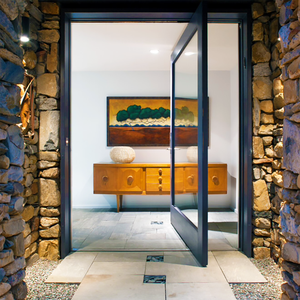
Florida Miami-Dade Approved NFRC Big Panel Tempered Glass Aluminium Modern Pivot Entry Door
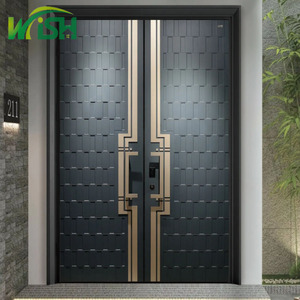
Modern Style Residential Heavy Duty Cast Aluminum Exterior Security Entrance Doors
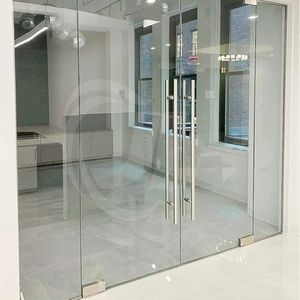
Modern Minimalist Design Exterior Aluminum Casement Door Impact Proof Glass Door
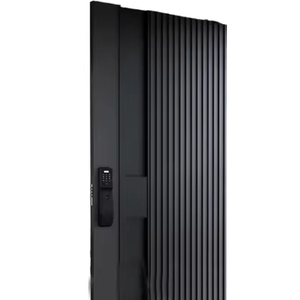
BST Ex-01 Modern Aluminium Anti-Theft Security Exterior Entry Door (5 Year Warranty)
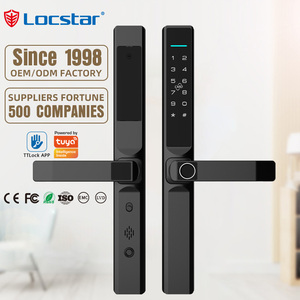
Locstar European Standard Aluminium Smart Door Lock Keypad Fingerprint Digital Entry System
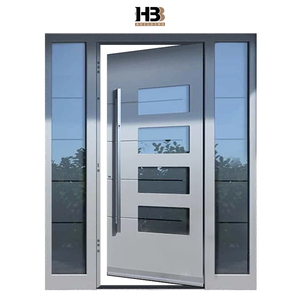
American Modern Main Entrance 4 Glass Panel Insulated Metal Stainless Steel Security Door
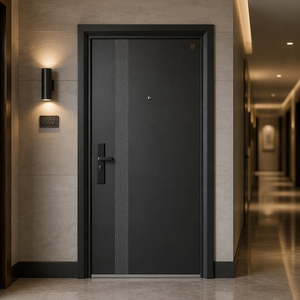
Modern Steel Entrance Door Anti-Theft Security Commercial Apartment Exterior Fire Door
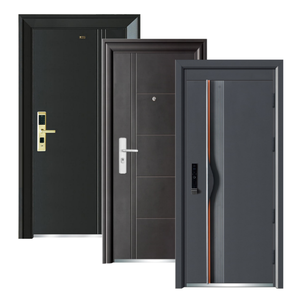
American Modern Style Main Security External Black Metal Steel Entry Front Door for Villas
Structural Mechanics of Wind-Resistant Exterior Door Systems
In high-wind zones, extreme coastal environments, and hurricane corridors, exterior entry doors act as the primary structural boundary against catastrophic structural envelope failure.
1. The Physics of Dynamic Wind Loads & Peak Pressure Differentials
When high-velocity winds impact a building facade, dynamic pressure is converted into static force acting directly upon the door sashes, frame anchors, and locking hardware. According to Bernoulli’s principle and ASCE 7 velocity pressure equations ($q_z = 0.00256 \cdot K_z \cdot K_{zt} \cdot K_d \cdot V^2$), localized wind suction forces along roof corners and building edges can exceed 5,000 Pascals (Pa).
As a leading custom OEM wind resistant entry door supplier and exporter, our engineering team designs structural profiles capable of resisting both positive pressure (wind driving inward) and negative pressure (suction forces pulling the door outward). Without engineered structural reinforcement, conventional entry doors suffer frame deflection, latch shear, water penetration, and seal degradation.
Structural Information Gain: Deflection limits for wind-resistant architectural doors must strictly adhere to $L/175$ or $L/240$ under maximum Design Pressure (DP). Custom extrusions manufactured by Foshan Derka utilize internal multi-chamber ribbing to ensure zero permanent structural deformation during 150% peak overload testing.
2. Alloy Metallurgy & Extrusion Geometry
Substandard entry doors often utilize standard commercial aluminum alloys (6063-T5 with minimal wall thickness). For certified hurricane and wind-resistant applications, we engineer customized extrusions using 6063-T6 or 6061-T6 structural aluminum alloys featuring primary wall thicknesses ranging from 2.0mm to 3.5mm.
In heavy-duty cast aluminum and steel entry configurations, internal corner keys are hydraulically crimped with double-component structural adhesives. This dual-action joining prevents corner joint fatigue when subjected to cyclic wind load oscillations (TAS 203 testing standard).
3. Impact-Resistant Glazing Architecture: SGP vs. PVB Interlayers
For modern entry doors incorporating glass panels, non-impact glass presents a severe safety hazard. Under high-wind conditions, airborne debris can shatter ordinary glass, creating internal pressurization that can blow off roof structures.
Our OEM impact-resistant doors utilize multi-layer laminated glass units (IGUs) incorporating SentryGlas® (SGP) ionoplast interlayers or heavy-duty PVB films. SGP interlayers are 5 times tougher and up to 100 times stiffer than conventional PVB materials, maintaining structural barrier integrity even if both glass panes are fractured by large missile impacts (ASTM E1996 Missile Level D / TAS 201 compliance).
OEM Entry Door Performance Matrix
A rigorous architectural breakdown of wind load resistance, thermal performance, water tightness, and hardware specifications across our primary OEM export product lines.
| Door System Classification | Structural Wind Load (DP Rating) | Water Tightness (Pa) | Thermal Transmittance (U-Value) | Impact / Security Standard | Ideal Architectural Application |
|---|---|---|---|---|---|
| Florida Miami-Dade Big Panel Pivot Door | DP70 – DP100 (Up to 7,200 Pa) | 750 Pa (15 lbs/sq ft) | 1.2 – 1.6 W/m²K (NFRC Ready) | Miami-Dade NOA, TAS 201/202/203, Missile D | Luxury Coastal Villas, Modern Architectural Entrances |
| Heavy Duty Cast Aluminum Exterior Door | DP80 – DP110 (Up to 7,920 Pa) | 900 Pa | 1.4 – 1.8 W/m²K | Class 4 Security, Anti-Bullet / Anti-Explosion Core | Private Estates, High-Security Residential Enclaves |
| Minimalist Aluminum Impact Casement Door | DP60 – DP85 (Up to 6,120 Pa) | 600 Pa | 1.0 – 1.4 W/m²K (Thermal Break) | ASTM E1886 / E1996, EN 12210 Class C5 | Modern Residences, High-Rise Residential Balconies |
| Multi-Panel Insulated Steel Front Security Door | DP65 – DP90 (Up to 6,480 Pa) | 550 Pa | 0.9 – 1.3 W/m²K (PU Foam Core) | UL 10C Fire Rated (60-120 Min), Anti-Burglary RC3/RC4 | Commercial Apartments, US Suburban Main Entries |
| Smart Access Control Glazed Entry System | DP50 – DP75 (Up to 5,400 Pa) | 450 Pa | 1.3 – 1.7 W/m²K | AES 128-Bit Encryption Lock, IP65 Waterproof Keypad | Boutique Hotels, Smart Executive Villas |
Future Procurement Trends in Wind-Resistant Entry Systems
Key technological, regulatory, and market shifts shaping global B2B procurement for architectural door and window packages over the next decade.
1. Harmonization of Extreme Weather Building Codes
Global climate instability has caused building code authorities across North America, Australia, Europe, and the Middle East to tighten structural penetration rules. Importers and contractors are transitioning from basic wind ratings to certified High-Velocity Hurricane Zone (HVHZ) systems verified by independent third-party laboratories.
2. Oversized Architectural Footprints & Pivot Mechanics
Architects are increasingly specifying single-panel entry openings reaching heights up to 4 meters and widths up to 2 meters. Procuring these monolithic dimensions requires custom heavy-duty German or Italian concealed floor-pivot hardware with multi-axis 3D adjustment, capable of supporting leaf weights up to 500 kg without sagging.
3. Decarbonization & Embodied Carbon Tracking
Major developers in North America and Western Europe now mandate Environmental Product Declarations (EPD). Future OEM suppliers must demonstrate low-carbon aluminum sourcing (hydro-powered aluminum smelting) and high recycled content ratios, alongside certified thermal break U-values under $1.2 \, \text{W/(m}^2\text{K)}$.
4. Concealed Smart Lock Integration
The market is rapidly rejecting surface-mounted smart locks in favor of factory-integrated, concealed multi-point motorized latching systems. Advanced OEM doors feature integrated 3D facial recognition, biometric fingerprint scanners, and smart home automation integration (Zigbee/Matter/TTLock) embedded cleanly within thermal-break profiles.
5. Advanced Surface Coating Longevity (C5-M Rating)
Coastal developments often experience premature paint peeling, blistering, and filiform corrosion within 24–36 months due to salt-spray oxidation. B2B buyers are demanding AkzoNobel or PPG fluorocarbon (PVDF 3-coat) finishes backed by 15-to-25-year anti-fading performance warranties.
6. Full-Package Project Sourcing & Single-Source Accountability
Procuring windows from one factory, entry doors from another, and interior doors from a third creates immense jobsite friction and color mismatching. Developers are shifting toward single-source architectural manufacturers like Derka who supply fully coordinated window, front entry, garage, and interior door packages.
Why Global Buyers Partner with Foshan Derka
Operating a massive 115,000 m² production base in Foshan, Guangdong, China—the world’s capital for architectural aluminum processing.
Massive Scale & Industrial Capacity
Powered by 700+ skilled staff, 9 specialized production lines operating 16 hours daily, our factory delivers high volume without sacrificing precision tolerances ($ \le 0.5\text{mm} $ machining variance).
44-Point Quality Assurance Protocol
Every custom order undergoes 44 distinct inspection stages: raw profile alloy testing, CNC miter accuracy, thermal bar shear strength, 100% water tank immersion checks, and pre-packing hardware operation validation.
Global Certification Benchmark
Our engineered door systems comply fully with ISO 9001, European CE standards, Australian AS2047, North American CSA, NFRC, and Florida Miami-Dade High-Velocity Hurricane Zone requirements.
Custom OEM/ODM Engineering Workflow
Architectural Review
Evaluation of site wind load requirements, CAD/BIM shop drawings, and local building code compliance.
Profile Engineering
Custom extrusion die design, thermal barrier simulation, and hardware stress analysis.
Precision Machining
5-axis CNC profile milling, corner crimping, structural glass glazing, and surface finish application.
Lab Pressure Testing
Mockup testing for structural wind load, air infiltration, and dynamic water penetration tightness.
Export Crate Packaging
Surface film protection, corner guards, custom wooden crates labeled by floor & opening schedule.
Frequently Asked Questions by Importers & Contractors
Expert guidance from our senior engineering team regarding structural specification, custom OEM options, testing documentation, and global freight delivery.
What specific engineering metrics define a "Wind-Resistant" entry door?
Can Foshan Derka manufacture custom OEM dimensions and non-standard architectural shapes?
How do your wind-resistant entry doors comply with Florida Miami-Dade HVHZ and NFRC requirements?
What surface treatment finishes do you offer for harsh coastal marine environments?
How are heavy entry doors and glass panels protected during international ocean transit?
What is the typical manufacturing lead time for custom OEM commercial orders?
Start Your Custom OEM Entry Door Project Today
Send us your project CAD drawings, elevation schedules, or wind load specifications. Our senior engineering team will provide detailed shop drawings, structural performance analysis, and a direct factory quotation within 24 hours.