Featured Contemporary Entry Doors & Architectural Product Range
Factory-direct engineered entry door systems manufactured to exact OEM/ODM project specifications
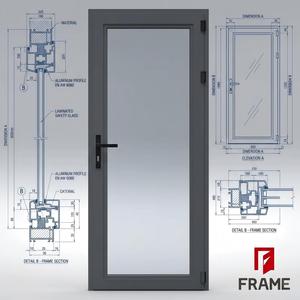
High Quality Aluminium Door Single Double Glass Indoor Single Casement Swing External Or Internal Doors
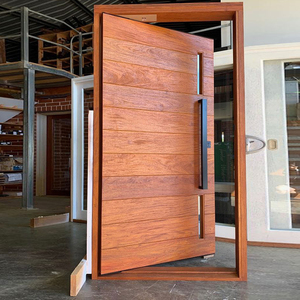
Hot Selling Residential Exterior Sliding Gate Anti-Theft Aluminium Wood Pivot Door Wrought Iron Front Door
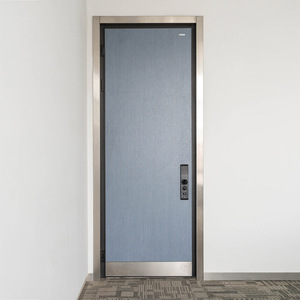
Matte Fabric Texture Steel Interior Door Smart Electronic Lock Wear Resistant Metal Door for Office Hotel Guest Rooms ISO9001
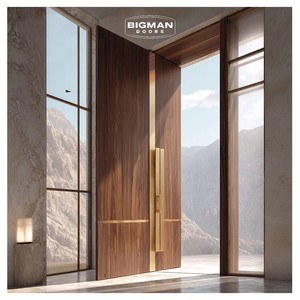
Modern Extra Large 6m High Waterproof Solid Wood Steel Frame Pivot Entrance Main Front Entry Door Heavy Duty
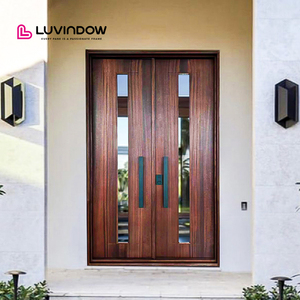
High Security Modern Energy Efficient Solid Wood Entry Door With Premium Hardware And Low-E Glass For Villa & Hotel
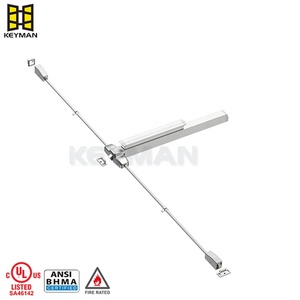
KEYMAN Commercial Emergency Door Surface Vertical Bar Lock 3 Point Locking Fire Rated Exit Device Push Bar Lock
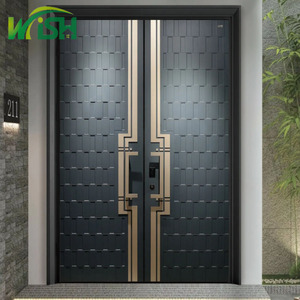
Modern Style Residential Heavy Duty Cast Aluminum Entrance Door Exterior Aluminum Security Entrance Doors

Modern Waterproof Soundproof Steel Pivot Front Entry Door Chinese Exterior Security Main Entrance Door for Apartment Hotel
Executive Technical White Paper: Structural Engineering & OEM/ODM Sourcing Standards for Contemporary Front Entry Doors
In modern architectural design, the entry doorway serves as the primary visual benchmark and critical structural envelope transition point for luxury residential villas, multi-family residential developments, and high-end commercial hospitality projects. As architects and developers push the boundaries of spatial openness—demanding soaring 6-meter pivot footprints, ultra-slim sightlines, and frameless aesthetic continuity—the structural performance and thermal integrity requirements of front entry doors have escalated significantly. Selecting an experienced OEM/ODM contemporary front entry doors supplier is no longer merely a supply chain decision; it is a core engineering partnership requirement.
This technical white paper evaluates the structural physics, material science advancements, thermal barrier engineering, anti-burglary multi-point locking systems, and international regulatory code compliance (NFRC, AS2047, CE) mandatory for high-performance architectural door manufacturing. Based on 25 years of specialized export fabrication at our 115,000 m² Foshan manufacturing base, this analysis outlines the essential criteria for evaluating tier-1 entry door suppliers.
1. Structural Mechanics of Modern Pivot and Hinged Entry Door Assemblies
Contemporary architectural entrances frequently utilize heavy-duty pivot hinge mechanics or reinforced continuous hinge geometry to support extra-large dimensions exceeding 2,400mm in width and up to 6,000mm in height. These structural dimensions introduce unique physics challenges, including lateral wind-load deflections, dead-load gravity stress on pivot pins, and thermal bowing caused by extreme temperature differentials between interior conditioned air and exterior climates.
- Pivot Load Bearing Capacity: Premium pivot entry door systems incorporate floor-recessed hydraulic pivot mechanisms constructed from high-tensile stainless steel (SUS316) and manganese alloy plates capable of supporting panel weights up to 1,000 kg with zero vertical sag over 500,000 cycle tests.
- Deflection Control & Steel Sub-Frames: To prevent panel warping in solid wood, copper skin, or cast aluminum hybrid panels, structural steel core reinforcement tubes (typically 60mm x 120mm x 3.0mm cold-rolled box sections) are integrated within the profile cavity. This achieves a structural wind load resistance class exceeding ASTM E330 standards (Design Pressure ≥ 50 psf / 2400 Pa).
- Thermal Bow Resistance (Anti-Warping Thermal Breaks): When dark-colored exterior aluminum surfaces absorb direct solar radiation, temperatures can rise to 80°C while interior room temperature remains at 22°C. OEM/ODM designs mitigate thermal bowing by integrating split-profile polyamide (PA66GF25) shear-free thermal barrier strips that allow independent expansion of inner and outer profiles without structural deformation.
| Material System | Structural Density / Strength | Thermal Performance (U-Factor Range) | Weatherability & Corrosion Resistance | Primary Architectural Application |
|---|---|---|---|---|
| Extruded Thermal-Break Aluminum (6063-T6) | High Strength-to-Weight Ratio (Tensile Strength ≥ 205 MPa) | 0.85 – 1.40 W/m²K (With Low-E Triple IGUs) | Exceptional (PVDF / Anodized Surface Grade 5) | Modern Luxury Villas, Commercial Storefronts, Coastal Homes |
| Heavy-Duty Architectural Cast Aluminum | Ultra-High Impact Resistance (Solid 8mm-12mm Casting) | 1.10 – 1.60 W/m²K (Insulated Polyurethane Core) | Impervious to Rust, High Salt-Spray Tolerance | High-Security Grand Entrance Gates, Executive Estates |
| Hand-Crafted Architectural Copper / Bronze | Extreme Mechanical Durability & Structural Stiffness | 1.20 – 1.80 W/m²K (Composite Core Sandwich) | Forms Protective Natural Patina Layer | Ultra-Luxury Mansions, Landmark Heritage Architecture |
| Reinforced Galvanized Steel & Wood Composite | High Rigidity (Yield Strength ≥ 250 MPa) | 0.90 – 1.50 W/m²K (Polyisocyanurate Foam Infill) | Requires Electro-Galvanized Primer + Powder Coat | Hospitality Guest Rooms, Apartment Security Mains |
Key Engineering Takeaway for B2B Importers:
Specifying entry doors without verifying thermal break shear values and structural steel reinforcement tube wall thickness often leads to air leakage, latch misalignment, and field failure within 24 months of installation. Partnering with an OEM/ODM supplier capable of providing finite element analysis (FEA) and factory CAD shop drawings ensures structural longevity.
2. Thermal Insulation, Acoustic Dampening, and Air/Water Tightness Performance Metrics
Building energy codes globally—such as ASHRAE 90.1, Title 24 in California, NCC in Australia, and the EU Energy Performance of Buildings Directive—mandate stringent U-factor and solar heat gain coefficient (SHGC) caps for building envelope openings. A high-performance entry door must serve as an impenetrable barrier against heat transfer, moisture intrusion, and acoustic pollution.
- Thermal Transmittance (U-Factor): Utilizing multi-chamber extruded aluminum profiles paired with 25mm polyamide 66 thermal barrier strips (reinforced with 25% fiberglass), insulating polyurethane foam core infills, and Low-E insulated glass units (Argon gas-filled, warm-edge spacers), premier OEM/ODM doors achieve U-factors as low as 0.85 W/m²K (0.15 Btu/h·ft²·°F), suitable for Passive House standards.
- Acoustic Isolation (STC / Rw Ratings): Urban hospitality and luxury apartment developments require entry doors capable of suppressing environmental traffic and hallway noise. Integrating continuous triple-tier EPDM synthetic rubber seals, drop-down acoustic bottom threshold sweeps, and multi-layer laminated glass configurations achieves Sound Transmission Class ratings up to STC 42 / Rw 43 dB.
- Water Penetration and Air Infiltration Resistance: To withstand hurricane-force rain conditions, thresholds incorporate concealed multi-stage drainage channels with non-return flap valves. Systems are tested to EN 12207 Class 4 (Airtightness) and EN 12208 Class E1050 (Watertightness under 1050 Pa static pressure).
Enterprise Capabilities & OEM/ODM Manufacturing Superiority
Why Tier-1 importers, commercial builders, and global distributors partner with our Foshan production center
115,000 m² Manufacturing Facility
Operating a massive 115,000 square meter automated manufacturing campus equipped with 9 specialized production lines, German CNC machining centers, and 16-hour daily operational output capabilities.
44-Point Rigorous Quality Control Matrix
Every single entry door unit passes through 44 documented inspection checkpoints—spanning raw alloy extrusion purity tests, CNC dimensional tolerances (±0.5mm), corner crimping strength, to dynamic water deluge testing.
Global Certification & Compliance
Fully compliant with ISO 9001 quality management systems, CE marking for Europe, AS2047 standard for Australia/New Zealand, and NFRC / CSA thermal efficiency certifications for North American projects.
Turnkey OEM/ODM Design Customization
Our in-house R&D engineering department translates architect sketches and CAD blueprints into precise shop drawings, customizing door sash dimensions, glass specs, surface textures, and smart hardware integration.
Export-Grade Protection & Container Logistics
Units are wrapped with anti-scratch protective film, corner foam buffers, and packed in reinforced sea-worthy wooden crates labeled with floor, unit, and opening code mapping for rapid jobsite installation.
Dedicated Engineering Support
From initial design calculation, factory audit videos, sample prototype verification, to post-installation technical guidance, our multilingual engineering support team operates 24/7 to serve global project schedules.
Engineering Development Trends in Contemporary Front Entry Door Systems
Driven by shifts in global architectural aesthetics toward minimalist luxury and smart home automation, entry door manufacturing is undergoing rapid technological innovation. B2B procurement managers and real estate developers must align their product specifications with these key industry evolution vectors:
A. Integration of Smart Biometric and IoT Access Infrastructure
The traditional key-and-cylinder lock mechanism is being rapidly superseded by concealed smart access control systems integrated directly into the door sash during factory fabrication. Modern OEM/ODM entry door development focuses on seamlessly embedding 3D infrared facial recognition scanners, capacitive fingerprint sensors, RFID keypads, and Bluetooth/Wi-Fi smart module boards into aluminum profiles or solid wood panels without compromising weatherproofing or thermal breaks.
Furthermore, commercial panic exit devices and residential entry doors are now engineered with automatic motorized multi-point locking gearboxes. Upon closing, heavy-duty stainless steel deadbolts automatically engage into the frame at 3 to 7 distinct locking points, communicating status updates in real time to centralized home automation platforms (compatible with Matter, Zigbee, and Z-Wave protocols).
B. Ultra-Large Scale Pivot Engineering with Hydraulic Concealed Closers
Minimalist grand entrances favor monolithic oversized single-panel pivot doors over traditional double-door configurations. The architectural trend emphasizes continuous vertical height up to 6,000mm and widths of 2,000mm. Achieving structural stability in these massive footprints requires advanced pivot engineering:
- Top Spindle & Bottom Hydraulic Pivot Units: Concealed floor pivot boxes with integrated adjustable hydraulic damping speed control eliminate the requirement for unsightly overhead door closers.
- Self-Centering Lock Alignment: Magnetic latch bolts and adjustable floor strike plates compensate for slight structural settling of buildings, maintaining smooth operational motion.
- Zero-Threshold Flush Transitions: ADA-compliant low-profile threshold profiles feature integrated silicone brush strips and concealed sub-floor drainage trenches to deliver seamless indoor-to-outdoor flooring continuity while preventing wind-driven water ingress.
C. Advanced Powder Coating, Anodizing, and Tactile Surface Technologies
Exterior doors face harsh environmental exposure, including UV radiation degradation, thermal shock, and airborne marine salt spray. Contemporary surface treatment trends emphasize non-reflective matte metallic textures, authentic wood-grain sublimations, micro-sand textured fluorocarbon (PVDF) spray coatings, and anodic oxidation finishes.
PVDF finishes containing 70% Kynar 500 resin withstand AAMA 2605 testing criteria, retaining color integrity and film adhesion without chalking or fading even after 4,000 hours of continuous accelerated salt spray exposure. This ensures long-term exterior durability for coastal luxury villa developments.
Future Sourcing Trends for B2B Entry Door Procurement (2025–2030)
Navigating global building material supply chains over the next decade requires an understanding of evolving regulatory frameworks, carbon tax policies, and procurement strategies. B2B importers, general contractors, and project developers should incorporate the following trends into their long-term supply agreements:
1. Carbon Neutral Extrusions and EPD Certification Requirements
With the implementation of the European Union's Carbon Border Adjustment Mechanism (CBAM) and green building rating systems (LEED v4.1, BREEAM), developers are prioritizing building materials with verified Environmental Product Declarations (EPD). Modern OEM/ODM suppliers are transitioning to low-carbon primary aluminum billets smelted using renewable hydroelectric energy, alongside recycled aluminum profile content (>75%), significantly lowering the embodied carbon footprint per door assembly.
2. Standardized OEM Sub-Frames for Fast-Track Jobsite Installation
To reduce expensive jobsite skilled labor costs in North America, Europe, and Australia, procurement models are moving away from traditional field-assembled knock-down frames. Future-focused door suppliers engineer pre-hung sub-frame mounting systems. Aluminum or galvanized steel sub-frames are embedded into the masonry structure during raw civil construction. The pre-assembled, factory-tested entry door unit is then retrofitted into the sub-frame during finishing stages, reducing installation times by up to 70% while protecting finished door surfaces from construction damage.
3. Supply Chain Consolidation & Whole-House Glazing Package Contracts
Managing multiple discrete vendors for windows, main entrance doors, interior doors, and garage doors creates friction in color matching, delivery scheduling, and warranty disputes. The industry sourcing trend heavily favors single-source OEM/ODM manufacturers capable of supplying complete architectural glazing and door packages—matching surface finishes, glass coatings, and hardware aesthetics across all opening types under a single unified factory warranty.
Frequently Asked B2B Procurement Questions (FAQ)
Technical guidance and commercial answers for architects, project importers, and wholesale buyers
Partner with China's Premier OEM/ODM Front Entry Door Manufacturer
Consult with our facade engineers, request detailed technical datasheets, or submit your project drawings for a fast, competitive factory-direct quote.
Inquire Now