Custom Architectural Glass Entry Door Solutions
Direct OEM/ODM Factory Supply for Commercial Developments, Luxury Residential Villas, and High-End Architectural Projects
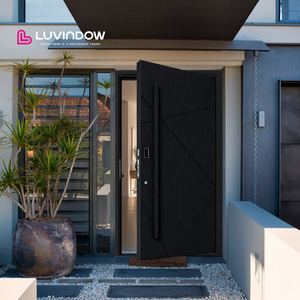
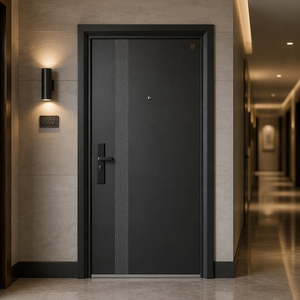
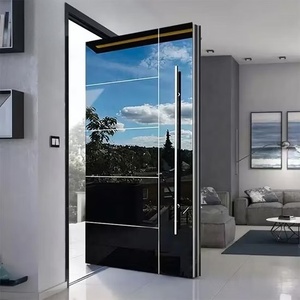
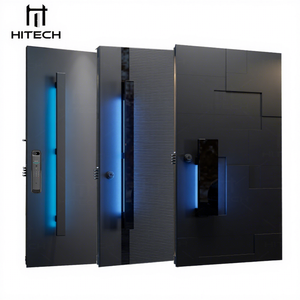
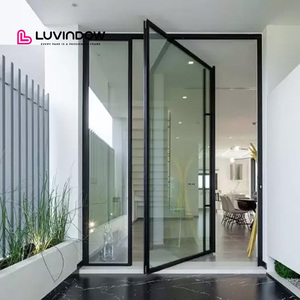
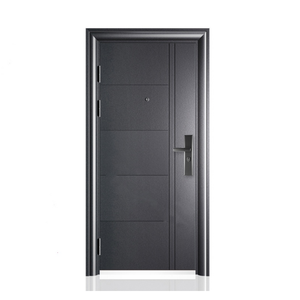
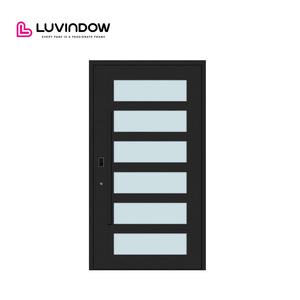
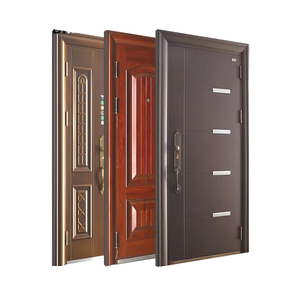
Architectural Engineering: Thermal Break & Structural Glass Performance
An Technical Overview for B2B Procurement Officers, Architects, and Commercial Contractors
In modern architectural design, the entry door serves not merely as a transitional threshold but as a critical component of the building envelope's thermal, structural, and security infrastructure. As a premier OEM/ODM modern glass entry doors supplier, our engineering division addresses the technical friction between expansive transparent sightlines and rigorous building energy code compliance (such as NFRC, Energy Star, AS2047, and European CE standards).
1. Thermal Insulation and Glazing Technology
The U-Factor (overall coefficient of heat transfer) of an architectural glass entry assembly is dictated by profile composition and glazing configuration. By utilizing extruded 6063-T6 architectural grade aluminum profiles insulated with 24mm to 34mm reinforced polyamide thermal breaks, system U-values drop to as low as 0.18 to 0.24 BTU/h·ft²·°F (1.0 to 1.4 W/m²K).
| Performance Parameter | Standard Entry Door | Derka OEM Thermal Break Glass Door | Test Standard / Certification |
|---|---|---|---|
| U-Factor (Thermal Transmittance) | 0.45 – 0.65 BTU/h·ft²·°F | 0.18 – 0.24 BTU/h·ft²·°F | NFRC 100 / EN ISO 10077-2 |
| Solar Heat Gain (SHGC) | 0.40 – 0.55 | 0.18 – 0.28 (Low-E Coated) | NFRC 200 / EN 410 |
| Acoustic Rating (STC / Rw) | 28 – 32 dB | 40 – 48 dB (Acoustic PVB Laminate) | ASTM E90 / ISO 717-1 |
| Structural Wind Load | 1200 Pa – 2000 Pa | 3000 Pa – 5000 Pa (Hurricane Impact) | ASTM E330 / AS2047 / EN 12210 |
| Water Penetration Resistance | 250 Pa | 700 Pa – 900 Pa | ASTM E331 / EN 12208 |
2. Acoustic Attenuation & Sound Insulation Mechanics
Urban commercial developments and luxury residential estates require enhanced acoustic insulation. Sound transmission loss is achieved through asymmetrical glass unit construction (e.g., 6mm tempered outer glass + 12mm Argon air space + 8.76mm acoustic laminated inner glass). The integration of multi-layer EPDM (Ethylene Propylene Diene Monomer) gasket systems around the perimeter frame eliminates sound leakage pathways, consistently yielding Sound Transmission Class (STC) ratings above 42 dB.
3. Structural Security and Multi-Point Hardware Integration
Security engineering for glass entry doors necessitates structural rigidity without compromising architectural elegance. Frame extrusions feature minimum wall thicknesses of 2.0mm to 3.0mm, reinforced at corner joins with heavy-duty cast aluminum corner cleats and dual-component polyurethane structural adhesive. Furthermore, our OEM/ODM customization capabilities support motorized multi-point automatic locking systems, smart biometric access controls (fingerprint, keypad, facial recognition), and integration with commercial building automation systems (BAS).
Global Architectural Trends & Future Sourcing Insights (2025–2030)
Macro-Industry Shifts Shaping B2B Procurement for Modern Glass Entry Doors
As international architectural preferences pivot toward minimalism, structural transparency, and decarbonized building material supply chains, B2B importers, distributors, and real estate developers must align their sourcing strategies with emerging technological vectors. Our market intelligence highlights four dominant procurement trends:
Trend 1: Vacuum Insulated Glass (VIG) Integration
With ultra-narrow profiles gaining market share, traditional thick double-glazed units are being replaced by Vacuum Insulated Glass (VIG). VIG technology achieves U-values under 0.6 W/m²K within a profile thickness of just 8.3mm, enabling ultra-slim sightline glass entry doors that comply with strict zero-energy building codes across Europe and North America.
Trend 2: Ultra-Large Format Pivot Entry Systems
Modern villa designs demand dramatic, grand entrances. Hydraulic floor-spring pivot hardware capable of supporting panel weights exceeding 500 kg to 1000 kg and panel heights up to 6 meters is increasingly specified. Proper weight distribution and offset pivot engineering ensure effortless manual operation while maintaining wind-load resilience.
Trend 3: Electrochromic & Smart Privacy Glass
Switchable Polymer Dispersed Liquid Crystal (PDLC) electrochromic glass allows entry doors to transition instantly from crystal-clear transparency to opaque privacy at the touch of a button or via automated smart home triggers. OEM integration of wiring tracks and concealed electrical transfer hinges is now standard for luxury projects.
Trend 4: Carbon-Neutral Recycled Aluminum Extrusions
ESG compliance is driving developers to demand low-carbon aluminum profiles smelted using renewable hydro-power energy. Utilizing scrap-recycled aluminum alloys reduces profile embodied carbon by up to 75% without compromising mechanical tensile strength or powder coating finish durability.
Enterprise Capabilities: Why Partner with Foshan Derka Door & Window Co., Ltd.
Direct-from-Factory Scale, Precision CNC Manufacturing, and Uncompromising Quality Governance
Operating from our expansive 115,000 square meter manufacturing headquarters in Foshan, Guangdong, Foshan Derka Architectural Doors & Windows Co., Ltd. represents the zenith of Chinese architectural door manufacturing. With over 25 years of continuous international export experience, our facility bridges the gap between customized European aesthetic design and high-volume industrial cost efficiency.
Advanced CNC Machining
9 automated extrusion and assembly lines equipped with 5-axis German CNC machining centers ensure profile cutting and hardware mortising precision within ±0.2mm tolerances.
44-Point Quality Inspection
Every door passes a rigorous 44-point quality control sequence covering raw profile wall thickness, anodizing/PVDF film coating thickness, corner crimping pull-strength, and pressurized air-water tightness testing.
Export Crating & Logistics
All finished units are wrapped in protective surface film, fitted with impact-resistant corner guards, and enclosed in fully closed fumigated plywood crates with detailed project tag labeling.
Comprehensive OEM & ODM Customization Scope
We provide full turn-key customization tailored to regional market demand:
- Dimensional Scale: Oversized single-panel doors up to 3000mm (W) x 6000mm (H); custom jamb depths matching regional wall framing requirements (e.g., 4-9/16" and 6-9/16" for North American framing).
- Surface Finishes: Fluorocarbon PVDF coating (AkzoNobel/PPG), marine-grade anodizing (Class 15/25), powder coating in full RAL spectrum colors, and authentic textured wood-grain heat transfer sublimation.
- Architectural Glazing Options: Single, double, and triple IGUs; Low-E (solar control & thermal retention); ceramic frit patterns; fluted/reeded decorative glass; bullet-resistant and hurricane impact SGP laminated assemblies.
- Hardware System Integration: Fully concealed German hinges (Siegenia, Hoppe, GU, Geze), multi-point lock mechanisms, motorized smart lock systems, and custom extruded pull handle designs up to 2.5 meters in length.
Our staff of 50+ structural engineers provides BIM models and CAD shop drawings within 48 hours.
Frequently Asked Procurement Questions (FAQ)
Direct Technical Guidance from Our Senior Export & Engineering Teams
Initiate Your OEM/ODM Entry Door Project Today
Partner with China's leading architectural glass entry door manufacturer. Contact our engineering team for instant technical consultation, custom CAD drawing preparation, and factory-direct wholesale pricing.