Featured Commercial & Villa Entrance Door Systems
Precision-engineered aluminum profiles, thermal-break structures, and high-security Smart Lock integrations certified for global building codes.
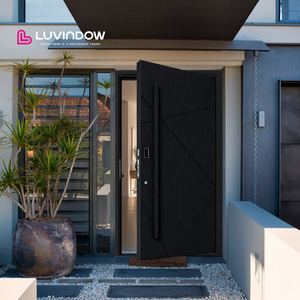
American Energy Efficient Residential Thermal Break Aluminum Entry Door With Smart Lock
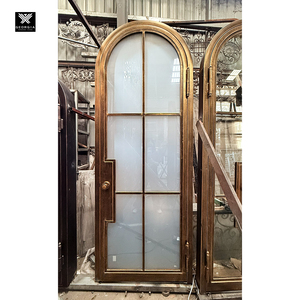
Arched Switchable Glass Steel Single Doors For Houses Front Entry Grilles Smart Frosted Glass Doors Interior Exterior
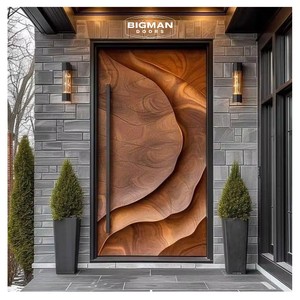
American Luxury Villa Solid Wood Black Walnut Front Entry Carved Exterior Modern Door Entrance Main Door for Houses
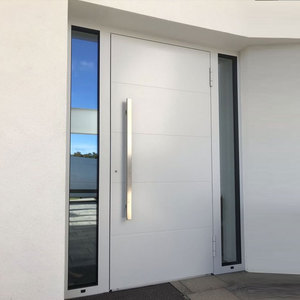
Villa Apartment Exterior Modern White Flat Panel Door Front Entry Doors Entrance Pivot Exterior Custom Doors for House
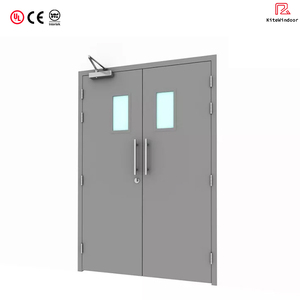
Custom Residential Exterior Front Entry Security Fire-Rated Double Metal Steel Doors Solid Stainless Steel Fire Rated Doo
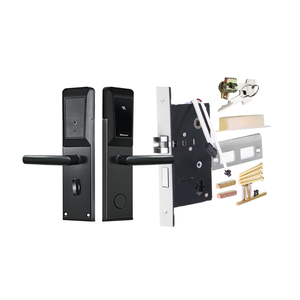
Digital Eletronic Hotel Rf Card Door Lock Hotel Lock Software Management System
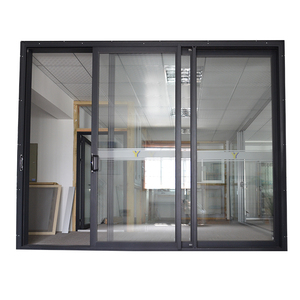
NFRC Certificate New Modern Big Entrance Aluminium Low-e Sliding Rail Glass Patio Doors
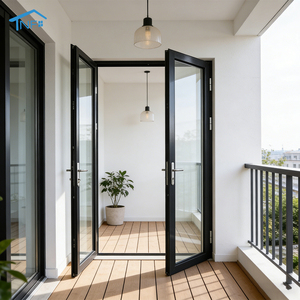
Foshan Aluminum Alloy Entry Doors Factory High Quality Modern Finished Swing Glass Door For Villa CE Certified
B2B Architectural Selection Framework: Evaluating Top 10 Aluminum Entrance Door Suppliers
When specifying aluminum entrance door systems for high-end residential luxury villas, multi-family housing developments, or modern commercial real estate, international developers and procurement directors face rigorous technical trade-offs. An entrance door is not merely a visual architectural anchor; it serves as the building envelope's primary defense against thermal energy transfer, structural wind loading, water ingress, and unauthorized intrusion.
To establish a authoritative supplier ranking, procurement teams must evaluate manufacturers across five fundamental engineering dimensions:
1. Metallurgy & Alloy Integrity
Top-tier exporters exclusively utilize primary 6063-T5 or 6063-T6 architectural grade aluminum extrusions with wall thicknesses exceeding 2.0mm to 3.0mm. Substandard suppliers frequently blend scrap aluminum, leading to micro-cracking during anodization or powder coating, compromising structural load limits under gale-force wind pressures.
2. Polyamide Thermal Barrier
High-performance entrance doors incorporate techno-polymer Polyamide PA66-GF25 (25% fiberglass reinforced) thermal break strips. This architectural barrier breaks the conductive heat path between exterior and interior profile skins, lowering door assembly U-factors to sub-1.2 W/m²K levels aligned with Passive House criteria.
3. Surface Finishing Durability
Resistance to UV degradation, coastal salt spray, and urban pollution requires fluorocarbon (PVDF) coating systems compliant with Qualicoat Class 2 or Class 3 standards, or hard-coat anodizing exceeding 25 microns. This guarantees color fastness and anti-chalking performance for over 30 years.
4. Security & Smart Integration
Modern entrance systems demand multi-point locking gearboxes (3-point to 7-point locking pins) paired with heavy-duty 3D adjustable concealed hinges capable of supporting sash weights over 300 kg. Integration with biometric RFID, 3D facial recognition, and motorized smart locks is now standard.
Technical Insight: According to global structural envelope audit standards, an aluminum entry door system featuring double-sealed EPDM continuous weather-stripping combined with multi-chamber insulated profile profiles cuts building HVAC energy loss by up to 34% compared to non-thermal break metal frames.
Comparative Technical Matrix: Standard vs. Tier-1 Export Engineering
| Engineering Specification | Standard Export Supplier | Foshan Derka Premium Standard | Project Performance Benefit |
|---|---|---|---|
| Aluminum Profile Alloy | 6063-T5 (Recycled mix / 1.4mm) | 6063-T6 Primary Ingot (2.0mm - 3.0mm) | +45% Tensile strength & zero micro-sagging |
| Thermal Insulation Strip | Generic PVC or Low-grade PA | German PA66-GF25 Polyamide | High melting point, zero shear deformation under heat |
| Glazing Specification | Single Tempered or Double Glaze | Double/Triple Low-E Argon-Filled SGCC/IGCC | U-Factor ≤ 0.22 BTU/h·ft²·°F (0.8-1.2 W/m²K) |
| Locking Mechanism | Single latch security bolt | Multi-Point German Siegenia/HOPO Gearbox | RC3 / PAS 24 Anti-burglary certification rating |
| Weather Gaskets | Standard Rubber / Vinyl | Co-extruded EPDM Foamed Sponge Gaskets | Class 4 Air Tightness & 750 Pa Water Tightness |
Foshan Derka: Factory Manufacturing Infrastructure & Quality Control
Based in China's premier architectural aluminum hub—Foshan, Guangdong—Foshan Derka Architectural Doors & Windows Co., Ltd. represents over 25 years of specialized export excellence, engineering luxury entrance solutions for global projects.
115,000 m² Mega Manufacturing Hub
Operating 9 fully automated CNC extrusion, cutting, crimping, and assembly production lines, the facility operates 16 hours daily to maintain annual production capacities exceeding 500,000 square meters of custom doors and windows, guaranteeing strict project milestone delivery schedules.
44-Point Quality Inspection Protocol
Quality assurance is embedded in every assembly phase. Raw aluminum wall thickness, tensile hardness, powder coat micron depth, corner joint structural crimping, EPDM seal resilience, hardware torque tolerance, and dynamic water spray penetration tests are executed and documented before crate sealing.
Global Compliance & Testing Rigor
Derka entrance systems carry international laboratory certifications including North American NFRC thermal ratings, Energy Star compliance, Australian AS2047 hurricane and wind pressure validation, European CE marking, and ISO 9001 certified operational management.
Future Sourcing & Architectural Trends in Entrance Door Systems
The global entrance door market is undergoing a rapid technological evolution driven by strict carbon-neutral building codes, smart home integration, and modern minimalist architectural preferences. Procurement managers and architectural specifiers must anticipate these shifts when designing future-proof developments.
Trend 1: Ultra-Large Heavy-Duty Pivot Systems
Architectural preference has shifted dramatically toward floor-to-ceiling pivot entrance doors reaching heights up to 4.5 meters and widths of 2.0 meters. These systems utilize hydraulic floor springs and top pivot axes engineered with aircraft-grade aluminum, allowing effortless 360-degree rotation of 400kg sashes with flush threshold designs.
Trend 2: Integrated Smart Glass & IoT Locks
Next-generation entry doors seamlessly incorporate electrochromic Smart Switchable Privacy Glass—instantly toggling between transparent glass and frosted opacity via smartphone apps or smart home controllers. Automated electronic multi-point lock actuators connect with home security hubs for keyless entry access logging.
Trend 3: Low-Carbon Circular Aluminum
Driven by European Union Carbon Border Adjustment Mechanisms (CBAM) and LEED green building certification demands, suppliers are utilizing low-carbon aluminum smelted using renewable hydro-electric power. This slashes the embedded carbon footprint of door profiles from 18kg CO2/kg to under 4kg CO2/kg of profile.
Trend 4: Concealed & Flush Sightline Architecture
Modern aesthetics favor completely coplanar entry doors where the sash sits perfectly flush with the frame profiles on both interior and exterior sides. Concealed 180-degree heavy-duty hinges eliminate visible mechanical hardware, leaving pure, sleek architectural lines.
B2B Global Procurement Frequently Asked Questions
Direct engineering clarity regarding shipping, customization, compliance, and factory audits.
What thermal performance ratings (U-Factor / SHGC) can your aluminum entrance doors achieve?
Our thermal break entrance door series engineered with PA66-GF25 insulation strips, warm-edge spacer bars, and triple Low-E argon-filled glass units achieve U-factors down to 0.18 BTU/h·ft²·°F (approx. 1.0 W/m²K), meeting stringent ENERGY STAR®, NFRC, and Passive House thermal efficiency codes across North America and Europe.
Can you customize door dimensions, frame colors, and glass treatments for specific projects?
Yes. Every single unit is manufactured 100% made-to-measure according to your approved architectural CAD shop drawings. We offer standard RAL color matching, dual-color extrusion options (different inner/outer colors), wood grain powder coatings, custom decorative grilles, frosted, tinted, or hurricane-impact laminated safety glass.
How do you protect oversized glass panels and aluminum frames during sea freight shipment?
Doors are packaged using a 5-layer protective system: surface protective film on all extrusions, plastic corner guards, EPE foam padding, vacuum moisture sealing, and custom fumigation-free solid plywood crates. Each crate is labeled with project room numbers and floor designations for rapid site sorting.
What structural wind load and water tightness certifications do your entrance doors possess?
Derka entry doors are tested to withstand Design Pressure (DP) ratings up to DP65 / 3100 Pa wind load pressures and 750 Pa water penetration resistance. We supply official laboratory test reports matching AS2047 (Australia), NFRC / ASTM (USA), and CE (EN 14351-1) criteria upon project specification review.
Can we perform a remote or live video factory audit of our door production order?
Absolutely. Buyers and third-party inspection agencies (SGS, TÜV, Intertek) are invited to audit our Foshan facility. For international clients unable to travel, we schedule live video inspections covering profile extrusion checks, glass assembly, hardware functional testing, and crate packing verification.
What is the average lead time for custom commercial or villa door order production?
Standard production lead time is 25 to 35 calendar days following final CAD shop drawing approval and color sample sign-off. For large-scale multi-family development projects, rolling container shipments can be scheduled according to site construction phases.
Request Engineering Support & Comprehensive Product Catalog
Partner with China's leading aluminum entrance door manufacturer. Send us your project floor plans or opening schedules for direct factory price quotes, CAD shop drawings, and physical sample kits.