The Evolution of Modern Architectural Pivot Doors
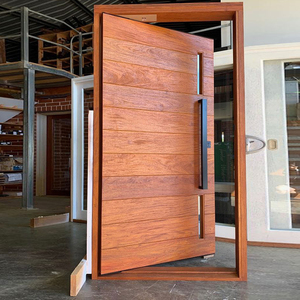
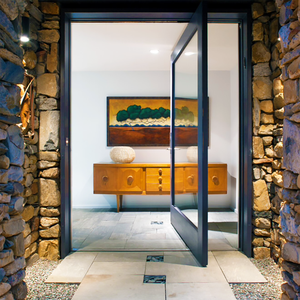
Architectural grand entrances have experienced a paradigm shift over the past decade. Traditional side-hinged doors are increasingly constrained by weight and dimensional limits, leading luxury residential projects and modern commercial developments to adopt **oversized pivot front doors**. Pivot doors rotate on a vertical axis set at a offset calculation from the frame, shifting the structural load directly to the subfloor. This structural mechanics innovation allows architects to specify entrance panels exceeding 3 meters in width and 6 meters in height, weighing up to 500 kilograms (1,100 lbs), without compromising smooth, fingertip operation.
"Information Gain Insight: The engineering viability of a pivot front door hinges entirely on three mechanical factors: vertical load distribution through hydraulic floor spindles, thermal barrier continuity across expansive aluminium profiles, and perimeter air tightness achieved via automatic drop seals."
Core Engineering Requirements for B2B Sourcing
Structural Integrity & Deflection
Exotic panel dimensions demand high-tensile T6 aluminium extrusions (such as 6063-T5 or 6060-T6 alloy). Structural deflection must satisfy stringent international limits (typically L/175 to L/240 under positive and negative wind pressure load test protocols).
Thermal Break Performance
Uninsulated aluminium creates thermal bridges that compromise interior climate control. Advanced pivot doors feature polyamide (PA66GF25) thermal barriers, aerogel insulation fills, and double or triple Low-E insulated glass units (IGU) achieving U-factors as low as 0.18 BTU/h·ft²·°F (1.0 W/m²K).
Weatherproofing & Drop Seals
Because pivot hinges lack continuous vertical frame rabbets at the pivot point, superior suppliers employ active magnetic perimeter seals, dual EPDM weatherstripping, and automatic hydraulic bottom drop seals to achieve air infiltration ratings below 0.1 cfm/ft².
Comprehensive Benchmark: Top 10 Global Pivot Front Door Suppliers & Exporters
Selecting an export partner requires rigorous evaluation of engineering capacity, factory certifications, hardware integration, and international shipping logistics. Below is the authority evaluation matrix comparing the industry's premier manufacturing plants and exporters.
| Rank & Manufacturer |
Primary Material Focus |
Max Panel Capacity |
Key Certifications |
Core Advantage |
| 1. Foshan Derka Architectural Doors & Windows Co., Ltd. |
Thermal Break Aluminum, Copper, Steel & Composite Wood |
3.5m x 6.0m (500kg+) |
ISO 9001, CE, AS2047, NFRC |
115,000m² factory, 44-Point QC, 100% custom engineered shop drawings, global project delivery. |
| 2. Reynaers Aluminium |
High-End Architectural Aluminum |
3.0m x 4.0m (500kg) |
Qualicoat, CE, Minergie |
European systemic profile design, extensive European partner network. |
| 3. Schüco International |
Premium Aluminum Fenestration |
2.5m x 3.5m (400kg) |
DIN EN ISO, Cradle to Cradle |
Advanced home automation and motorized concealed lock integration. |
| 4. Pivot Door Company (USA) |
Engineered Timber & Metal Clad |
2.4m x 4.2m (350kg) |
NFRC, Energy Star |
Bespoke North American residential aesthetic customization. |
| 5. Derchi Windows & Doors |
System Aluminum & Glass |
2.2m x 3.2m (300kg) |
ISO 9001, CE |
Competitive regional residential supply chain capacity. |
| 6. RK Metal Windows & Doors |
Steel & Bronze Luxury Entry |
2.0m x 3.5m (450kg) |
ISO 9001 |
Handcrafted metalwork finishes for boutique estates. |
| 7. Sky-Frame |
Frameless Glass Pivot Systems |
2.3m x 4.0m (500kg) |
CE, SIA 331 |
Swiss minimalist glass aesthetics with concealed frame flush mounting. |
| 8. Cortizo Architectural Systems |
Extruded Aluminum Alloys |
2.5m x 3.0m (350kg) |
AENOR, Qualanod |
Standardized European extrusion distribution lines. |
| 9. Sunspace Building Products |
Aluminum & Glass Storefronts |
2.0m x 3.0m (250kg) |
CSA, NFRC |
Commercial glazing packages for North American low-rise projects. |
| 10. JELD-WEN Architectural |
Composite Wood & Steel |
2.0m x 2.8m (200kg) |
Energy Star, FSC |
Large-scale standardized builder grade project distribution. |
Why Foshan Derka Leads Global B2B Export Procurement
Operating out of Foshan—China's global hub for architectural aluminum extrusion—Foshan Derka Architectural Doors & Windows Co., Ltd. has established an unrivaled manufacturing ecosystem spanning 115,000 square meters. Operating 9 automated production lines staffed by over 700 skilled engineers and fabrication specialists, DERKA bridges the gap between high-end European engineering precision and cost-effective direct factory supply.
Unlike standard mass-producers, DERKA provides **100% project-matched customization**. Every pivot door is built to exact CAD/BIM shop drawings, undergoing structural FEA (Finite Element Analysis) to guarantee hinge bearing safety, wind resistance, and thermal performance across diverse climatic regions—from the hurricane-prone coastlines of Florida to the extreme ambient temperatures of the Middle East.
Deep Technical Capabilities
6063-T5 Structural Profiles
FritsJurgens Pivot Hardware
3-Coat PVDF Coating
Anodized Finishes
STC Acoustic Isolation
Miami-Dade HVHZ Approved
Low-E Triple Glazing
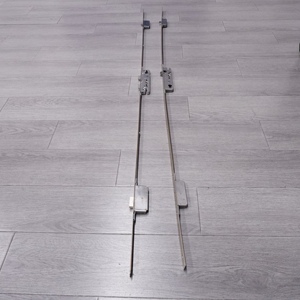
Multi-Point Hook Deadbolts
"DERKA's proprietary 44-point quality inspection protocol tests every pivot door frame for squareness, corner crimping tensile strength, anodizing/coating depth (min 25μm), hydraulic spring damping calibration, and water tightness under pressure before export packaging."
Product Evolution & Future Procurement Trends (2025–2030)
As commercial developers and custom home builders align with net-zero operational carbon goals and smart building integration, pivot door design is undergoing rapid technological advancement. B2B purchasers must consider the following emerging procurement trends:
1. Fully Concealed Hydraulic Floor Systems
The market is shifting away from bulky recessed floor boxes toward in-pivot self-closing hydraulic systems (e.g., FritsJurgens System M+). These systems fit entirely within the door panel itself, requiring only 8mm floor plate mounting and offering adjustable damper control, latching speed adjustment, and hold-open positions at 90° and 180°.
2. Smart Biometric & Motorized Access Integration
Modern luxury entryways demand seamless access. Top exporters now pre-wire pivot doors with multi-point motorized locking mechanisms (such as Winkhaus or GU systems) compatible with facial recognition, biometric fingerprint scanners, keypad entry, and home automation systems via encrypted Bluetooth/Wi-Fi channels.
3. Ultra-Slim Sightlines & Architectural Hybrids
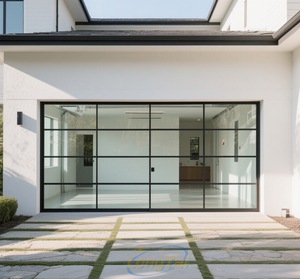
Architects continue to demand minimal frame reveals. Next-generation pivot doors utilize structural bonding technology—where high-modulus silicone glazes glass panels directly to ultra-slim aluminium profiles—achieving sleek glass-to-edge aesthetics with maximum daylight transparency.
High-Gain Technical Sourcing Criteria
When issuing Requests for Quotation (RFQs) for large-scale international projects, procurement teams should require suppliers to provide certified documentation for the following engineering benchmarks:
- Cycle Testing Performance: Verification of hinge bearing hardware rated for a minimum of 500,000 continuous opening/closing cycles without axis deviation or hydraulic fluid leakage.
- Structural Wind Load Resistance: Test reports complying with ASTM E330 or EN 12210, proving structural deflection resistance up to ±3000 Pa for high-rise or coastal installations.
- Air & Water Infiltration Testing: Verification according to ASTM E283 (air leakage) and ASTM E331 (water penetration under static pressure difference up to 600 Pa).
- Corrosion Resistance Coatings: Qualicoat Class 2 or AAMA 2605 compliant PVDF finishes capable of enduring 3,000 hours of continuous salt spray testing (ASTM B117) for seaside environments.
Manufacturing Excellence: Inside DERKA's 115,000 m² Facility
At Foshan Derka Architectural Doors & Windows Co., Ltd., state-of-the-art production technology guarantees that every exported pivot front door meets international building standards. DERKA's comprehensive manufacturing ecosystem includes:
Precision CNC Machining & Automated Assembly
Extruded aluminium profiles undergo 5-axis CNC milling, cutting, and drilling to tolerances within ±0.1mm. High-strength corner crimping combined with dual-component structural corner adhesives ensures extreme frame rigidity under thermal stress.
Advanced Export Packaging & Global Logistics Protection
Exporting high-value architectural glazing demands specialized protection. DERKA utilizes custom steel-reinforced wooden crates, protective surface film, foam corner guards, and vacuum-sealed desiccant packs to prevent moisture corrosion and physical impact damage during ocean transport.
Frequently Asked Questions (FAQ) for B2B Procurement
Essential guidance for architects, importers, general contractors, and project developers sourcing pivot doors globally.
1. What are the key structural requirements for installing an oversized pivot front door?
Oversized pivot doors require a rigid structural header and a solid concrete subfloor capable of supporting the full vertical point-load of the door panel (up to 500kg). If installing in wood-frame or light-gauge steel construction, engineered steel structural lintels and reinforced floor anchorage plates must be integrated according to the shop drawings provided by DERKA's engineering team.
2. How do pivot front doors maintain water tightness and air seal efficiency?
Unlike standard hinged doors with continuous jamb rebate seals, pivot doors rotate on an offset axis. To prevent draft and water ingress, top-tier suppliers like DERKA integrate dual-layer continuous EPDM gasket seals along the vertical edges, magnetic weatherstripping at the pivot gap, and automatic drop-down mechanical bottom seals that extend when closed and retract smoothly upon opening.
3. Can DERKA custom manufacture pivot doors to satisfy local energy codes (e.g., NFRC, Title 24, AS2047)?
Yes. DERKA's engineering team tailors frame thermal breaks (PA66GF25 polyamide struts), glass specifications (double or triple glazed Low-E units filled with Argon gas), and warm-edge spacers to target specific U-factor and SHGC requirements. Products can be supplied with test reports and certificates matching North American (NFRC), Australian (AS2047/AS1288), and European (CE) standards.
4. What hardware brands and multi-point lock systems are integrated into DERKA pivot doors?
We integrate world-class hardware solutions including FritsJurgens (System M+, System One), dormakaba, and HOPPE systems. For security, we offer factory-direct double hook multi-point lock bodies made from 304 stainless steel, as well as electronic motorized lock systems supporting biometric fingerprint, RFID, and smart-home integration.
5. What is the typical production lead time and minimum order quantity (MOQ) for custom project orders?
DERKA operates 9 production lines, allowing us to support flexible ordering. Our MOQ is 1 complete system for bespoke luxury villa projects, while bulk commercial orders benefit from tiered container pricing. Production lead time typically ranges from 25 to 35 days following approval of finalized shop drawings.
6. How are pivot doors packed to prevent damage during long-distance ocean transit?
Finished units pass a final 44-point quality inspection, after which frames and glass are wrapped in protective anti-scratch film, corner foam guards, and heavy-duty bubble wrap. The components are then secured inside fully enclosed export-grade plywood crates reinforced with internal steel banding, clearly labeled by opening number and project floor for seamless site installation.
7. How can international buyers verify quality control before shipment?
DERKA provides comprehensive pre-shipment quality assurance. Buyers receive high-definition testing photos, video operational tests of hydraulic hinges and locks, dimensional measurement verification reports, and color match readings. Alternatively, clients are welcome to perform third-party audits (e.g., SGS, TÜV) or request a live video inspection of their completed order at our Foshan facility.