Featured OEM/ODM Entry Doors & Access Control Systems
Explore high-performance architectural entrance solutions engineered in Foshan, China. Fully customizable for thermal insulation, hurricane resistance, commercial security, and smart access control.
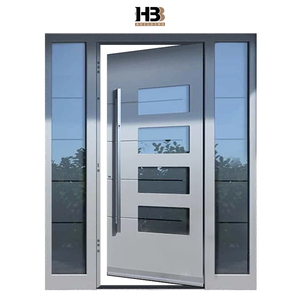
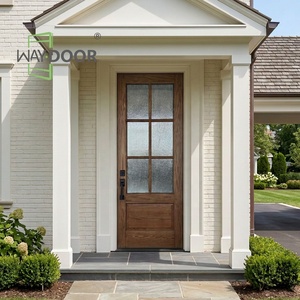
Navigating China’s Architectural Aluminum Entry Door Supply Chain
An authoritative operational guide for real estate developers, procurement directors, project architects, and B2B building material importers seeking verified OEM/ODM manufacturing capability.
Foshan Industrial Cluster Dominance
Foshan, Guangdong stands as the undisputed global capital of architectural aluminum extrusions. By sourcing directly from integrated Foshan facilities like Foshan Derka Architectural Doors & Windows Co., Ltd., international buyers reduce raw profile supply risks, gain access to advanced anodizing lines, and cut total landed procurement costs by up to 35% compared to Western fabrication houses.
Metallurgical & Profile Integrity
Tier-1 entry door manufacturers employ primary 6063-T5 or 6060-T66 grade aluminum extrusions with profile wall thicknesses exceeding 2.0mm to 3.0mm for structural door sashes. Unlike secondary recycled scrap aluminum, virgin billets ensure superior structural yield strength (>170 MPa), precise mitered corner alignment, and zero structural bowing under intense thermal expansion stress.
Thermal Barrier Engineering
Modern energy codes (such as IECC in the USA, NCC in Australia, and EN ISO 10077 in Europe) require advanced Thermal Break Technology. Utilizing glass-fiber reinforced Polyamide struts (PA66-GF25) inserted between extruded profiles, Chinese entry door factories achieve low overall U-factors (U < 0.24 Btu/h·ft²·°F / K-value < 1.4 W/m²K), preventing internal condensation and thermal bridge losses.
Technical Comparison: Architectural Profile & Surface Standards
Review the technical parameters required for specifying long-lasting exterior entry doors in harsh climatic zones, coastal salt-air environments, and high-traffic commercial applications.
| Performance Spec | Standard Commercial Grade | DERKA Premium Architectural Grade | Compliance Test Code |
|---|---|---|---|
| Profile Alloy & Temper | Recycled 6063-T5 (1.4mm - 1.6mm) | Virgin 6063-T6 / 6060-T66 (2.0mm - 3.0mm) | GB/T 5237.1 / ASTM B221 |
| Thermal Break Insulation | PVC / Low-Density Polyurethane Struts | Technoform Polyamide PA66-GF25 (24mm - 34mm) | EN 14024 / ISO 10077-2 |
| Surface Finish (Coating) | Standard PE Powder Coating (40-50µm) | Fluorocarbon PVDF (Kynar 500) / Qualicoat Class 2 | AAMA 2605 / ISO 2360 |
| Acoustic Isolation (STC) | STC 25 - 28 dB (Single Glazed) | STC 38 - 45 dB (Acoustic Laminated Double IGUs) | ASTM E90 / ISO 10140 |
| Wind Pressure Rating | 1500 Pa (Standard Residential) | Design Pressure DP60 - DP90 (>4500 Pa Impact) | ASTM E330 / TAS 202 (Hurricane) |
| Water Tightness Rating | 250 Pa Resistance | 600 Pa - 900 Pa Static & Dynamic Resistance | ASTM E331 / AS2047 Class 450Pa |
Future Directions in High-End Entry Door Manufacturing
To retain a competitive edge in global procurement, real estate developers and import distributors must align with emerging technological shifts in fenestration engineering.
1. IoT Smart Access Convergence
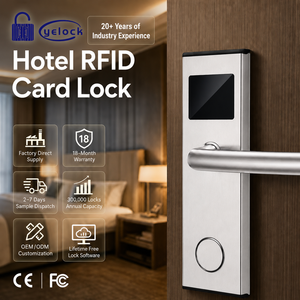
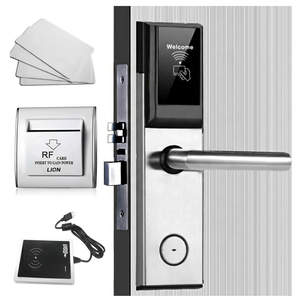
The integration of embedded smart locks—featuring RFID 13.56MHz sensors, 3D facial recognition, biometric fingerprint scanning, and Tuya/Zigbee/Z-Wave smart home connectivity—is now standard in luxury residential and hotel developments. Systems like the RFID Card Lock software eliminate mechanical key management headaches while logging real-time entry audits.
2. Ultra-Slim Sightline Minimalist Designs
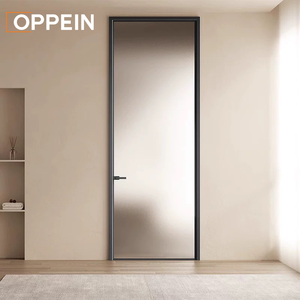
Architectural aesthetics continue to favor minimal frame exposure and maximal glass surface area. Concealed heavy-duty 3D adjustable hinges capable of supporting door sash weights over 300 kg, paired with narrow 18mm - 25mm visible sightlines, allow sweeping panoramic outdoor vistas without compromising structural load or forced-entry security ratings.
3. ESG Compliance & Low-Carbon Extrusions
Institutional buyers in Europe and North America increasingly require Environmental Product Declarations (EPD) and LEED credits. Leading Foshan manufacturers are transitioning to hydroelectric-smelted low-carbon aluminum and zero-VOC waterborne fluorocarbon coatings, achieving full compliance with strict global environmental carbon taxonomies.
4. Industrialized Pre-Hung Assembly Packages
On-site labor shortages across Western markets have accelerated demand for factory pre-hung door packages. Doors arriving on site complete with pre-milled lock mortises, installed sub-frames, pre-fitted weatherstripping, and factory glass installation reduce field installation hours by up to 65%, eliminating costly field fitting errors.
Frequently Asked Questions by International Buyers
Direct, technical, and commercial answers derived from decades of handling complex OEM/ODM door export orders.
How do Foshan aluminum entry door factories ensure air infiltration and water tightness compliance?
Can Chinese aluminum door profile systems meet thermal efficiency codes in cold climates?
What surface treatment is recommended for oceanfront or coastal villa installations?
What is the standard lead time and CAD shop drawing approval workflow for custom projects?
How are heavy glass panels and delicate powder-coated surfaces protected during ocean freight?
Is it possible to inspect orders live before final container loading?
Foshan Derka Architectural Doors & Windows Co., Ltd.
Operating a sprawling 115,000 m² manufacturing facility staffed by over 700 skilled technicians and engineers, DERKA operates 9 automated production lines delivering precision-engineered architectural aluminum doors, windows, and smart keyless entry systems worldwide. Backed by 44-point strict quality control procedures, ISO 9001 compliance, and international certificates (CE, AS2047, NFRC), we provide one-stop custom manufacturing for high-end residential, hotel, and commercial developments.
Contact Us