Executive Summary: Navigating China’s Low-E Glass Front Door Supply Chain
In modern sustainable architecture, the entrance system is no longer viewed merely as a structural barrier or aesthetic centerpiece; it is a critical node in the building envelope's thermal physics and security infrastructure. As global building codes tighten—exemplified by strict U-factor targets in North America’s ENERGY STAR® v7.0 and Europe’s Passive House standard (Passivhaus)—importers, main contractors, and real estate developers are turning to premier Chinese fenestration hubs, specifically Foshan, Guangdong.
This whitepaper offers a technical roadmap for evaluating Top China Low E Glass Front Door Factories & Suppliers. It explores the physics of microscopic metal-oxide spectral coatings, thermal break aluminum and composite profile geometries, structural pivot hardware, automated smart access integration, and strategic supply chain protocols necessary to maximize Information Gain and project ROI.
Physics of Low-E Coatings
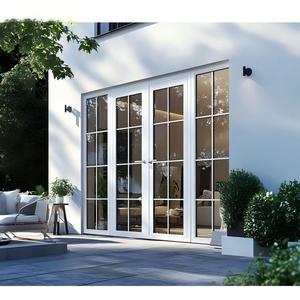
Low-Emissivity (Low-E) glass features microscopic, spectrally selective metallic layers (silver-nanometer coatings) that reflect far-infrared energy (heat) while transmitting visible light. Hard-coat (pyrolytic) vs. Soft-coat (off-line magnetron sputtered triple-silver) coating selections directly influence Solar Heat Gain Coefficient (SHGC) and U-factors in high-exposure front entries.
Structural Security & RC Ratings
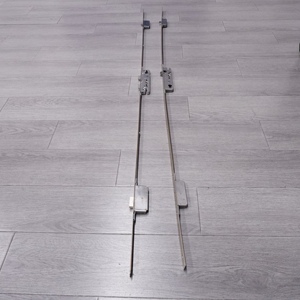
Combining Low-E glass with laminated SentryGlas® (SGP) or high-tensile PVB interlayers guarantees severe hurricane impact resistance (ASTM E1996) and forced-entry deterrence matching European Resistance Class 2 and 3 (EN 1627 RC2/RC3). Heavy-duty multi-point stainless steel locking bars complete the envelope safety.
Thermal Performance Metrics: Decoding Low-E Physics in Door Fenestration
When specifying Low-E glass front doors, architectural engineering teams must balance four core physical glass metrics to ensure total energy efficiency across different climate zones:
- U-Factor (Thermal Transmittance): Measures the rate of non-solar heat transfer through the door system (W/m²·K or BTU/h·ft²·°F). Lower values indicate superior insulation against winter interior heat loss and summer thermal gain. Premium thermal break aluminum Low-E front doors achieve U-factors as low as 0.75 to 1.2 W/m²·K.
- Solar Heat Gain Coefficient (SHGC): The fraction of incident solar radiation admitted through the glass panel. In tropical zones (e.g., UAE, Florida), low SHGC values (<0.22) prevent interior overheating. In sub-arctic or cold climates, higher SHGC values allow passive solar warming.
- Visible Light Transmittance (VLT): The percentage of daylight transmitted through the Low-E glazing assembly. Advanced triple-silver Sputtered Low-E coatings preserve VLT above 65% while blocking over 95% of damaging short-wave UV and long-wave infrared heat.
- Condensation Resistance (CR): Measures the door assembly's ability to resist moisture buildup on interior glass and frame surfaces under high interior-exterior thermal differentials.
| Glazing & Profile Assembly | Overall U-Factor (W/m²K) | SHGC Range | Acoustic Rating (STC) | Recommended Climate Target |
|---|---|---|---|---|
| Single Low-E + Standard Frame | 2.8 - 3.2 | 0.45 - 0.55 | STC 28 - 30 | Mild / Non-restricted regions |
| Double Low-E + Argon Gas + PA66 Break | 1.3 - 1.6 | 0.25 - 0.38 | STC 36 - 40 | ENERGY STAR® Zone 1-3 / Australia AS2047 |
| Triple Low-E + Double Argon + TPS Warm Edge | 0.75 - 1.0 | 0.18 - 0.28 | STC 42 - 46 | Passive House / Severe Winter & Extreme Heat |
| Laminated Hurricane Low-E (SGP) + Steel Core | 1.1 - 1.4 | 0.20 - 0.30 | STC 45+ | Coastal Wind-Borne Debris & High Security |
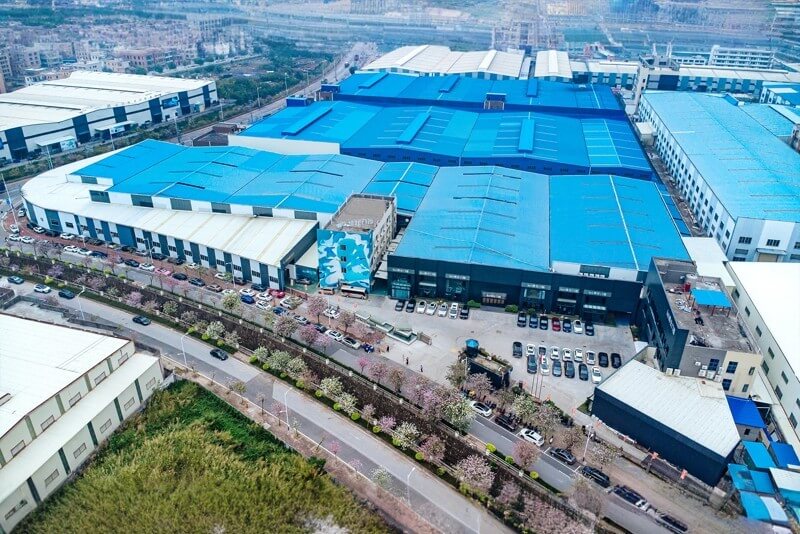
Detailed Manufacturing Workflow at Top Foshan Glass Door Factories
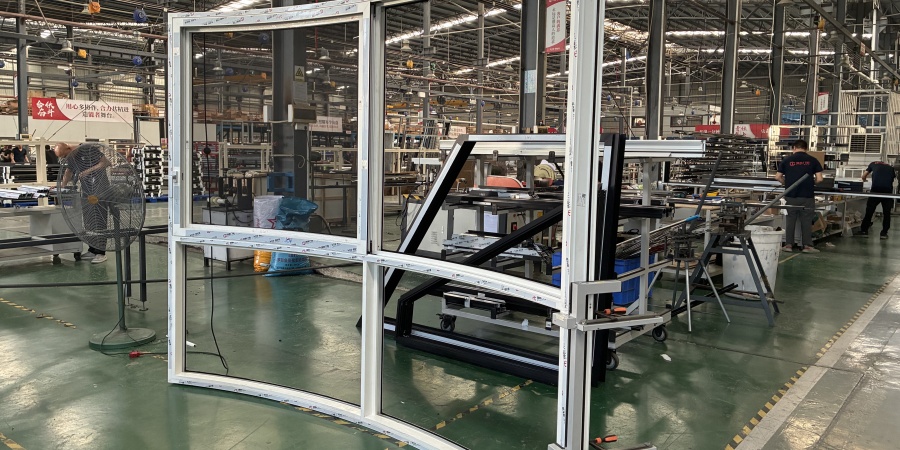
The manufacturing process for high-end exterior Low-E front doors requires zero-tolerance precision tooling. A quality failure at any point—such as seal failure leading to argon gas leakage or micro-flexing in large pivot hinge mounting points—can compromise an entire project. Leading Foshan OEMs like DERKA implement a rigid 6-phase engineering workflow:
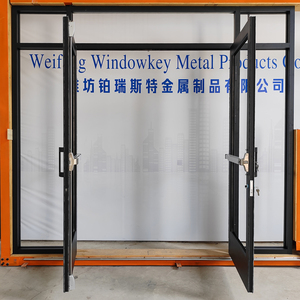
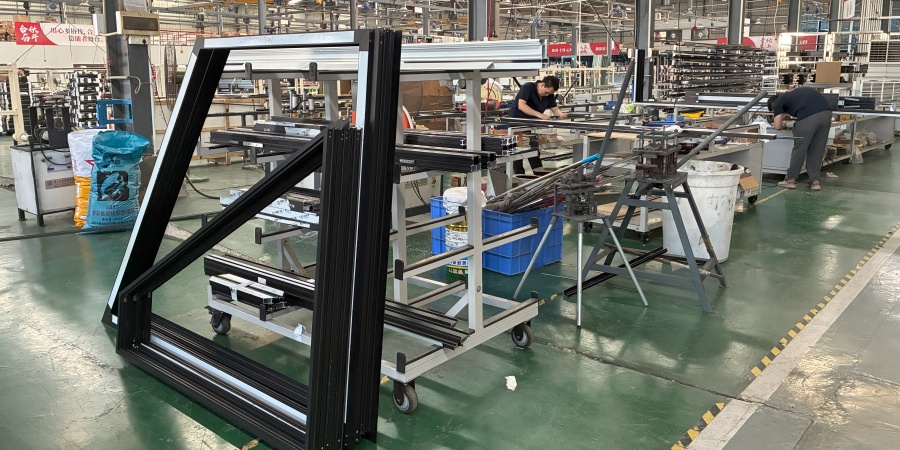
- Structural Profile Extrusion & Anodization: High-grade 6063-T6 aluminum extrusions are precision-milled. Polyamide PA66GF25 (25% glass fiber reinforced) thermal break strips are inserted to eliminate thermal bridging across inner and outer aluminum skins.
- Low-E Insulated Glass Unit (IGU) Fabrication: Raw float glass is coated with spectrally selective metal-oxide layers via Magnetron Sputtered Vacuum Deposition (MSVD). Glass sheets undergo thermal tempering at 680°C before automated assembly into sealed double or triple IGUs utilizing Thermoplastic Spacers (TPS) or Swisspacer warm-edge technology.
- Structural Corner Crimping & Hydraulic Sealing: Door leaf frames are assembled with heavy cast-aluminum corner keys, dual-component polyurethane corner adhesive (Injectable Glue), and EPDM continuous weatherstripping gaskets to resist extreme wind-driven rain pressure (up to 750 Pa).
- Hardware & Heavy-Duty Pivot Integration: Heavy-capacity floor spring hydraulics or top/bottom pivot systems capable of carrying door leaf weights from 300kg to over 800kg are integrated. Multi-point locking hooks are aligned with millimeter precision.
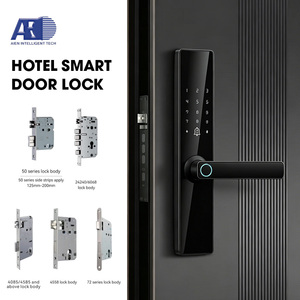
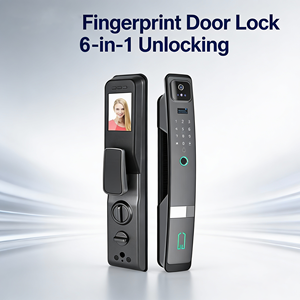
- Smart IoT Access System Integration: Biometric fingerprint sensors, 3D Structured Light face recognition modules, and Tuya/TTLock IoT smart locks are integrated directly into the door sash profile or lock trim panel with concealed wireways.
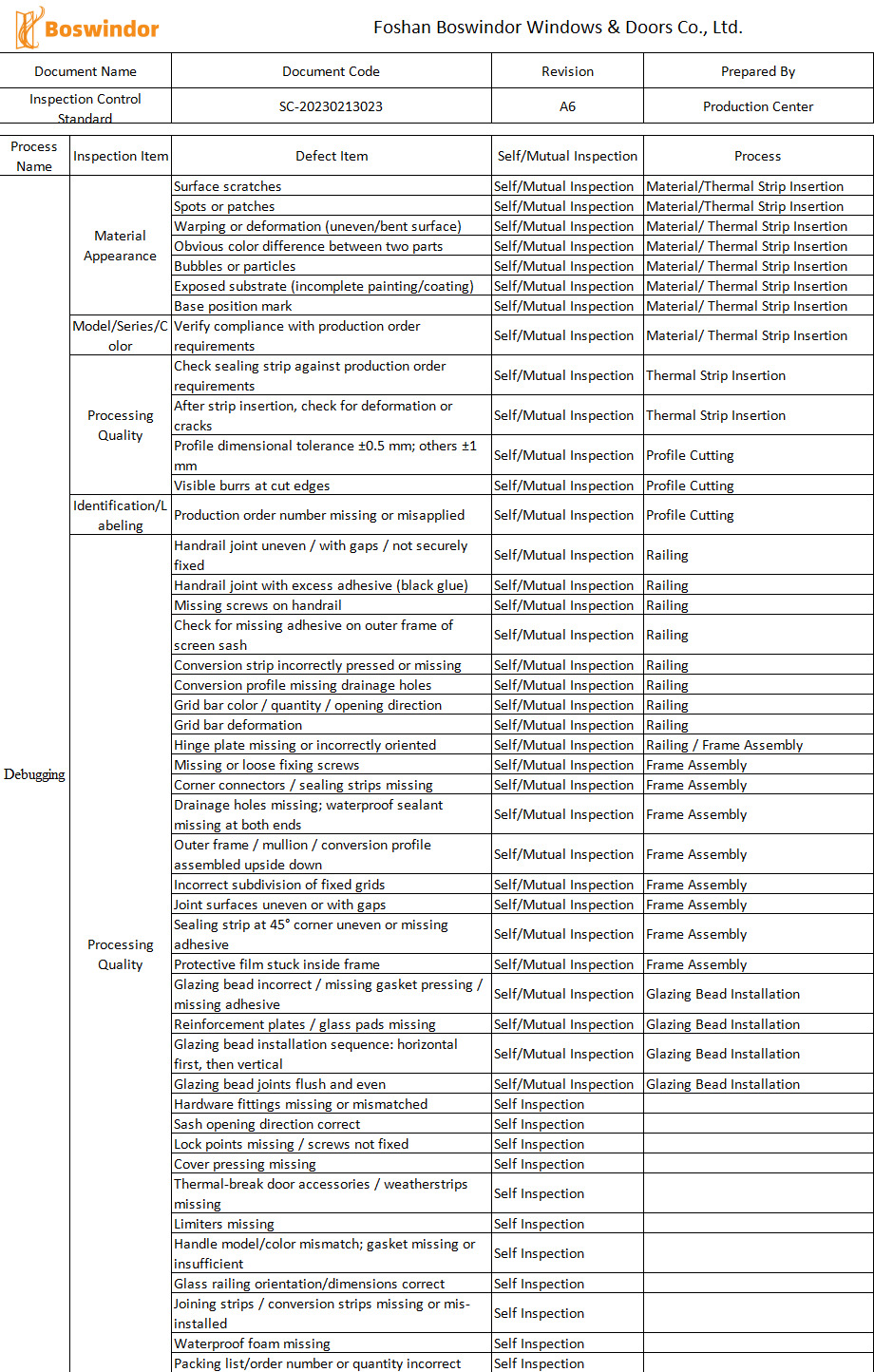
- 44-Point Quality Assurance & Testing: Finished doors undergo rigorous testing covering dimensional tolerances (±0.5mm), air tightness (ASTM E283), water penetration (ASTM E331), structural load (ASTM E330), and continuous 100,000-cycle lock actuation tests.
Future Technology & Procurement Trends for Front Door Systems (2025–2030)
As architectural trends favor grand entrance statements and smart building automation, procurement managers must align with factories actively investing in next-generation technology:
1. Oversized Architectural Pivot Doors with Zero-Threshold Drainage
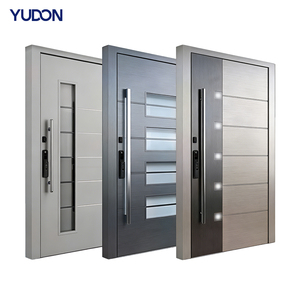
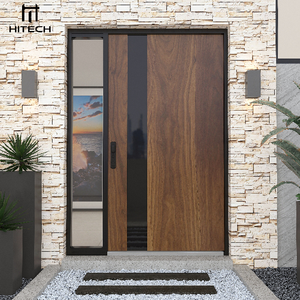
Residential luxury developments are moving away from traditional hinged double doors toward monumental single-panel pivot entrance doors measuring up to 2.5 meters in width and 6 meters in height. These systems utilize heavy-duty hydraulic pivot hinges embedded in the subfloor, paired with magnetic pop-up weather seals and concealed linear drainage channels to maintain flush, zero-threshold transition while preventing water ingress.
2. Vacuum Insulated Glass (VIG) & Dynamic Electrochromic Low-E Glazing
Emerging as the ultimate glazing innovation, Vacuum Insulated Glass (VIG) replaces gas-filled spaces between glass panes with a 0.2mm high-vacuum gap supported by microscopic micro-spacers. VIG achieves a U-factor of 0.40 W/m²K in a profile thickness of less than 10mm. Simultaneously, electrochromic Low-E glass allows occupants to dynamically adjust glass tinting from clear to privacy-opaque via smart home control or smartphone app.
3. 3D Face Recognition & Biometric Smart Access Integration
Keyless entry has evolved beyond simple keypad codes. Modern Low-E front doors manufactured in China integrate 3D Infrared Structured Light face recognition camera modules, optical fingerprint sensors, encrypted RFID, and dual Tuya/TTLock IoT connectivity directly into the multi-point lock mortise. These systems function reliably under extreme temperature ranges (-25°C to +60°C) with backup mechanical key and emergency USB power overrides.
4. Carbon Neutrality, EPD Certifications, & Circular Aluminum Sourcing
With environmental compliance becoming mandatory across Europe (CBAM - Carbon Border Adjustment Mechanism) and North America (LEED v4.1 certification), leading Foshan factories are transitioning to recycled low-carbon aluminum billets processed using hydroelectric energy. Requesting Environmental Product Declarations (EPD) from your Chinese supplier is fast becoming standard practice for commercial developers.
Buyer’s Factory Audit Matrix: Evaluating Chinese Suppliers
When selecting a Chinese manufacturer for wholesale or project-based Low-E glass front doors, importers should perform a structured audit using the following supplier rating protocol:
| Evaluation Pillar | Critical Inspection Items | Acceptable Standard / Benchmark |
|---|---|---|
| Raw Material Traceability | Aluminum Alloy Grade, Anodizing Thickness, PA66 Nylon Strips | Primary 6063-T6 Alloy (Not recycled scrap); Powder Coating Qualicoat Class 2 standard; Technoform PA66GF25 thermal strips. |
| Glazing Integrity | Low-E Coating Type, Sealant Quality, Gas Fill Percentage | Triple-Silver Soft-Coat; Dual-seal Structural Silicone (Dow Corning / IGK); Argon gas fill purity >90% with test verification. |
| Hardware Durability | Hinge Load Capacity, Multi-Point Lock Steel Grade, Salt Spray Test | Sus304 / Sus316 Stainless Steel components; 500-hour Neutral Salt Spray Test (NSS) corrosion resistance; 100,000+ cycle rating. |
| Factory Compliance | International Certification, In-House Testing Lab | ISO 9001:2015 audit; Product compliance test reports for CE (EN 14351-1), NFRC, AS2047, and Florida Building Code impact approvals. |
| Export Packaging | Crate Construction, Corner Protection, Moisture Barrier | Fumigated fully-enclosed plywood crates with internal high-density EPE foam, corner rubber guards, and vacuum plastic film sealing. |