Engineered Panic Hardware & High-Load Entrance Systems
Factory-direct commercial doors compliant with international emergency exit and structural standards.
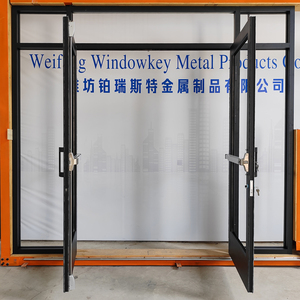
Strong & Secure Commercial Aluminum Glass Door, Reinforced Frame for Heavy Use
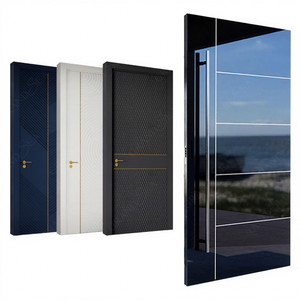
Modern Luxury Villa Exterior Armored Aluminum Smart Entrance Door Anti-theft Steel Front Door Pivot Door with Smart Lock
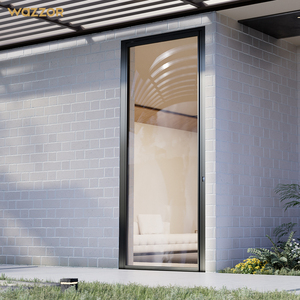
WAZZOR NFRC Certified High Load Bearing Aluminum Glass Pivot Door for Luxury Villa Entrance
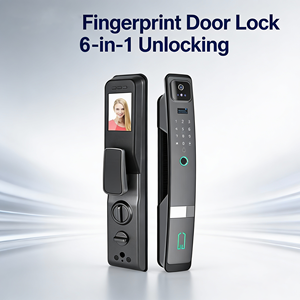
Cerradura Inteligente 6 in 1 TUYA 3D Face Recognition Smart Door Lock with Camera
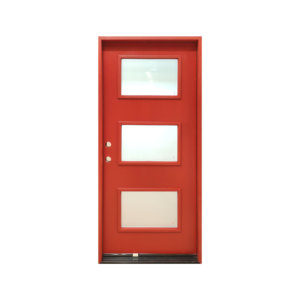
Wholesale Modern Exterior Composite Fiberglass Door with Waterproof Glass Windows and Impact Resistance
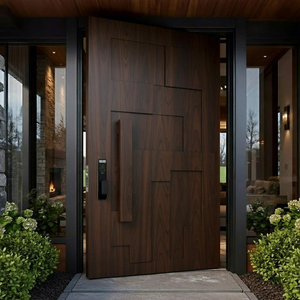
Modern Aluminum Pivot Entry Door Luxury Exterior Front Door Thermal Break Custom Size Double Glass OEM ODM Manufacturer
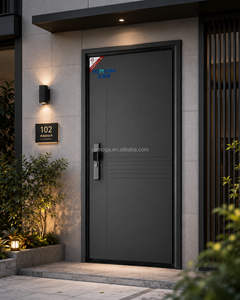
Modern Waterproof Soundproof Steel Pivot Front Entry Door Chinese Exterior Security Main Entrance Door for Apartment Hotel
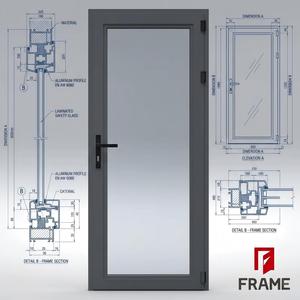
High Quality Aluminium Door Single Double Glass Indoor Single Casement Swing External Or Internal Doors
Why World-Class Developers Source Panic Hardware from Foshan
Precision manufacturing, certified compliance, and complete engineering control for mega-projects.
Life Safety Code Compliance
Engineered to meet ANSI/BHMA A156.3 Grade 1 standards, UL 10C 3-hour fire ratings, and EN 1125 certifications for egress assemblies in commercial facilities.
Automated CNC Manufacturing
Utilizing 9 automated production lines across our 115,000 m² facility, achieving extrusion precision tolerances within ±0.1mm for seamless lock housing alignment.
1,000,000 Actuation Fatigue Life
Heavy-duty latching mechanisms designed and cycle-tested to endure over one million door operations without mechanical degradation or latch binding.
BIM & Custom CAD Shop Drawings
In-house technical department providing architectural drafting, BIM modeling, and customized elevation schedules within 48 hours of project plan intake.
Multi-Material Integration
Seamless factory pairing of panic exit hardware with thermal break aluminum frames, armored steel entry doors, and heavy-duty structural glass pivot assemblies.
Project-Crated Logistics
Export-grade wooden crate packaging labeled meticulously by building quadrant, floor number, and opening ID to streamline field installation for contractors.
Section I: The Technical Architecture of Life-Safety Panic Hardware Assemblies
Commercial door panic hardware—commonly designated as emergency exit devices, touch bars, or crash bars—serves a dual structural role: providing impenetrable perimeter security during standard operational states while permitting instantaneous, unlatching egress during emergency evacuations. Compliance with building codes such as NFPA 101 (Life Safety Code), the International Building Code (IBC), and European Norm EN 1125 mandates that panic hardware unlatch under a single linear pushing motion applied to the actuating bar without prior knowledge of key operation or multi-step physical manipulation.
For international procurement managers sourcing from Chinese manufacturing hubs like Foshan, selecting the optimal factory requires an engineering-level evaluation of mechanical latch mechanics, alloy metallurgical compositions, and certified life-safety standards. Standard residential door locks fail to comply with public assembly door requirements due to mechanical binding under structural frame pressures. Premium OEM China suppliers utilize cold-rolled stainless steel components, high-density alloy investment castings, and integrated shock-absorbing spring actuators capable of withstanding lateral forces exceeding 2,500 N during panic egress situations.
Technical Insight: Under ANSI/BHMA A156.3 Grade 1 benchmarks, panic exit devices must withstand 1,000,000 continuous operation cycles and function seamlessly when a lateral pull force of 250 lbs is applied simultaneously with an egress push force not exceeding 15 lbf (66 N).
Mechanics of Core Panic Hardware Configurations
Factories operating in China's industrial architectural hardware cluster specialize in four core structural configurations tailored to specific framing styles and pressure ratings:
- Rim Exit Panic Devices: Surface-mounted directly to the interior face of single doors or double doors equipped with a removable mullion. Featuring a heavy-duty latch bolt that projects into a frame strike, rim exit hardware offers high durability, ease of maintenance, and compatibility with narrow-stile commercial glass doors.
- Surface Vertical Rod (SVR) Panic Hardware: Configured primarily for pair door applications without a center mullion. Steel vertical rods extend from the exit bar mechanism to latch into top frame strikes and floor threshold plates, establishing dual-point structural locking capable of resisting wind loads up to 120 PSF.
- Concealed Vertical Rod (CVR) Panic Assemblies: Designed for high-end architectural aluminum storefront doors and luxury entrance systems. Vertical latch rods operate inside hollow aluminum frame profiles, preserving minimalist visual lines while maintaining multi-point panic egress compliance.
- Mortise Panic Exit Locks: Combining an internal heavy-duty mortise lock body housed inside the door leaf with an exterior panic push bar. This mechanism provides superior anti-vandalism security, anti-saw deadbolts, and multi-function trim capability suited for educational institutions and municipal facilities.
| Specification Metric | ANSI/BHMA A156.3 (Grade 1) | EN 1125 (European Standard) | Foshan OEM Factory Standard |
|---|---|---|---|
| Minimum Cycle Durability | 1,000,000 Actuations | 200,000 Actuations | 1,200,000 Actuations (Tested) |
| Maximum Egress Push Force | 15 lbf (66 N) | 80 N under neutral load | < 50 N under high pre-load |
| Fire Door Assembly Rating | UL 10C (Up to 3 Hours) | EN 1634-1 (E120 / EI60) | Dual-Certified UL/EN Compliant |
| Salt Spray Corrosion Resistance | ASTM B117 (240 Hours) | EN 1670 (Grade 4 - 240 hrs) | 500+ Hours Powder Coat / PVD |
| Electrified Option Capability | Motorized / Solenoid Latch Retraction | Electric Unlatching Trim | Smart IoT & Tuya/3D Face Integration |
Section II: Key Trends Shaping Future Procurement in Panic Hardware (2025–2030)
The global market for architectural doors and emergency exit hardware is experiencing a rapid structural transition driven by smart building automation, rigorous carbon neutrality directives, and heightened biosecurity demands. Leading export manufacturers in China are evolving beyond pure mechanical fabrication, establishing integrated research labs to pioneer next-generation panic systems.
1. Electrified Latch Retraction (ELR) and Access Control Convergence
Modern commercial buildings demand seamless synchronization between life-safety door hardware and building access control management systems (CMS). Electrified Latch Retraction (ELR) panic bars feature quiet, low-draw motorized actuators operating at 24VDC. During standard operating hours, the latch bolt can be held retracted electronically to allow free push/pull access. Upon receiving a signal from card readers, biometric scanners, or fire alarm control panels (FACP), the system automatically toggles between secure latching and instantaneous emergency unlock states.
2. Smart Delayed Egress and Biometric Security Integration
High-security commercial environments—such as data centers, luxury residential entrances, and pharmaceutical warehouses—require panic devices that deter unauthorized egress without compromising emergency codes. Delayed egress panic hardware initiates a 15-second or 30-second audible alarm delay upon initial bar depression, allowing security personnel time to respond, before automatically releasing the latch bolt. Furthermore, integration with 3D Face Recognition smart locks (such as Tuya-compatible ecosystem locks) bridges the gap between residential luxury aesthetics and high-load security.
3. Sustainable Low-Carbon Alloys and Modular Assemblies
Global architectural specifications increasingly require Environmental Product Declarations (EPD) and recycled material content data for LEED certifications. Advanced Foshan suppliers are implementing 6063-T6 aluminum extrusions derived from 80%+ post-industrial recycled billets, processed using eco-friendly anodizing and solvent-free electrostatic powder coatings that eliminate Volatile Organic Compounds (VOCs).
Section III: China Panic Hardware Factory Selection & Quality Audit Protocol
Procuring commercial doors fitted with panic exit devices from overseas manufacturers introduces specific operational risks, including profile structural deflection, lock binding, coating degradation, and non-compliant hardware geometry. Establishing a standardized factory audit framework ensures zero-defect delivery for international projects.
The 44-Point Quality Inspection Standard
At our 115,000 m² Foshan production base, every custom aluminum glass door, armored pivot door, and panic exit assembly undergoes a rigorous 44-point quality inspection prior to crating. International buyers should mandate that their OEM suppliers provide documented verification across five critical testing domains:
Quality Assurance Checklist for Overseas Buyers:
- Dimensional & Squareness Tolerances: Diagonal variance across door frames must not exceed ±1.5mm to eliminate field binding.
- Structural Latch Operation Force: Measurement of push-bar actuation force under zero pressure and 250 lb lateral frame deflection.
- Acoustic & Weatherproofing Seals: Continuous EPDM gasket compression testing across thermal break frames.
- Surface Finish Film Thickness: Powder coat thickness verification (min. 60–80 microns) via magnetic gauge testing.
- Electrified Circuitry Fatigue: 5,000-cycle high-voltage surge and continuous duty cycle verification for ELR solenoids.
Navigating Custom OEM/ODM Architectural Door Procurement
For custom villa entrances, hotel grand lobbies, and apartment complexes, panic doors must frequently harmonize with specialized aesthetics—such as oversized aluminum pivot doors, NFRC-certified energy-efficient glass, composite fiberglass framing, or heavy anti-theft steel structures. Leading Chinese suppliers provide full OEM customization, adapting standard panic hardware touch-bars with custom PVD finishes (Matt Black, Brushed Brass, Rose Gold) to align with interior hardware schedules while maintaining certified internal mechanical components.
Frequently Asked Questions for Commercial Door Procurement
Technical solutions directly from senior door hardware engineers and global trade compliance managers.
What is the difference between panic hardware and emergency exit hardware?
Panic hardware (tested under EN 1125 / ANSI A156.3) features a full-width push bar or touch bar across the interior door face, designed for public assembly buildings where occupants may be unfamiliar with the layout and panic can occur. Emergency exit hardware (EN 179) utilizes lever handles or push pads, suitable for non-public buildings where personnel are fully trained on evacuation routes.
Can Chinese panic door assemblies satisfy US (UL/NFRC) and European (CE/EN) building codes?
Yes. Tier-1 manufacturers in Foshan produce specialized export profile systems specifically certified for international code compliance. Frames can be specified with thermal break Polyamide (PA66) strips to satisfy NFRC energy performance, paired with UL 10C fire-rated steel or aluminum core assemblies capable of passing 1-hour to 3-hour fire endurance testing.
How do I select the right panic hardware for double swing entrance doors?
For double doors, if a removable center mullion is installed, two standard Rim Exit Devices can be used. If an open double-door opening is required without a center obstacle, specify a Surface Vertical Rod (SVR) device on the inactive leaf and a Rim or Vertical Rod device on the active leaf, or utilize Concealed Vertical Rods (CVR) within hollow aluminum door profiles.
What lead times should buyers expect for project-based custom door orders?
Standard architectural shop drawings and engineering reviews take 3 to 5 business days. Once CAD drawings are signed off, production across automated CNC lines typically requires 25 to 35 days depending on profile finish (such as custom anodizing or PVDF painting) and glass lamination specs. Ocean freight logistics are coordinated directly to destination ports worldwide.
Can panic hardware be integrated with smart electronic locks and access control systems?
Absolutely. Modern panic devices can be equipped with Electrified Latch Retraction (ELR), internal request-to-exit (RX) switches, and electric strikes. These integrate directly with keyless entry systems, Tuya smart app control, 3D facial recognition access control, and centralized fire alarm override panels.
How are fragile glass panic doors protected against damage during international ocean shipment?
Finished door assemblies undergo protective film masking and edge-corner wrapping. Entire assemblies are packed into fully enclosed, fumigated solid wooden crates fitted with shock-absorbing foam spacers. Openings are individually labeled with project quadrant IDs matching architectural plans for efficient site sorting.
Streamline Your Architectural Door Procurement Today
Partner directly with China's leading 115,000 m² window and door manufacturing facility. Receive customized engineering recommendations, competitive factory-direct pricing, and shop drawings within 48 hours.
Inquire Now