Featured Architectural Entry & Interior Door Systems
Direct manufacturer supply engineered for thermal separation, high-traffic durability, smart electronic access, and soundproofing across luxury villas, hotels, and commercial developments.
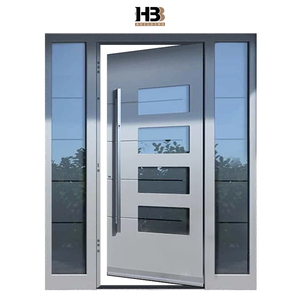
American Modern House Front Entrance 4 Glass Panel Insulated Metal Security Door
- 304 Stainless Steel / Thermal Metal Core
- 4-Panel Low-E Insulated Glazing
- Anti-Pry Multi-Point Locking System
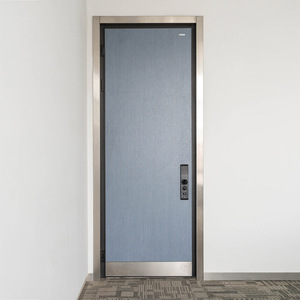
Matte Fabric Texture Steel Interior Door with Smart Electronic Lock (ISO9001)
- Wear-Resistant Textured Finish
- Integrated Smart Electronic Keypad
- Engineered Soundproof Internal Core
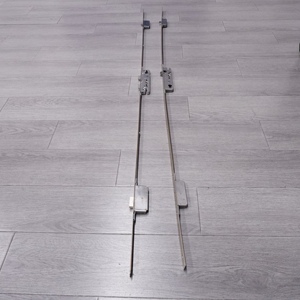
Factory Direct Double Hook Multi-Point Lock Body with 201 Stainless Steel Panel
- Heavy-Duty Double Hook Mechanism
- Corrosion-Resistant Stainless Faceplate
- Tailored for Aluminum & Security Doors
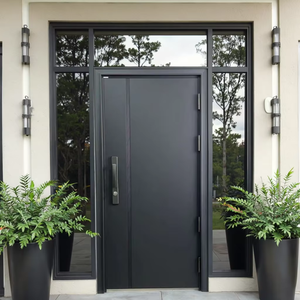
Heavy-Duty Exterior Security Entry Front Gate Door for Residential Estate
- Weatherproof Electroplated Steel Frame
- Impact-Tested Structural Integrity
- Custom Size & Architectural Finish
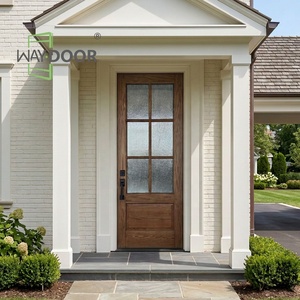
Custom Soundproof Solid Wood Front Entry Door with 6 Tempered Glass Panels
- Premium Mahogany / Oak Hardwood
- 6-Panel Insulated Safety Glass Insert
- STC-Rated Acoustic Insulation Core
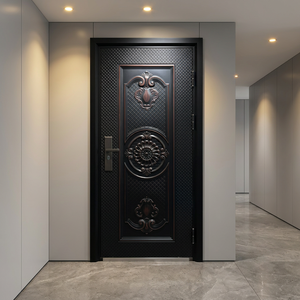
High-End Armored Pivot Security Door with Anti-Drill Smart Digital Lock
- Heavy-Duty Floor Pivot Hinge Bearing
- Reinforced Anti-Drill Armor Plate
- Biometric & RFID Digital Locking
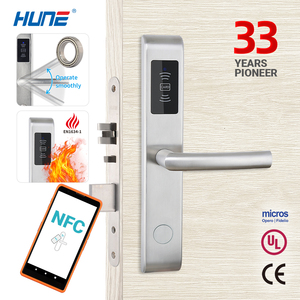
UL-Certified Contactless RFID Smart Card Keyless Hotel Door Lock System
- UL Fire-Rated Lock Mechanism
- High-Frequency RFID Card Sensing
- Heavy Commercial Usage Rating
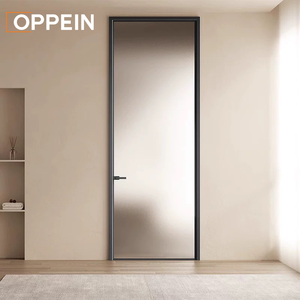
Slim Aluminum Frame Frosted Glass Privacy Interior Door for Hotel & Office
- Ultra-Narrow Aluminum Profile
- Double Tempered Frosted Privacy Glass
- Minimalist Anodized / Powder Coated
1. Architectural Engineering & Material Science in Modern Glass Entry Doors
In modern architectural design, the main entrance serves as both an aesthetic centerpiece and a critical envelope component responsible for structural integrity, energy thermal isolation, acoustic damping, and physical security. Sourcing entry doors with glass inserts from top-tier OEM factories requires a meticulous understanding of material science—specifically regarding profile alloy tempering, glass interlayer physics, and thermal break engineering.
Leading door manufacturers utilize 6063-T6 aluminum extrusion alloys, electroplated cold-rolled security steel, or hand-carved copper claddings combined with polyamide (PA66-GF25) thermal barriers. The inclusion of glass elements inside an entry door creates a potential thermal bridge; however, modern manufacturing mitigates heat transfer through triple-glazed Insulated Glass Units (IGUs) infused with 90%+ Argon gas and treated with soft-coat Low-E (Low-Emissivity) coatings.
Safety glazing technology has simultaneously evolved beyond standard tempered glass. High-end glass entry door suppliers incorporate Laminated Architectural Glass utilizing Polyvinyl Butyral (PVB) or SentryGuard Plus (SGP) interlayers. SGP interlayers provide up to 5 times the tear strength and 100 times the rigidity of conventional PVB, ensuring that even if the outer pane fractures under extreme storm wind pressures or impact forced-entry attempts, the glazing pane remains structural and intact within its aluminum or steel frame matrix.
Multi-Point Anti-Pry Lock Integration
Commercial-grade 304/316 stainless steel lock bodies featuring multi-point deadbolts and top/bottom double hook latches prevent frame pry attacks and meet EN 1627 RC3/RC4 security grades.
Thermal Break Structural Separation
Glass fiber reinforced nylon thermal barriers physically isolate internal frame sections from external metal skins, reducing condensation risk and HVAC thermal losses by over 45%.
Heavy-Duty Floor Pivot Bearings
Architectural pivot entry doors utilize bottom-mounted hydraulic pivot hinges rated for door leaf weights exceeding 500kg (1,100 lbs) with soft-close dampening and 90-degree hold-open options.
B2B Vendor Selection Matrix: Factory Direct vs. Intermediaries
A comparative analysis of operational parameters, quality control protocols, and customization flexibility for commercial building material buyers.
| Evaluation Criteria | Tier-1 OEM Factory Direct (e.g., DERKA) | Trading Companies / Sourcing Agents | Local Regional Distributors |
|---|---|---|---|
| Production Footprint & Capacity | 115,000 m² Facility, 9 Automated Lines | No Production Facility (Broker) | Small Assembly / Stock Warehouse |
| Quality Assurance System | 44-Point Documented QC Process | Visual Inspection Only | Batch Random Sampling |
| International Compliance | ISO9001, CE, AS2047, NFRC, CSA Ready | Varies by Sub-Contractor | Limited Local Approvals |
| Custom CAD / BIM Support | Dedicated In-House Engineering Team | Third-Party Outsourced | Standard Catalog Sizes Only |
| Cost Structure & Margin Leakage | Direct Manufacturer Pricing (Zero Markup) | 15% – 35% Intermediary Margin | 40% – 70% Retail / Wholesale Markup |
| Crating & Export Packaging | Steel-Frame Reinforced Wooden Crates | Basic Cardboard Wrap | Unpackaged / Local Transport Only |
2. Enterprise Manufacturing Excellence: Foshan Derka Architectural Doors & Windows
Rooted in China's premier architectural hardware manufacturing hub—Foshan, Guangdong—Foshan Derka Architectural Doors & Windows Co., Ltd. (DERKA) has grown over 25+ years into a premier global manufacturer of customized aluminum windows, steel front entry doors, luxury copper entry systems, and architectural glazed interior doors. Spanning an expansive 115,000 square meter modern industrial campus, DERKA operates 9 automated production lines staffed by more than 700 master craftsmen and certified facade engineers.
What differentiates a top trusted glass entry door manufacturer is total control over the manufacturing lifecycle. From raw aluminum profile extrusion checking and CNC precision miter cutting to robotic corner crimping, glass IGU sealing, and surface treatment application (Flurocarbon PVDF coating, Anodizing, and AkzoNobel powder coating), every step is kept strictly in-house.
DERKA’s engineering systems are fully certified to meet or exceed international building codes across major export regions: AS2047 & AS1288 for Australia and New Zealand, NFRC & Energy Star rating protocols for North America, CSA standards for Canada, and CE marking for the European Union. Products are backed by structural wind-load calculation reports and independent laboratory test documentation prior to order dispatch.
Future Sourcing & Technology Trends in Glass Entry Doors (2025–2030)
How evolution in smart building envelopes, minimalist aesthetics, and climate-resilient engineering is reshaping factory specifications.
Ultra-Slim Sightlines & Oversized Panoramic Pivot Systems
Architects are shifting away from heavy traditional frame borders toward ultra-narrow vertical profiles (sightlines under 20mm). Floor-to-ceiling entry pivot doors reaching heights of up to 4.5 meters with concealed hardware and flush threshold drains are becoming standard for luxury residential developments.
Biometric IoT & Seamless Smart Access Integration
Traditional keyless locks are yielding to embedded biometric sensors, 3D facial recognition cameras, and smart home IoT access protocols (Matter, Zigbee, Z-Wave). Top factories now pre-wire internal door cores during manufacturing to accept concealed power transfers and motorized multi-point locks.
Carbon-Neutral Envelopes & Vacuum Insulated Glass (VIG)
To comply with net-zero carbon building regulations, entry doors are integrating Vacuum Insulated Glass (VIG). VIG units offer U-values as low as 0.60 W/m²K in a profile thickness of just 8.3mm, offering thermal isolation superior to solid brick walls while maintaining transparent natural daylighting.
Hurricane-Impact & Extreme Weather Protection Envelopes
Climate disruption has elevated demand for hurricane-rated impact entry doors even outside coastal zones. Expect higher specification requirements for ASTM E1886/E1996 Large Missile Impact testing, cyclic wind pressure resistance up to 5,000 Pa, and salt-spray corrosion resistance exceeding 3,000 hours.
B2B Glass Entry Door Procurement FAQs
Critical answers to help contractors, real estate developers, and commercial buyers navigate sourcing, custom engineering, and international delivery.
How do glass entry doors maintain physical security comparable to solid steel front doors?
Security in modern glass entry doors relies on a dual-layer protection system: structural frame reinforcement and laminated security glazing. High-end factories utilize heavy-gauge extruded aluminum (minimum 2.0mm to 3.0mm wall thickness) or reinforced steel armor frames paired with multi-point anti-pry locking gear. For the glass component, suppliers use double or triple-laminated glass incorporating SGP (SentryGuard Plus) interlayers. SGP glass can withstand repeated sledgehammer strikes and forced-entry attempts without shattering open, satisfying forced-entry test standards such as ASTM F1233 and EN 1627 RC3/RC4 grades.
Can your factory produce entry doors compliant with NFRC and Energy Star standards for North America?
Yes. DERKA’s thermally broken aluminum profiles and insulated metal entry door lines are specifically engineered for thermal performance compliance. By combining PA66-GF25 thermal barriers, double/triple Low-E coated glass inserts, argon gas filling, and warm-edge spacer bars (such as Technoform or Swisspacer), our door systems easily achieve the low U-Factor (≤ 0.20 to 0.24 BTU/h·ft²·°F) and optimized SHGC (Solar Heat Gain Coefficient) required for NFRC accreditation and Energy Star certification across all North American climate zones.
What customization options are available for architectural project orders?
Every door manufactured by DERKA is made to order according to project architectural drawings. Customization scope includes: precise custom sizes up to 5 meters high; frame surface finishes (Kynar 500 PVDF fluorocarbon paint, anodized bronze/black, powder coating in any RAL color, or authentic wood-grain heat transfers); glass specifications (clear, ultra-clear low-iron, frosted privacy, tinted, reflective, decorative muntin grilles, or smart switchable privacy glass); and hardware options including electronic smart biometric keypads, RFID card access, or concealed hydraulic pivot operators.
What quality control verification is provided before container loading and shipment?
DERKA operates a transparent 44-point quality inspection workflow. Prior to packing, finished doors undergo full pre-assembly testing in factory test rigs where dimension accuracy, diagonal squareness, corner seal continuity, latch operation, and glass seal integrity are verified. We provide comprehensive QC inspection reports, high-resolution photography, and HD video documentation to the buyer for formal approval before crating. Third-party inspection audits (such as SGS, TUV, or Intertek) are also welcomed.
How are heavy glass doors packaged to prevent damage during ocean transit?
Export ocean freight safety is a core priority. Door frames and glass leaves are wrapped in protective anti-scratch surface film, fitted with heavy-duty plastic corner guards, wrapped in shock-absorbing EPE foam, and encased inside fully sealed, fumigated IPPC-certified wooden crates or steel-frame crates. Crates are clearly labeled with project opening codes, floor tags, and handling instructions, enabling smooth distribution and site installation upon arrival.
What is the typical manufacturing lead time and minimum order quantity (MOQ)?
For standard customized residential project orders, manufacturing lead time is typically 25 to 35 working days following CAD shop drawing sign-off and color sample approval. For major commercial developments or project orders exceeding 100 units, phased delivery schedules can be arranged. We accommodate both small-batch custom villa requirements and large commercial project contracts with flexible MOQs.