Featured Thermal Break & High-Security Entrance Systems
Explore our primary export-grade door configurations engineered for extreme structural loads, weather tightness, and architectural distinction.
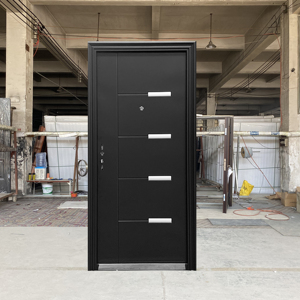 Heavy Security
TECHTOP Laser-Cut Armor Security Door System
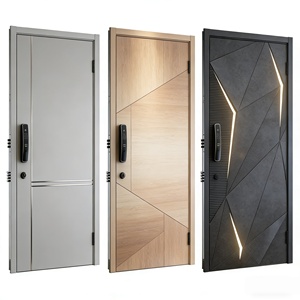 Thermal Break
Minimalist Modern Aluminum Front Security Entrance
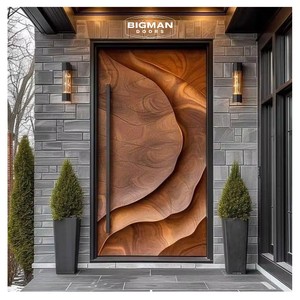 Luxury Villa
American Villa Solid Black Walnut Carved Main Entry Door
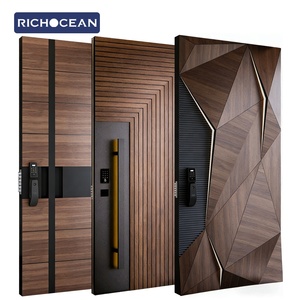 Bulletproof Option
Richocean Bulletproof Armor Aluminum Storm Entry Door
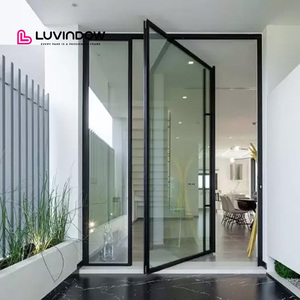 Architectural Pivot
Luvindow Large-Format Modern Glass & Aluminum Pivot Door
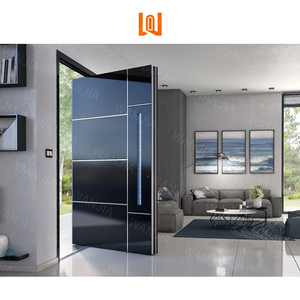 Tempered Glass
Industrial Precision Steel Frame Glass Pivot Entrance
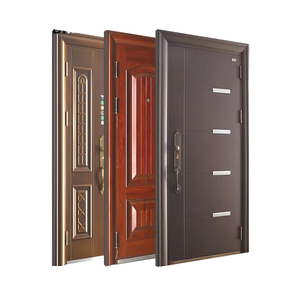 Acoustic Rated
Acoustic Insulated High-Safety Steel Residential Entry
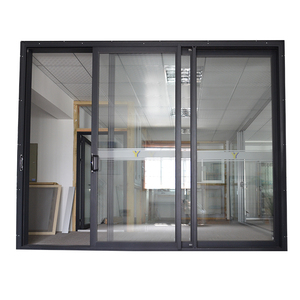 NFRC Certified
NFRC-Certified Thermal Break Sliding Patio Glass Door
Foshan Derka Architectural: 25+ Years of Extrusion & Fabrication Excellence
When specifying structural entrance systems for high-end residential compounds, commercial towers, or luxury hospitality projects, thermal performance and structural reliability are uncompromisable. Operating from Foshan, China—the world’s foremost hub for advanced architectural aluminum processing—Foshan Derka Architectural Doors & Windows Co., Ltd. stands as a premier manufacturer, engineering high-efficiency thermal break doors and window systems.
Spanning an expansive 115,000 square meter manufacturing base and powered by over 700 skilled technicians and structural engineers, our facility operates 9 fully automated profile extrusion and assembly lines. We manage every step of production internally: from raw 6063-T6 aluminum billet homogenizing to thermal barrier polyamide insertion, automated CNC miter cutting, pneumatic corner crimping, and final glass glazing.
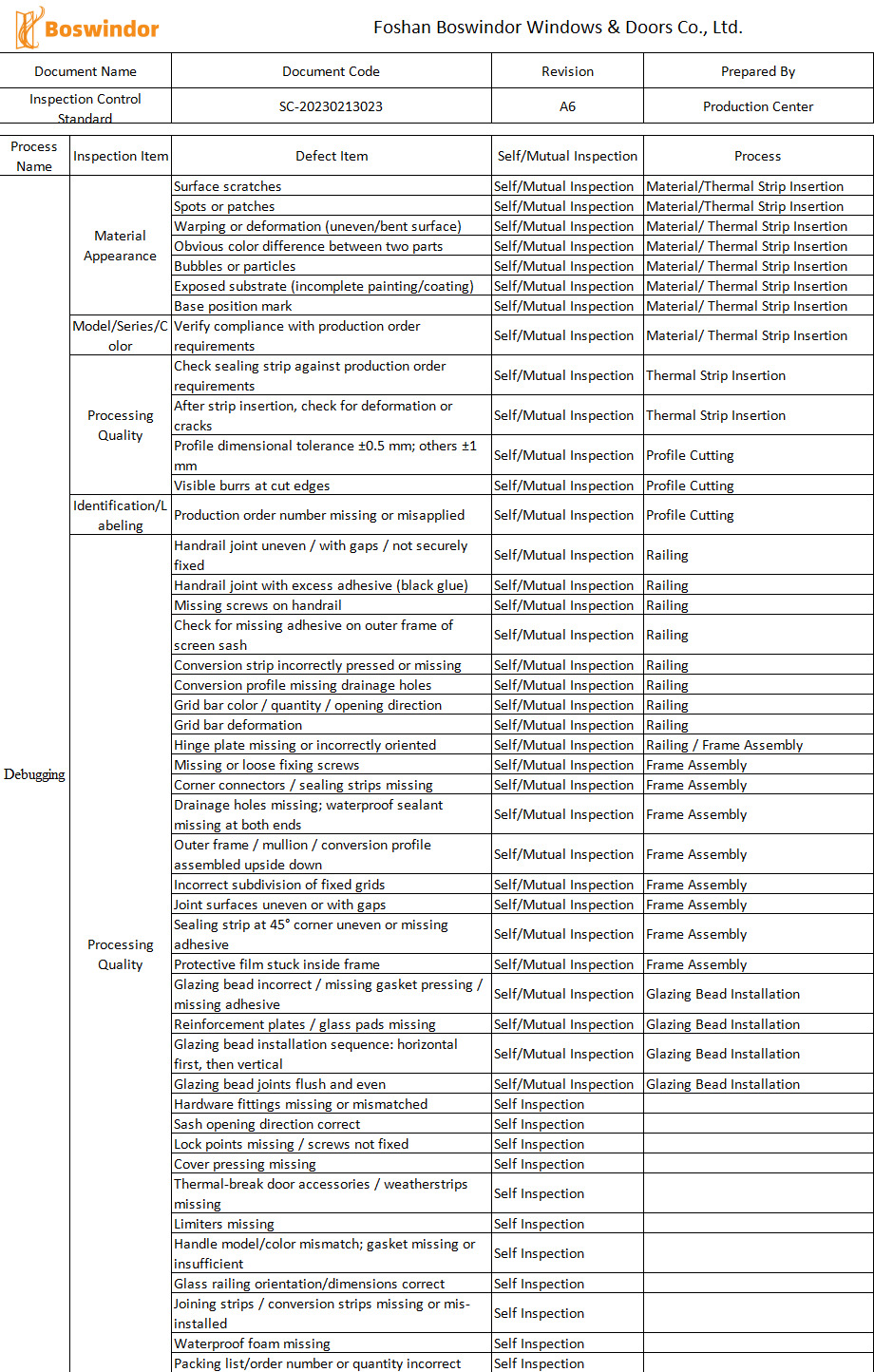
Strict Quality Guarantee: Every door system manufactured in our Foshan plant undergoes a 44-point stringent inspection workflow, verifying dimensional tolerance to within ±0.1mm, thermal strip shear resistance, hydrostatic seal pressure, and hardware cycle testing up to 100,000 continuous operations.
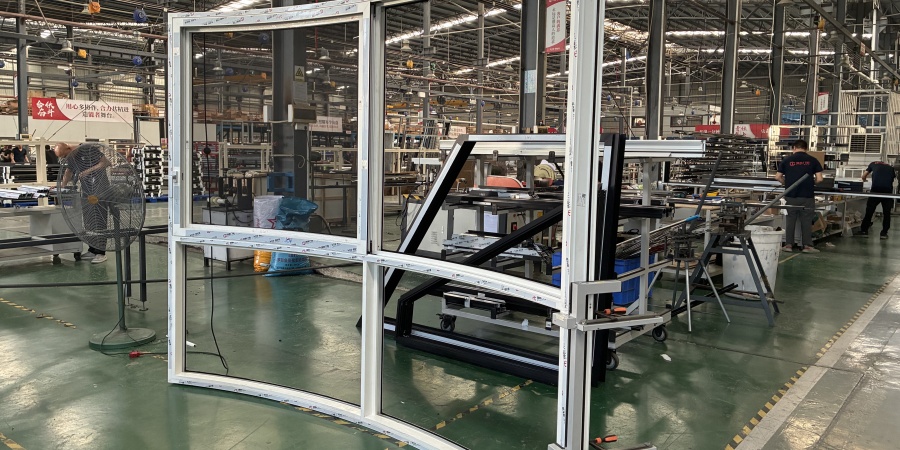
The Engineering Physics of Thermal Break Aluminum Doors
A definitive technical breakdown of how polyamide thermal barrier technology eliminates heat bridging, lowers HVAC power consumption, and satisfies modern low-carbon energy codes.
Aluminum is celebrated in modern architecture for its exceptional strength-to-weight ratio, structural rigidity, and immunity to rot and deformation. However, uninsulated aluminum profile frames possess a high thermal conductivity rate (approximately $k = 160 \text{ to } 200 \text{ W/m}\cdot\text{K}$). Left unmitigated, an ordinary aluminum entrance frame acts as a thermal bridge—rapidly transferring heat inside during summer and allowing radiant warmth to escape during winter. This thermal transmission forces HVAC systems to overwork and often causes internal moisture condensation, which can lead to mold growth and interior surface degradation.
1. Polyamide PA66 GF25 vs. Pour-and-Debridge (P&D) Systems
To interrupt heat flow, top-tier thermal break aluminum door manufacturers insert a low-conductivity barrier between the exterior and interior extruded aluminum profiles. The two predominant global manufacturing techniques are Polyamide Strip Insertion (PA66 GF25) and Pour-and-Debridge (P&D) Polyurethane Resin.
| Engineering Attribute | Polyamide PA66 GF25 Strip (DERKA Standard) | Pour & Debridge (P&D) Polyurethane |
|---|---|---|
| Thermal Expansion Coeff. ($\alpha$) | $2.3 \times 10^{-5}/\text{K}$ (Matches Aluminum perfectly) | $7.0 \times 10^{-5}/\text{K}$ (High risk of shear stress) |
| Tensile & Shear Strength | High Structural Integrity ($\ge 80 \text{ MPa}$) | Moderate Shear; susceptible to cold-flow deformation |
| Fire Safety & Melting Point | 250°C Melting Point (Self-extinguishing) | 160°C Degradation (Fumes emitted under flame) |
| Large Door Panel Suitability | Ideal for heavy double-glazed pivot & sliding doors | Restricted to lighter residential windows |
| Thermal Insulation Conductivity | $k \approx 0.3 \text{ W/m}\cdot\text{K}$ (Extremely Low) | $k \approx 0.2 \text{ W/m}\cdot\text{K}$ |
At Foshan Derka, we standardize on multi-chambered PA66 GF25 (Polyamide 66 reinforced with 25% structural glass fiber). Because PA66 GF25 shares an almost identical linear coefficient of thermal expansion as architectural aluminum profiles, the combined assembly expands and contracts uniformly under extreme ambient temperature swings (from -40°C winter conditions to +60°C direct summer solar radiation). This mechanical symmetry prevents frame warping, seal separation, or structural delamination over decades of exposure.
2. U-Factor Thermodynamics & Glazing Synergy
A door system's overall heat transfer rate is quantified by its thermal transmittance value ($U$-factor or $U$-value, measured in $\text{W/m}^2\text{K}$). The lower the $U$-factor, the greater the insulation efficiency. Achieving an overall system thermal performance of $U \le 1.4 \text{ W/m}^2\text{K}$ requires optimizing three distinct components simultaneously:
- Frame Thermal Break Depth: Expanding the polyamide barrier width from standard 14.8mm strips up to 24mm or 34mm multi-chamber insulated strips packed with expandable aerogel insulation foam.
- Insulated Glass Units (IGUs): Incorporating double (5mm + 12Ar + 5mm) or triple (5mm + 12Ar + 5mm + 12Ar + 5mm) tempered safety glass panels treated with soft-coat Low-Emissivity (Low-E) metallic layers and 90%+ pure Argon gas filling.
- Warm-Edge Composite Spacers: Replacing traditional cold aluminum glass spacers with stainless steel composite or polymer warm-edge spacers to mitigate perimeter thermal bridging along glass edge seals.
Structural Security Integrity
Integrated multi-point locking gear paired with heavy European C-groove profiles provides forced-entry deterrence rated to EN 1627 RC2/RC3 safety standards.
Acoustic Decibel Reduction
Dual-density continuous EPDM gaskets combined with asymmetric glass thickness configurations achieve Sound Transmission Class ratings up to STC 45 dB.
Weather Tightness Seal
Precision pneumatic corner crimping combined with dual-component corner adhesive injection ensures zero water leakage under hurricane storm driving rain conditions.
Future Sourcing & Procurement Trends for Architectural Doors
Key market forces shaping international window and door procurement strategies over the next decade.
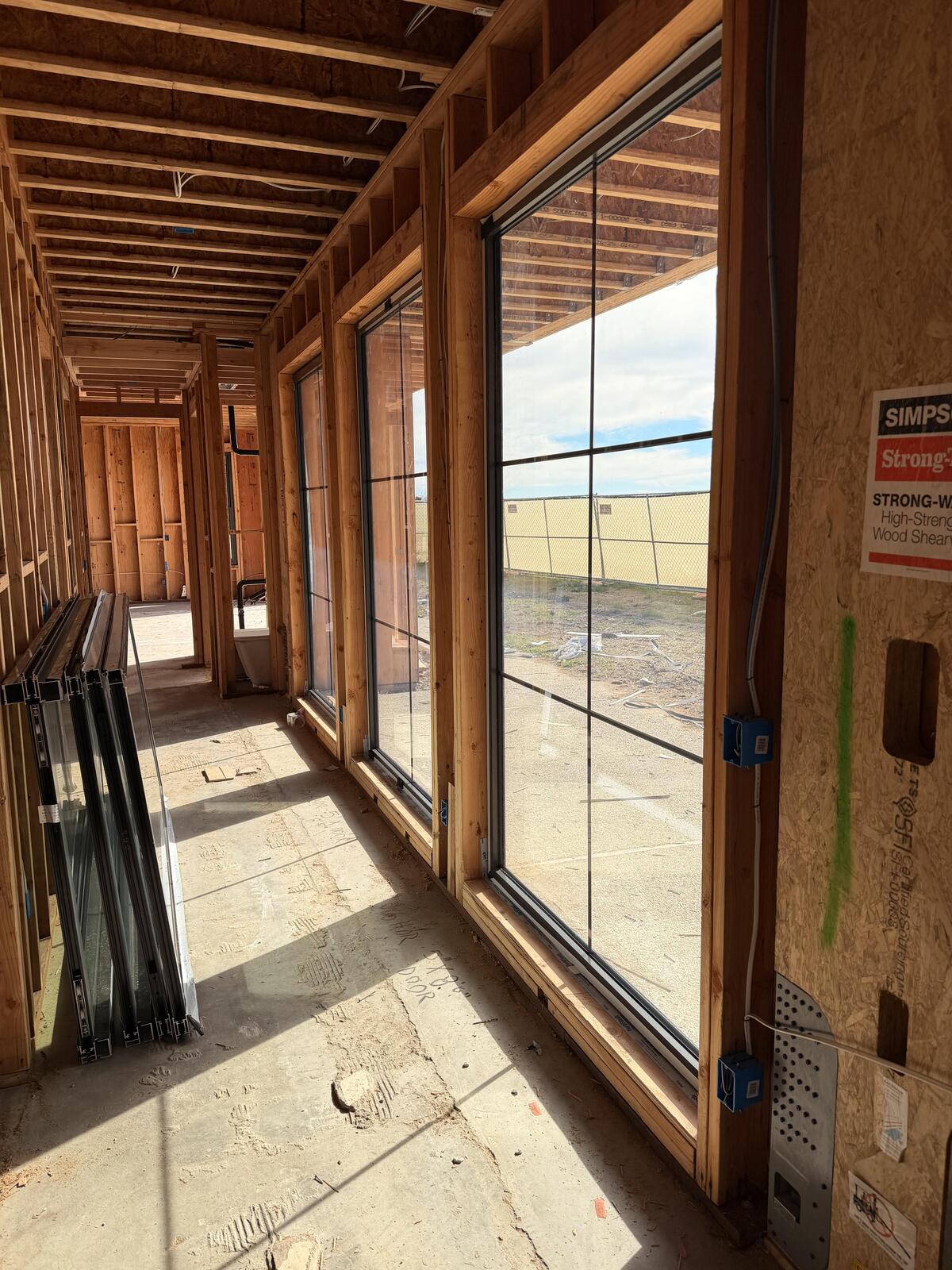
Procurement Pro-Tip: Global project buyers are shifting away from standalone product purchasing toward single-source factory packages (combining entry, sliding, folding, and interior doors) to streamline shipping logs, reduce transit risk, and maintain uniform finish matches across building facades.
1. Net-Zero Energy Buildings (NZEB) & Ultra-Low U-Value Mandates
As stringent building energy standards (such as European EPBD revisions, US Title 24, and Australian NCC Energy Efficiency standards) become law, architectural projects increasingly mandate entrance doors with system $U$-factors $\le 1.0 \text{ W/m}^2\text{K}$. Forward-thinking manufacturers are incorporating aerogel insulated strips, vacuum insulating glass (VIG), and quad-gasket sealing geometries to deliver passive-house compliance.
2. Smart Automated Entry & Biometric Integration
Modern commercial and residential developments expect seamless integration with smart home automation. Procurement specs now routinely call for motorized multi-point locks, integrated fingerprint scanners, facial recognition cameras, and hidden magnetic contact sensors built into the thermal break extrusions without breaking weather seals.
3. Low-Carbon Aluminum & EPD Verification
Importers and commercial developers now evaluate product environmental impact profiles. Leading manufacturers are adopting low-carbon aluminum billets smelted using renewable hydropower and incorporating certified post-consumer recycled content, supported by verified Environmental Product Declarations (EPDs).
4. Architectural Ultra-Slim Sightlines & Oversized Spans
Minimalist luxury design trends favor floor-to-ceiling glass expanses with narrow visible aluminum frames. Engineering developments in high-yield structural alloys (such as 6060-T66 and high-tensile 6063-T6) allow pivot doors exceeding 4 meters in height while supporting heavy glass loads of up to 500 kg per panel.
Why Direct Sourcing from Foshan Derka Protects Your Project
Our integrated production system eliminates intermediary markups, ensures code compliance, and provides complete project tracking.
In-House CAD & Shop Drawings
Our engineering department translates your architectural elevations into detailed shop drawings—specifying profile dimensions, glass makeup, hinge offsets, and installation flashing details for approval prior to production.
Surface Coating Mastery
We operate automatic vertical powder coating and PVDF fluorocarbon spraying lines compliant with AAMA 2605 specifications—delivering 30-year resistance against salt air, chalking, and UV fading.
Export-Grade Crating
Finished door units are wrapped with protective film, edge guards, and high-density foam before being packed in fully enclosed fumigated plywood crates. Each crate is labeled by project section and floor level for easy site handling.
The DERKA 44-Point Quality Inspection Standard
Every custom thermal break door assembly undergoes rigorous testing prior to crating. Our internal QA lab performs profile thickness verification, anodizing depth checks, sealant corner adhesion tests, water infiltration trials up to 1000 Pa, and smooth hardware cycle tests.
Clients receive comprehensive digital QC reports—complete with high-resolution photos, measurement readouts, and glass certification serials—before container loading.
Frequently Asked Technical & Sourcing Questions
Answers to key technical, compliance, and ordering questions from international buyers, architects, and builders.
Ready to Engineer High-Performance Entrance Doors for Your Project?
Submit your architectural elevation drawings or schedule window schedules today. Our structural engineering team will deliver a comprehensive proposal with shop drawings, thermal calculations, and factory-direct pricing within 24 hours.