Precision Multi-Point Door & Locking Assemblies
Engineered for maximum pull resistance, smooth latch operation, and zero thermal bridging. Exported directly from our Foshan facility to Berlin jobsites.
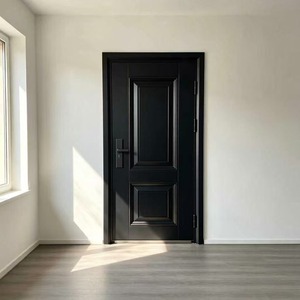 RC3 Security
Double Steel Security Entry Door Multi Point Lock Anti Pry Commercial Office Door
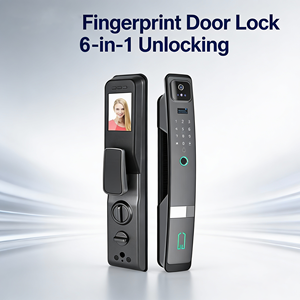 Biometric Smart
6-in-1 TUYA 3D Face Recognition Smart Lock with Motorized Multi-Point Linkage
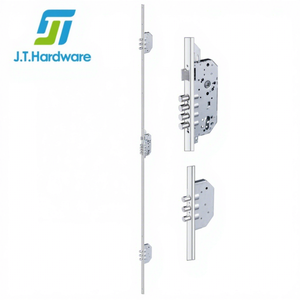 European Standard
Three-Point Security Mortise Lock Body with Silent Roller Latch & Hook Bolts
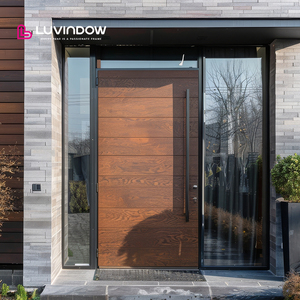 Villa Grade
Solid Wood Exterior Entry Door with Concealed Multi-Point Locking System
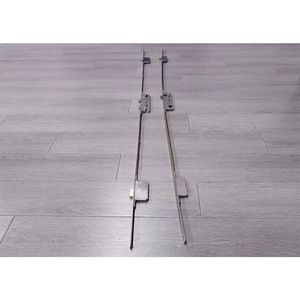 Heavy Duty
Iron Multi-Point Linkage Long Lock Body with Vertical Top/Bottom Rod Extensions
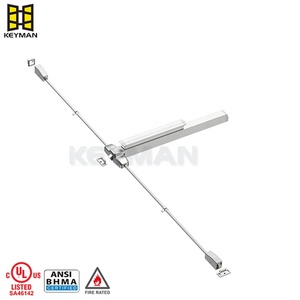 EN 1125 Panic
Commercial 3-Point Vertical Rod Fire-Rated Panic Push Bar Emergency Exit Device
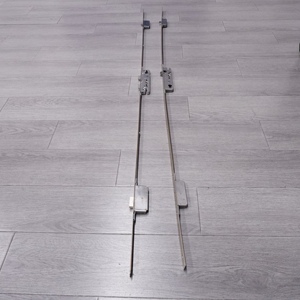 Slim Profile
Double-Hook Multi-Point Lock Body for Thermal Break Aluminum Casement Doors
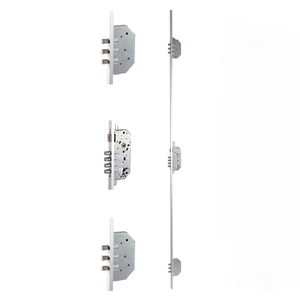 DIN 18251 Spec
European DIN Spec 3-Point Steel Mortise Lock Body for High-Security Timber Doors
Engineering Multi-Point Locking Doors for Berlin’s Structural Standards
Addressing Burglar Resistance (DIN EN 1627), Thermal Envelope Regulations (GEG 2024), and Acoustic Insulation across German Municipalities.
In modern European urban architecture, single-point deadbolts are no longer sufficient to meet commercial insurance standards or municipal building codes. In Berlin, property developers, housing associations (*Wohnungsbaugesellschaften*), and general contractors increasingly specify multi-point locking (MPL) assemblies for residential entry ways (*Wohnungseingangstüren*), main entrance doors (*Hauseingangstüren*), and emergency exit routes. A multi-point locking system secures the door leaf to the frame at three, five, or seven distinct structural points simultaneously, activated by a single cylinder turn or automated motor drive.
From a structural engineering standpoint, traditional single-point latches concentrate mechanical loads entirely on the center strike plate. When subjected to pry-bar force attacks (*Hebelversuche*) or severe wind pressure differentials, the door sash flexes, compromising the perimeter gasket seal. DERKA’s multi-point locking entry systems integrate hardened steel hook bolts (*Schwenkhaken*), solid steel mushroom pins (*Pilzkopfzapfen*), and heavy-duty vertical extension rods. This distributes physical loads evenly across the entire frame length, achieving certified compliance up to DIN EN 1627 RC3 and RC4 security levels.
DIN EN 1627 RC2 to RC4 Resistance
Our heavy-duty steel entry assemblies utilize 20mm projection hardened steel hook bolts and anti-saw roller pins capable of withstanding lateral forces exceeding 15,000 N, repelling aggressive mechanical intrusions.
GEG 2024 Thermal Integration
Under Germany’s *Gebäudeenergiegesetz* (GEG), exterior entrance doors require ultra-low thermal transmittance ($U_d \le 0.8 \text{ W/m}^2\text{K}$). Multi-point compression pulls the sash tight against multi-chamber EPDM gaskets, eliminating air infiltration.
Berlin Acoustic Control ($R_w \ge 45\text{dB}$)
Urban density in districts like Mitte and Neukölln demands strict sound attenuation. Solid-core insulated leaves, paired with perimeter multi-point compression locking, block street traffic and ambient city noise.
Locking System Performance Matrix
Comparing structural lock configurations across key engineering parameters to match your project specification in Berlin.
| Lock Mechanism System | Burglar Resistance Rating | Lateral Force Load Limit | Air Tightness (EN 12207) | Smart Motor Integration | Target Berlin Application |
|---|---|---|---|---|---|
| Standard Single-Point Mortise | RC1 N / Basic | ~3,500 N | Class 2 (Basic) | Manual Key Only | Interior Office Doors |
| 3-Point Roller Latch & Deadbolt | RC2 Level | ~8,000 N | Class 3 (Moderate) | Optional Electric Strike | Commercial Shopfronts |
| 5-Point Dual Hook & Mushroom Pin | RC3 Level Certified | ~15,000 N | Class 4 (Highest) | Keypad & RFID Ready | Multi-Family Entrances (*Altbau*) |
| Motorized 3D Face / Smart Multi-Point | RC3 - RC4 Level | >18,000 N | Class 4 (Highest) | Tuya / IoT Smart Hub | Luxury Residential Villas & Tech Offices |
| Vertical Rod Surface Panic Push Bar | EN 1125 Fire / Emergency | ~12,000 N | Class 3 (Gasket Sealed) | Access Control Relays | Warehouse & Public Emergency Exits |
Tailored Application Scenarios for Berlin Architectural Projects
From historic *Altbau* restoration to modern zero-emission commercial complexes, explore how our multi-point locking doors solve local urban structural challenges.
Historic *Altbau* Renovation & Luxury Residence Entrances
Restoring high-ceiling period buildings (*Altbau*) requires custom-proportioned entry doors that maintain classic architectural aesthetic while integrating invisible multi-point security mechanics. DERKA supplies tall solid wood and steel-reinforced entry sashes equipped with internal vertical rod extensions. These provide 5-point locking into the upper frame header and bottom threshold without altering the traditional ornamental exterior facade.
High-Traffic Multi-Family Residential (*Mehrfamilienhäuser*)
Urban apartment complexes require durable, low-maintenance main entrances subject to hundreds of daily operational cycles. Our aluminum thermal-break entry systems incorporate continuous 3-point latch locks with stainless steel roller latches and heavy-duty electric strikes. Compatible with digital intercom access systems (e.g., Siedle, Gira), they offer seamless tenant entry while keeping unwanted intruders out.
Logistics Complexes & Industrial Emergency Exits
In Berlin’s expanding logistics centers and commercial parks, safety codes dictate strict emergency egress functionality alongside robust intruder protection. DERKA manufactures EN 1125 panic exit devices integrated into multi-point vertical latch systems. During standard operation, top and bottom latches secure the perimeter against forced break-ins. In an emergency, a single depress of the panic bar retracts all locking points instantly.
Smart Passivhaus Entrances & Private Luxury Villas
Suburban villa developments demand the intersection of high aesthetics, airtight insulation, and keyless biometric entry. Our Smart Tuya 6-in-1 3D Face Recognition door systems feature motorized multi-point lock bodies. Upon approach, 3D structured light verifies the owner’s identity and automatically retracts the top, center, and bottom deadbolts in under 0.8 seconds without mechanical key contact.
Key Procurement Trends Shaping Berlin’s Door Specifications
Market intelligence for architectural specifiers, hardware distributors, and general contractors in Germany.
Motorized Auto-Locking Linkages
Mechanical keys are rapidly being phased out in new Berlin developments. Modern specs mandate motorized multi-point locks that automatically engage deadbolts when the door drops into the latch position, ensuring continuous RC3 burglar rating without requiring manual key locking by occupants.
Hybrid Thermal-Break Aluminum
Combining extruded structural aluminum profiles with high-density polyamide (PA66) thermal insulation bars allows doors to maintain slim, contemporary sightlines while achieving the ultra-low $U_d$ thermal transfer values demanded by Germany's strict energy saving directives.
Direct Factory B2B Procurement
Berlin developers are bypassing intermediate regional traders to source custom door assemblies directly from certified manufacturing hubs in Foshan. Direct factory engagement reduces material lead costs by up to 35% while granting custom CAD/BIM shop drawing engineering flexibility.
Why Berlin Buyers Partner with DERKA Factory
As a global architectural door manufacturer operating a 115,000 m² state-of-the-art facility with over 700 skilled technicians, DERKA bridges high-capacity production with European engineering standards.
We work directly from your architectural plans, structural drawings, or door schedules. Our dedicated engineering team prepares comprehensive shop drawings for approval before production begins, ensuring zero dimensional discrepancies on the Berlin jobsite.
- 9 Automated Production Lines operating 16 hours daily for reliable lead times
- Complete 44-Point Quality Inspection covering profile thickness, lock cycle testing & sealing
- Export-Grade Wooden Crating labeled by floor, opening number, and building section
- Comprehensive technical compliance docs (CE, ISO 9001, test reports) shared prior to shipment
Quality Assurance Workflow
Raw Profile & Steel Audit
Spectrometer testing of aluminum alloys & stainless steel lock plate hardness (SUS 304/316).
CNC Machining & Mortise Slotting
Computer-controlled milling ensures 0.1mm tolerance for lock body insertion and strike plate alignment.
Cyclic Operational Testing
Automated test rigs simulate 200,000+ lock/unlock handle operations under simulated load.
Water & Air Tightness Verification
Chamber pressure testing to guarantee zero air leak and water ingress around perimeter multi-point seals.
Frequently Asked Questions by Berlin Importers & Contractors
Expert answers addressing local compliance, shipping logistics, customization, and architectural standards.
Our security doors integrate heavy-gauge reinforced steel internal sub-frames, hardened steel anti-saw hook bolts with a 20mm throw, and anti-drill cylinder protection plates. The lock assemblies undergo rigid mechanical force testing to withstand leverage attacks using crowbars, screwdrivers, and heavy wedges, conforming to DIN EN 1627 Resistance Class 2 (RC2) and Resistance Class 3 (RC3) standard requirements.
Yes. Every order is 100% made to measure. Historic buildings in Berlin often feature oversized openings exceeding 2,500mm in height and non-standard wall widths. We customize profile depth, frame dimensions, transom light windows, side-lites, and vertical rod linkage lengths based on your exact field measurements and CAD drawings.
Our thermal-break aluminum and composite solid-core entry doors achieve overall heat transfer coefficients ($U_d$) as low as $0.78 \text{ W/m}^2\text{K}$. This exceeds the baseline $U_d \le 1.3 \text{ W/m}^2\text{K}$ requirement specified by Germany's *Gebäudeenergiegesetz* (GEG 2024), making them eligible for KfW energy efficiency renovation subsidies in Germany.
Absolutely. Our Tuya 3D Face and biometric smart lock bodies are built around standard European DIN mortise specifications (e.g., PZ 92mm distance, 35mm/45mm/55mm backsets). They accept standard Euro-profile lock cylinders (PZ-Zylinder), allowing manual key override capability alongside smart fingerprint, RFID card, keypad, and mobile app access.
Products are wrapped in protective anti-scratch surface film, fitted with rigid corner guards, encapsulated in thick PE shock foam, and packed inside fully enclosed, ISPM-15 compliant fumigated plywood crates. Crates are shipped via sea freight to major ports such as Hamburg or Bremerhaven, followed by direct container chassis transport to your jobsite or warehouse in Berlin.
We provide full export clearance documentation, including Commercial Invoice, Packing List with detailed itemization, Bill of Lading, Certificate of Origin (Form A / CO), CE Declaration of Performance (DoP), and ISO 9001 test reports. We can assist your customs broker in Germany to ensure smooth customs clearance under your EORI number.
Ready to Specify High-Security Multi-Point Doors for Your Berlin Project?
Contact our engineering desk today to submit your door schedules or architectural blueprints. Receive a formal factory quotation and technical BIM/CAD shop drawing within 24 hours.