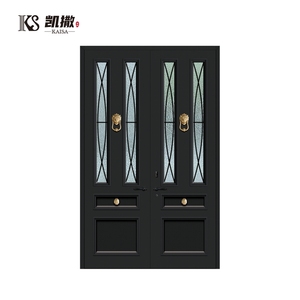
Featured High-Performance Door Systems
Engineered to satisfy stringent global and regional architectural standards, incorporating thermal barriers, hurricane impact protection, and modern aesthetic profiles.
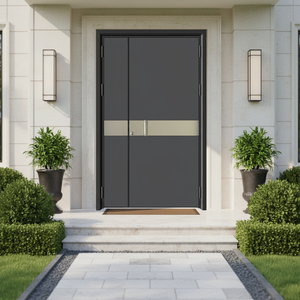
Luxury Cast Aluminum Front Entry Door High Security Anti-Theft Fire Prevention Pivot Design
Get Catalog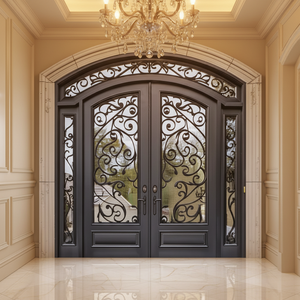
Luxury Design Exterior Entrance Wrought Iron Glass Anti-Theft Security Front Entry Doors
Get Catalog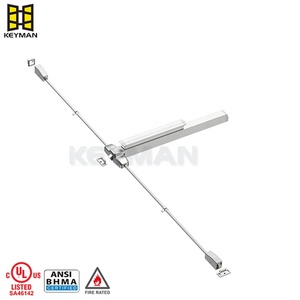
Commercial Emergency Door Surface Vertical Bar Lock 3 Point Locking Fire Rated Exit Device
Get Catalog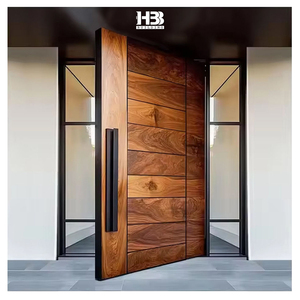
American Villa Custom Large Size Exterior Modern Pivot Door Solid Wood Double Sidelite
Get Catalog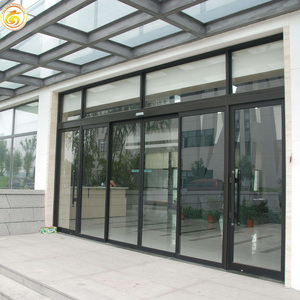
Hurricane Impact Resistant Storefront Doors With Decorative Grilles for Coastal Buildings
Get Catalog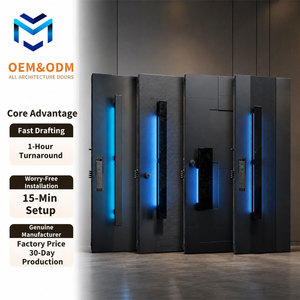
American Soundproof Front Entry Cast Aluminum Security Entrance Steel Pivot Doors
Get Catalog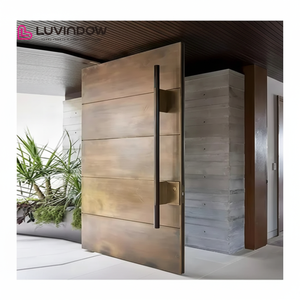
American Style Contemporary Solid Wood Entry Main Entrance Exterior Pivot Doors
Get CatalogThermal Break Engineering in Modern Fenestration Manufacturing
Thermal break aluminum fenestration systems represent the benchmark of modern energy-efficient architectural design. By inserting a reinforced structural polyamide insulator—typically Polyamide 66 reinforced with 25% glass fiber (PA66-GF25)—between the exterior and interior extruded aluminum profiles, manufacturers eliminate the inherent thermal conductivity of raw aluminum. Aluminum possesses a thermal conductivity rate of approximately 160 to 200 W/m·K, which readily conducts heat across building envelopes. The integration of high-grade thermal barriers reduces thermal conductivity within the break zone down to less than 0.3 W/m·K, driving exceptional overall system thermal performance (U-values).
For high-end residential, multi-family, and commercial architectural developments, choosing the correct thermal break aluminum door manufacturer is critical to meeting statutory decarbonization metrics, operational energy reduction mandates, and structural safety standards.
115,000 m²
Industrial Manufacturing Base
25+ Years
Export & Engineering Expertise
44-Point
Rigorous Quality Control Protocol
700+
Skilled Technicians & Engineers
Thermal Break Aluminum Doors in the Japan Market: Environmental & Compliance Drivers
Japan presents unique climatic challenges, stringent building codes, and distinct architectural preferences that demand customized thermal break door systems. From sub-zero winter temperatures in Hokkaido to high-humidity typhoons and seismic threats in coastal Honshu and Kyushu, door envelope specifications must handle multi-variable stresses.
Thermal Performance & Condensation Control
Japan’s Revised Energy Conservation Act mandates elevated insulation standards for residential construction (ZEH - Net Zero Energy House). High interior relative humidity combined with low external temperatures causes severe interstitial condensation in legacy frames. Thermal break profiles prevent internal frame surface temperatures from dropping below dew points, stopping mold and structural decay in wood-frame (Jukutaku) constructions.
Typhoon Resistance & Water Tightness
Japanese JIS A 4702 standards require rigorous performance metrics for wind pressure resistance (S-grade) and water tightness (W-grade). Systems engineered for Japan incorporate multi-stage EPDM weather-stripping gaskets, equalized pressure chambers, and integrated sub-sill drainage paths to withstand extreme coastal precipitation exceeding 1500 Pa wind pressures.
Seismic Movement & Structural Flexibility
Fenestration installed in Japanese urban developments must accommodate inter-story drift during seismic events. Specialized perimeter fixing hardware, flexible structural silicone sealant channels, and reinforced corner crimped joinery ensure frame integrity under dynamic structural shear without glass displacement.
| Specification Metric | Standard Aluminum Door | Thermal Break Door (Export Grade) | Japan Market Specialized Profile |
|---|---|---|---|
| Thermal Conductivity (U-Frame) | > 5.8 W/m²K | 1.8 - 2.4 W/m²K | ≤ 1.4 W/m²K (JIS A 4710 Level H-5) |
| Polyamide Barrier Material | None / PVC Strips | PA66-GF25 (14mm to 24mm) | PA66-GF25 Multi-Cavity (28mm to 34mm) |
| Airtightness Performance | JIS A 4702 A-2 | JIS A 4702 A-3 | JIS A 4702 A-4 (High Performance) |
| Water-Tightness Threshold | 150 Pa | 350 Pa | 500 Pa - 750 Pa (W-5 Equivalent) |
Localization & Architectural Evolution in Japanese Fenestration
The Japanese architectural landscape is witnessing a convergence between minimalist Scandinavian aesthetics and traditional space-efficiency demands (such as Shoji-inspired sliding mechanics). Key trends shaping manufacturer sourcing strategies include:
Ultra-Slim Sightlines with Structural Glass Integrity
Modern residential builds in Tokyo, Osaka, and Yokohama prioritize high natural daylight transmission. Thermal break manufacturers are engineering high-tensile 6063-T6 aluminum alloys allowing narrow frame sightlines without compromising load-bearing resistance against heavy snow loads in northern prefectures.
Barrier-Free (Flush Sill) Transitions
With Japan’s aging population demographics, universal design accessibility mandates flat threshold transitions for interior-to-patio access. Technical solutions integrate subterranean drainage channels with magnetic retractable bottom seals to provide zero-step access while maintaining wind-driven rain resistance.
Why Leading Global Procurement Teams Partner with Foshan Derka
Operating out of Foshan, Guangdong—the global manufacturing epicenter for architectural aluminum—Foshan Derka Architectural Doors & Windows Co., Ltd. provides factory-direct custom door and window systems tailored to rigorous international building codes.
25+ Years of International Engineering
Extensive export history supplying custom thermal break entrance doors, lift-and-slide doors, and curtain walls across North America, Australia, Europe, the Middle East, and East Asia.
115,000 m² Advanced Manufacturing Facility
Houses 9 automated production lines, precision CNC extrusion milling centers, thermal break crimping lines, and automated double/triple-glazed insulated glass assembly units operating 16 hours daily.
44-Point Rigorous Quality Assurance
Every profile, thermal strip bonding strength, corner joint crimping precision, hardware cycle durability, and powder coating micron thickness undergoes multi-stage technical inspection prior to shipment.
Comprehensive International Certification Readiness
Systems engineered to target ISO 9001, CE Marking, AS2047 (Australia), NFRC / Energy Star (North America), and JIS (Japan) compliance thresholds.
Frequently Asked Questions by Japanese Importers & Contractors
1. How do your thermal break aluminum doors conform to Japanese JIS standards?
Our engineering team selects specific raw profiles (6063-T5/T6 grade aluminum) and integrates high-density polyamide thermal breaks (PA66-GF25). Systems can be customized to match JIS A 4702 structural and airtightness performance metrics. Mill test reports, alloy composition data, and mock-up test photos are provided during the shop drawing phase.
2. Can you manufacture custom door sizes to fit traditional Japanese module grids (Shaku / Ken system)?
Yes. As a custom manufacturer, 100% of our production is made-to-measure. We design doors to exact project specifications, whether working within standard Japanese construction modules (e.g., 910mm grid spacing) or grand-scale custom luxury architectural spans.
3. What surface finishes are recommended for harsh coastal environments in Japan?
For coastal applications subject to salt spray, we recommend fluorocarbon PVDF coating (minimum 2-coat or 3-coat system) or high-micron anodic oxidation (anodized finish). These coatings resist pitting corrosion, chalking, and UV degradation caused by marine climate exposure.
4. How are products packed to ensure zero damage during sea freight transit to ports like Yokohama, Kobe, or Tokyo?
All finished assemblies are wrapped in protective surface film, equipped with heavy-duty corner guards, isolated with foam padding, and encased in fully enclosed export-grade plywood crates. Crates are tagged according to floor plan opening numbers for immediate site sorting upon arrival.
5. Do you offer hardware integration compatible with Japanese electronic lock systems?
Our doors can be factory-prepped via CNC routing to accept a wide array of global multi-point locks, panic bars, as well as Japanese smart lock systems (such as keyless digital mortise locks and biometric access units).
Accelerate Your Project with Certified Thermal Break Doors
Connect directly with our senior fenestration engineers to obtain shop drawings, thermal calculations, and factory-direct pricing for your next residential or commercial project.
Get Full Product Catalog & Quote