Featured Thermal Break & Architectural Door Systems
Explore our export-ready architectural door lineup, structurally verified for atmospheric resilience, thermal efficiency, and acoustic isolation across South American climatic zones.
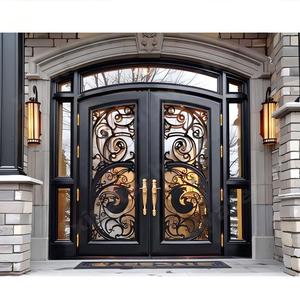
XIYATECH Factory Price Classical Design Customized Exterior Iron Door Grill Design Wrought Iron Front Entry Doors For Houses
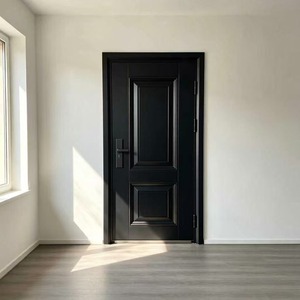
Double Steel Security Entry Door Multi Point Lock Anti Pry Structure Commercial Office Warehouse Outdoor Burglar Proof Door
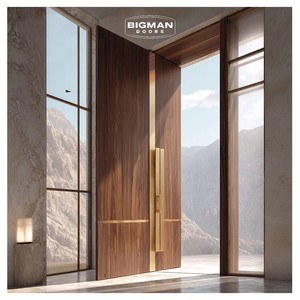
Modern Extra Large 6m High Waterproof Solid Wood Steel Frame Pivot Entrance Main Front Entry Door Heavy with Duty Pivot Hinge
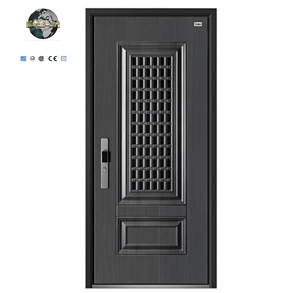
Modern Minimalist Anti-Theft Aluminum Alloy Entry Door Commercial Outdoor Garden Side Opening Sliding For Apartment Security
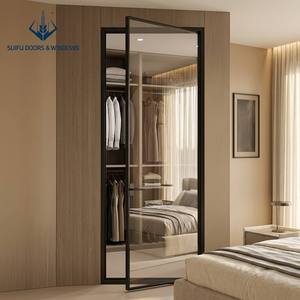
Minimalist Slim Frame Aluminum Swing Door for Bathroom Kitchen Fluted Glass Narrow Frame Casement Door with Magnetic Mute Lock
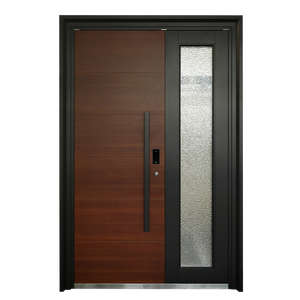
Aluminum Security French Door-Waterproof Exterior Entry Door For Hotel Apartment Villa Use
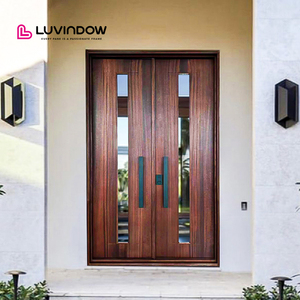
Luvindow Custom USA Villa Modern Design Exterior Solid Wood Main Entry French Door Pivot Aluminum Entry Doors for House
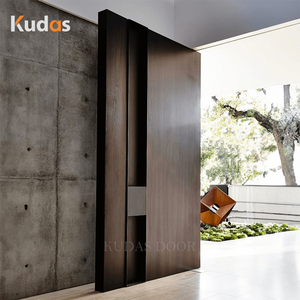
Main Entrance Exterior Walnut Solid Wood Large Front Door Single Aluminum Modern Front Entry Wooden Pivot Door
Thermal Break Technology: Mitigating Thermal Conductivity in Brazilian Architecture
The Brazilian construction industry is undergoing a paradigm shift driven by stringent energy performance requirements, urbanization in high-density capitals like São Paulo, and luxury real estate developments along coastal zones such as Rio de Janeiro and Florianópolis. Central to this architectural evolution is the widespread adoption of Thermal Break Aluminum Door Systems. Standard extrusion aluminum, while structurally resilient and lightweight, possesses a high thermal conductivity ($\lambda \approx 200 \text{ W/m}\cdot\text{K}$). Unmitigated, standard aluminum acts as a thermal bridge, rapidly conducting intense tropical solar heat into air-conditioned interior spaces, severely compromising HVAC energy efficiency.
Thermal break technology solves this fundamental physical constraint by inserting a precision-engineered, non-metallic structural barrier—specifically Polyamide PA66 reinforced with 25% fiberglass (PA66GF25)—between the interior and exterior aluminum profile extrusions. This polyamide barrier exhibits a thermal conductivity of merely $\sim 0.3 \text{ W/m}\cdot\text{K}$, effectively severing the thermal path. When exported to the Brazilian market, thermal break doors serve a dual function: reducing cooling load requirements in hot, humid northern and coastal climates, and maintaining acoustic integrity in dense metropolitan centers.
Comparative Analysis: Thermal Break vs. Standard Aluminum Door Systems
A quantitative performance comparison establishing information gain for architectural specifiers, Brazilian importers, and commercial developers.
| Performance Characteristic | Standard Non-Thermal Break Aluminum | DERKA Thermal Break System (PA66GF25) | Impact on Brazilian Projects |
|---|---|---|---|
| Thermal Transmittance (U-Value) | $5.0 - 6.2 \text{ W/m}^2\cdot\text{K}$ | $1.4 - 2.2 \text{ W/m}^2\cdot\text{K}$ | Dramatically lowers interior heat gain, cutting HVAC energy usage up to 35%. |
| Acoustic Attenuation (Rw / STC) | $22 - 26 \text{ dB}$ | $38 - 48 \text{ dB}$ (with Double IGU) | Essential for São Paulo & Curitiba urban noise mitigation (ABNT NBR 15575). |
| Condensation Prevention | High Risk (Surface sweat in humid AC spaces) | Zero Dew-Point Formation | Prevents wall mold, structural wood rot, and internal finish degradation. |
| Corrosion Resistance (Marine Air) | Standard Anodized (10-15 $\mu\text{m}$) | Qualicoat Class 2 / PVDF & Anodized 25 $\mu\text{m}$ | Extends door lifespan to 30+ years in coastal environments (Rio, Salvador). |
| Structural Wind Load (Pa) | $1200 - 1800 \text{ Pa}$ | Up to $4500 \text{ Pa}$ (Extra Heavy Duty) | Exceeds ABNT NBR 10821 structural requirements for high-rise facades. |
Tailored Door Solutions across Brazil’s Diverse Microclimates
High-Rise Residential Urban Towers (São Paulo & Curitiba)
Dense metropolitan zones demand strict compliance with acoustic standard ABNT NBR 15575. Modern residential high-rises suffer from severe traffic noise pollution. Derka’s multi-cavity thermal break casement and sliding doors incorporate continuous EPDM weather-stripping seals and insulated double-laminated glazing. This combination creates an impenetrable acoustic damper, achieving sound insulation indices above 42 dB while withstanding high-altitude wind pressure pressures exceeding 3500 Pa.
Coastal Luxury Estates & Resorts (Rio, Florianópolis, Bahia)
Brazilian coastal regions present extreme atmospheric challenges characterized by heavy salt spray (salinidade), intense ultraviolet exposure, and torrential rains. Standard hardware and untreated aluminum degrade rapidly. Derka supplies custom thermal break aluminum pivot and bi-fold doors equipped with Qualicoat Class 2 Seaside architectural powder coating and 316-grade stainless steel hardware. This guarantees total immunity against filiform corrosion, pitting, and color fading.
Tropical Humid Regions & Eco-Lodges (Manaus & Belém)
In equatorial and tropical regions, maintaining low indoor humidity while running air conditioning creates massive temperature differentials between inside and outside frame surfaces. Non-thermal doors result in condensation "sweating," damaging high-end interior woodwork. Derka's thermal break systems feature low Solar Heat Gain Coefficient (SHGC < 0.28) Low-E insulated glass units, preventing internal moisture accumulation and optimizing air-conditioning duty cycles.
Brazilian Architectural Trends Shaping Door Import Specifications
1. Minimalist Slim-Line Sightlines & Floor-to-Ceiling Spans
High-end Brazilian architects (inspired by contemporary tropical modernism) increasingly specify oversized openings—often exceeding 3.5 to 6 meters in height. The market demands ultra-narrow interlock profiles (as slim as 20mm visible sightline) without sacrificing structural moment of inertia. Derka addresses this by integrating heavy-duty concealed thermal break structural stiles reinforced with titanium-aluminum alloys, delivering expansive ocean and garden views alongside high wind resistance.
2. ESG & Green Building Certifications (LEED & AQUA-HQE)
Brazil leads Latin America in green building projects requiring LEED (Leadership in Energy and Environmental Design) and local AQUA-HQE certifications. Commercial developers must prove operational carbon reduction. Importing certified thermal break door systems from Foshan Derka provides complete environmental product declarations (EPD), verified U-value test reports, and fully recyclable 6063-T5 aluminum profiles that earn valuable points under energy performance criteria.
Foshan Derka: World-Class Manufacturing Serving Brazilian Importers
Operating from an expansive 115,000 square meter manufacturing base in Foshan, China—the world’s premier hub for architectural aluminum processing—Foshan Derka Architectural Doors & Windows Co., Ltd. represents the pinnacle of industrial engineering. Backed by 25+ years of dedicated international export experience, 9 fully automated production lines, and a workforce of over 700 skilled technicians, Derka bridges the gap between high-volume production speed and custom architectural crafting.
44-Point QC Quality Audit
Every door assembly undergoes a rigorous 44-point quality inspection regime. Checkpoints cover raw ingot alloy composition analysis, extrusion dimensional tolerances, polyamide strip crimping shear strength, corner joint hydraulic crimping precision, surface coating micron thickness, and air-water-tightness pressure chamber testing prior to containerization.
Export-Grade Heavy Packaging
Maritime transit to major Brazilian ports (Santos, Paranaguá, Rio de Janeiro, Suape) involves extended sea voyages through tropical humidity. Derka protects every order with 5-layer protective wrapping: protective scratch surface film, thick corner guards, EPE shock foam, vacuum sealers, and fumigated steel-strapped plywood crates labeled by project floor and room code.
BOM & Shop Drawing Engineering
Our in-house engineering department converts your CAD / Revit architectural files into precise shop drawings for approval. We provide full structural calculations, wind load validation against Brazilian topography zones, and comprehensive Bill of Materials (BOM) detailing exact glass, hardware, and thermal profile specifications.
Frequently Asked Questions by Brazilian Importers & Contractors
Addressing technical compliance, import logistics, customs protocols, and thermal door engineering specifications for Brazil.
ABNT NBR 10821 governs performance requirements for external building openings in Brazil. Derka thermal break door systems are engineered and lab-tested to meet and exceed all five key criteria outlined in NBR 10821: Air Permeability (Permeabilidade ao Ar), Watertightness (Estanqueidade à Água), Structural Wind Resistance (Cargas Acidentais e de Vento), Mechanical Durability (Manuseio e Operação), and Acoustic Isolation. Prior to order confirmation, our engineering team provides complete test certificates detailing pressure performance up to Class 5 requirements for high-rise towers in coastal zones.
We exclusively utilize Technoform or certified high-grade PA66GF25 (Polyamide 66 reinforced with 25% glass fiber) thermal break struts. Unlike cheap PVC or low-grade plastic insulators that degrade, warp, or crack under ultraviolet light, PA66GF25 possesses the exact same thermal expansion coefficient as architectural aluminum ($2.4 \times 10^{-5}/K$). This prevents mechanical separation of the inner and outer aluminum extrusions under extreme thermal cycles found in Brazilian climates—from 40°C afternoon sun to cold AC interiors.
For optimal energy performance in Brazil, we recommend Double Insulated Glass Units (IGU) featuring a 6mm outer Tempered Solar-Control Low-E glass pane, a 12mm or 16mm Argon gas-filled spacer with warm-edge technology, and a 6mm inner Clear Tempered pane ($6\text{mm Low-E} + 12\text{Ar} + 6\text{mm Clear}$). This setup achieves a Solar Heat Gain Coefficient (SHGC) below 0.25 and a U-value of $\sim 1.4 \text{ W/m}^2\cdot\text{K}$, blocking up to 78% of infra-red solar heat radiation while maintaining high daylight transmission.
Importing architectural doors into Brazil requires a valid RADAR license (Registro e Rastreamento da Atuação dos Intermediários do Comércio Exterior) issued by the Receita Federal. Aluminum doors typically fall under NCM (Nomenclatura Comum do Mercosul) code 7610.10.00. Derka provides comprehensive commercial documentation—including detailed Commercial Invoices, Packing Lists with precise Net/Gross weights, Certificates of Origin (CO), and Bills of Lading (B/L)—ensuring seamless customs clearance at ports like Santos or Rio de Janeiro while minimizing duty discrepancies (II, IPI, PIS/COFINS, and ICMS taxes).
For coastal installations within 5 kilometers of the ocean (e.g., Rio, Salvador, Recife, Santos), we mandate either PVDF Fluorocarbon 3-Coat Liquid Spraying (minimum 40 microns thickness) or Anodizing with a minimum thickness of 25 microns (Class 25). Both treatments comply with Qualicoat Seaside specifications and offer verified 3,000+ hour neutral salt spray test resistance, preventing filiform corrosion, chalking, and salt blistering.
Manufacturing lead time for customized thermal break door packages is typically 25 to 35 calendar days following shop drawing approval. Ocean freight transit from Shenzhen/Guangzhou ports to Santos or Paranaguá ports takes approximately 30 to 38 days. While we accommodate complete custom villa packages with no strict minimum quantity, containerized shipping (20GP or 40HQ) is highly recommended to maximize ocean freight cost efficiency for B2B importers, real estate developers, and construction firms.